
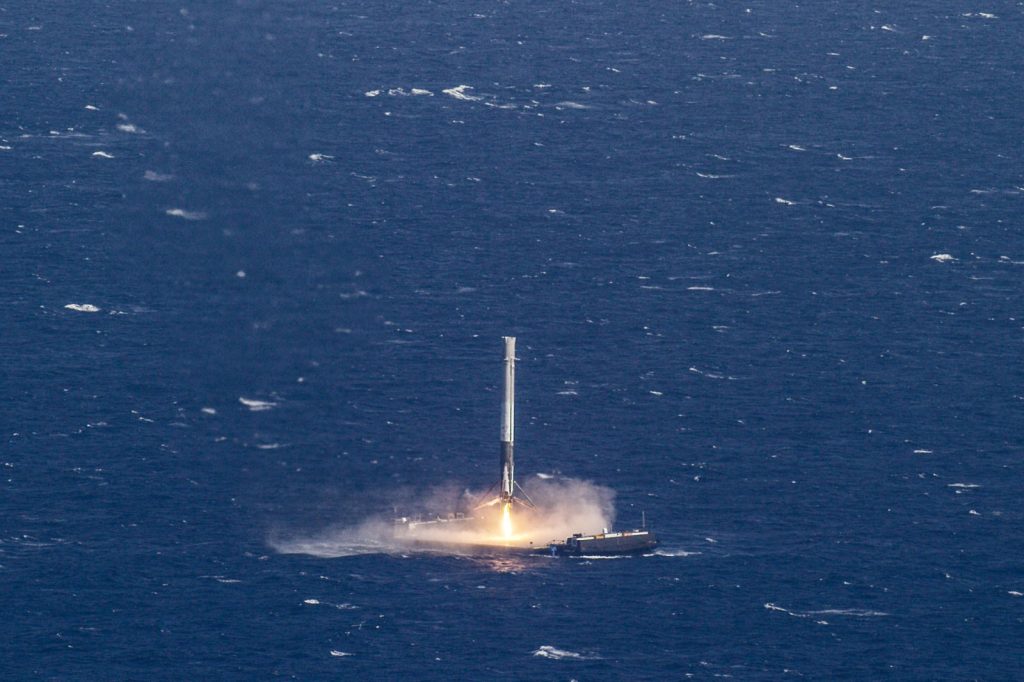
CAPE CANAVERAL, July 10 — The first time a Falcon 9 booster came back from space and stood upright on the ground, it felt like a glimpse of a future that had been promised for decades. That was December 2015. Nearly nine years later, China has now pulled off the same trick — but the gap between the two programmes tells a story about how hard reusability really is, and how far ahead one company has pulled.
SpaceX’s Falcon 9 achieved the first successful orbital-class booster recovery on December 21, 2015, when the first stage landed at Cape Canaveral Air Force Station. As of June 2024, the company has successfully landed Falcon 9 boosters over 250 times and reused them on multiple missions.
The cost per flight now sits at approximately $67 million, down from an estimated $62 million for a brand-new booster. That is the economics of reusability in action: the hardware that used to fall into the ocean now flies again. The science behind how it works is a combination of precision guidance, throttleable engines, and grid fins that steer the booster through the atmosphere.
The Falcon 9 uses nine Merlin 1D engines, each producing 85 tons of thrust at sea level. After stage separation, the booster relights some of those engines to slow itself down, then deploys landing legs and touches down on a pad or a drone ship.
It sounds straightforward now, but it took SpaceX years of testing — the reusability programme began in 2011 with the Grasshopper test vehicle, a stubby experimental rocket that hopped a few hundred metres off the ground before coming back down.
China’s entry into the reusable rocket club
On June 23, 2024, the China Aerospace Science and Technology Corporation, or CASC, achieved its first booster recovery with the Long March 10B. The landing used a ship-borne platform in the South China Sea. It is a significant milestone for China’s space programme, which started its reusable rocket development in 2019 — eight years after SpaceX began Grasshopper tests.
The Long March 10B uses the YF-100K engine, a kerosene-liquid oxygen design that produces 120 tons of sea-level thrust. That is a single engine, compared to Falcon 9’s cluster of nine Merlins.
The rocket can lift 14 metric tons to low Earth orbit, while Falcon 9 can manage 22.8 metric tons to the same destination. The numbers show a capable vehicle, but one that is not yet in the same weight class. China projects cost savings from reusability at 30% per launch.
SpaceX, by contrast, has achieved an estimated 50-60% savings for reused boosters. The difference reflects years of operational experience — Falcon 9 has conducted over 300 missions, including crewed flights to the International Space Station.
The Long March 10B is expected to support China’s space station and commercial launches, but it has not yet flown a crew.
How the landing works
The mechanism that makes these landings possible is a combination of engine throttling, navigation, and structural engineering. For the Falcon 9, the Merlin 1D engines can throttle down to about 40% of their maximum thrust, which allows the booster to hover briefly before touchdown. The grid fins — four small, steerable surfaces mounted near the top of the booster — unfold after stage separation and adjust the rocket’s angle as it falls through the atmosphere.
On the way down, the booster performs a series of engine burns: the entry burn slows it from hypersonic speeds, the re-entry burn manages aerodynamic forces, and the landing burn brings it to a stop just above the ground. The Long March 10B uses a similar basic approach — a controlled descent with engine burns and a ship-borne landing platform — but the details of its guidance system and throttle capability are less publicly documented.
What is clear is that China has now demonstrated the fundamental capability, even if it lags behind SpaceX’s operational reusability by nearly nine years.
What the gap means
That nine-year gap is not just about timing. It represents hundreds of successful landings, thousands of engineering refinements, and a supply chain built around reuse. SpaceX has landed boosters over 250 times as of June 2024.
Each landing generates data that feeds back into the design of the next flight. The company has reached the point where reusing a booster is routine — so routine that the launch price for a reused Falcon 9 is only about $5 million more than the estimated cost of a new booster, which is a remarkable compression of the cost curve.
China’s 30% projected savings are real, but they come from a starting point where the Long March 10B is still a new vehicle. The first recovery is a proof of concept. The next step is to fly the same booster again, and then again, and to do it reliably enough that customers and mission planners treat reuse as the default rather than the exception.
The Long March 10B is expected




