
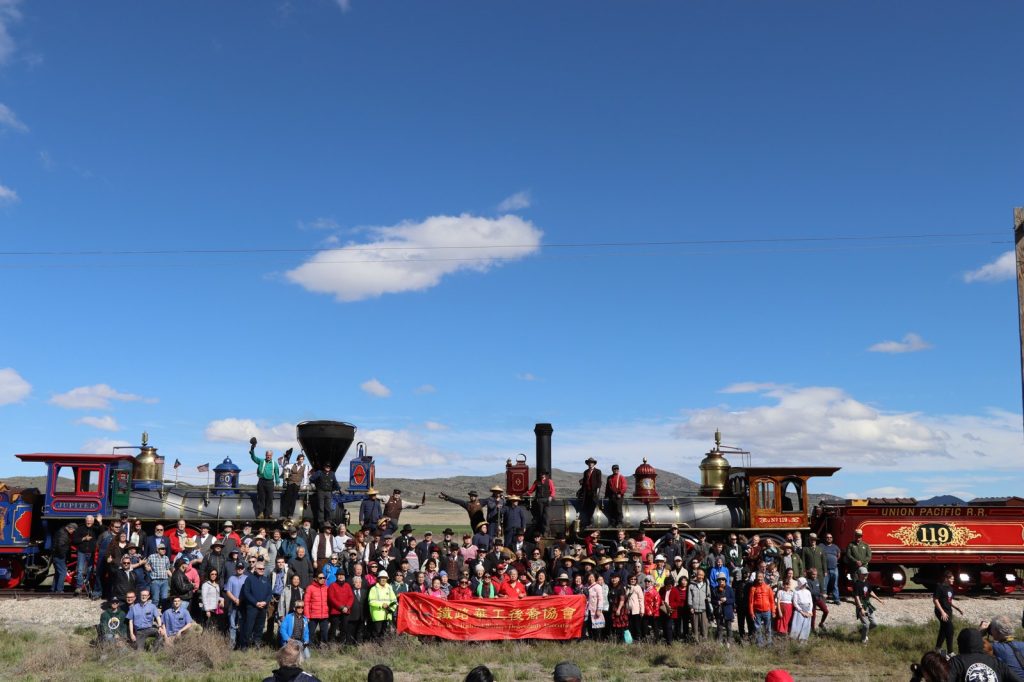
SAN FRANCISCO, July 14 — The story of America’s first transcontinental railroad is one of steam hammers, summit tunnels, and a workforce that was overwhelmingly Chinese. Between 1865 and 1869, the Central Pacific Railroad employed roughly 12,000 Chinese labourers. They made up 80 per cent of the company’s entire workforce.
Most were recruited from California, and many came directly from Guangdong province in southern China. How it worked on the ground was a study in organisation under extreme duress.
The men were arranged into gangs of 20 to 30 workers, each led by a Chinese headman. That headman negotiated directly with the railroad on behalf of his crew. The wages were not equal: Chinese labourers earned between $30 and $35 per month, while white workers received $35 to $40.
On top of that lower pay, the Chinese men had to cover their own food and lodging.
The granite obstacle at Donner Pass
The most punishing stretch of the line was the Summit Tunnel at Donner Pass, a 1,659-foot bore through solid granite. It took 13 months of relentless work to complete in 1867. The Central Pacific had to blast through rock that was among the hardest on the entire route.
Chinese workers introduced a technique that was both ingenious and terrifying: they wove baskets, lowered themselves down sheer cliff faces, and drilled holes for explosives while dangling in mid-air. It was a method that no other labour force on the project had been willing to attempt.
The toll was staggering. Between 1,200 and 1,500 Chinese workers died during the construction. Avalanches, premature explosions, and disease claimed them.
The dead were often buried where they fell, their names unrecorded in the company ledgers.
After the golden spike
Once the railroad was finished in 1869, the Chinese labourers did not simply vanish. Many moved on to other railroad projects across the West. Others headed to cities, where they found work in factories, laundries, and service trades.
But the welcome they received was thin. Discrimination was widespread and codified.
The Chinese Exclusion Act of 1882 became the first federal law in American history to bar a specific ethnic group from immigration. It was a direct response to the very workers who had helped bind the continent together. What researchers continue to find is a story of technical skill and brutal economics.
The Chinese labourers were not just a source of cheap muscle; they brought specific engineering practices—like the cliff-lowering basket technique—that the railroad relied on to finish the line through the Sierra Nevada. Their headmen acted as cultural and commercial intermediaries, handling wages, supplies, and negotiations in a system that kept the gangs running efficiently.
The Central Pacific’s own records show that without the Chinese workforce, the railroad would not have been completed on time—or perhaps at all. The 12,000 men who built the line were paid less, fed themselves, and died in numbers that would be unacceptable by any modern standard. The Summit Tunnel remains a monument to their labour, cut through granite by men in baskets.
What to watch next is how historians and preservationists continue to document the specific names and fates of those who worked the cliffs, as the 160th anniversary of the railroad’s completion approaches.




