
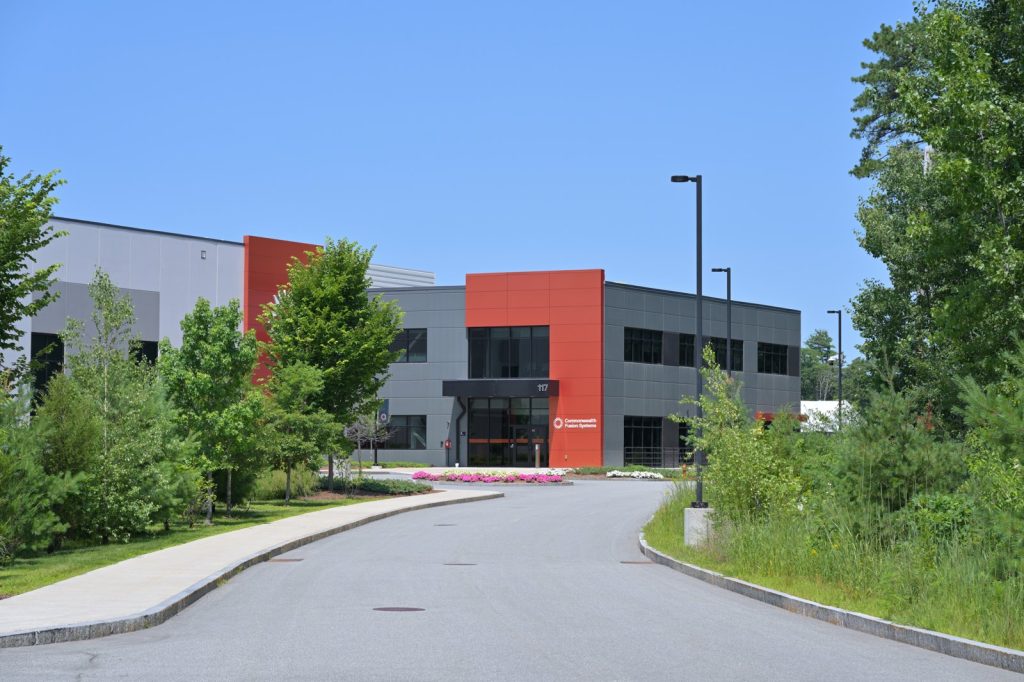
Record Private Investment and Federal Partnership
Commonwealth Fusion Systems closed a $1.8 billion Series B financing round in December 2021, which the company described at the time as the largest private investment in fusion energy ever. That round pushed the firm’s total disclosed fundraising above $2 billion. Investors include Breakthrough Energy Ventures, the climate-technology fund founded by Bill Gates; the Italian energy company Eni; and the Singaporean sovereign wealth fund Temasek. The influx of private capital has made CFS one of the best-capitalized players in the emerging fusion industry, which has seen a surge of investment over the past five years as dozens of startups pursue different reactor designs.
In 2022, the company secured a partnership with the U.S. Department of Energy to advance high-temperature superconducting magnet technology, a collaboration that ties the private effort to national laboratory expertise. The DOE partnership, combined with the record financing, reflects growing confidence that compact, high-field tokamak designs could move fusion from laboratory experiments toward practical power generation.
Technical Path: From SPARC to ARC
CFS is a direct spinout from MIT’s Plasma Science and Fusion Center, and its work builds on decades of research into high-temperature superconductors and compact reactor designs led by the university. The SPARC device is a compact tokamak, a doughnut-shaped magnetic confinement vessel first demonstrated by Soviet physicists in the late 1960s. The key innovation behind SPARC is the use of high-temperature superconducting tape for the magnets, which can carry large currents in smaller spaces than conventional superconductors. This technical breakthrough, first shown at MIT and then scaled up by CFS, allows the tokamak to be smaller and more powerful than earlier generations of machines.
The company’s 2025 target for net energy gain with SPARC is among the most aggressive timelines publicly stated by any fusion company. If that demonstration succeeds, the next step is to navigate the engineering and regulatory hurdles required to scale from a proof-of-concept tokamak to a grid-connected commercial reactor by the mid-2030s. The commercial-scale design, ARC, would follow the same magnetic confinement principles but at a scale suitable for baseload electricity generation.
The Stakes for Fusion Energy
Fusion energy traces its scientific roots to mid-20th-century experiments in magnetic confinement, when researchers first explored tokamaks as a way to replicate the fusion reactions that power stars. The approach gained traction after Soviet physicists achieved the first stable plasma in a tokamak in the late 1960s, proving the concept could hold superheated gas long enough for reactions to occur. Over the following decades, governments built larger machines to test scalability, while private efforts remained small and speculative. The field’s shift toward private investment began in earnest after 2010, as climate concerns and advances in materials science made compact, high-field tokamaks a plausible commercial path.
Commonwealth Fusion Systems emerged from this convergence. The significance of its effort lies in its potential to accelerate the arrival of fusion energy on the grid. Unlike government-led projects that progress at a deliberate pace, CFS operates with private capital and a corporate timeline, aiming to demonstrate net gain by 2025 and move toward a commercial plant by the mid-2030s. If successful, fusion could provide a carbon-free electricity source that operates continuously, unlike wind or solar, while avoiding the fuel-supply and waste issues of fission reactors. The company’s growing workforce, partnerships with national laboratories, and record financing rounds underscore both investor confidence and the broader race to develop new energy technologies that can meet rising demand without worsening climate change.




