
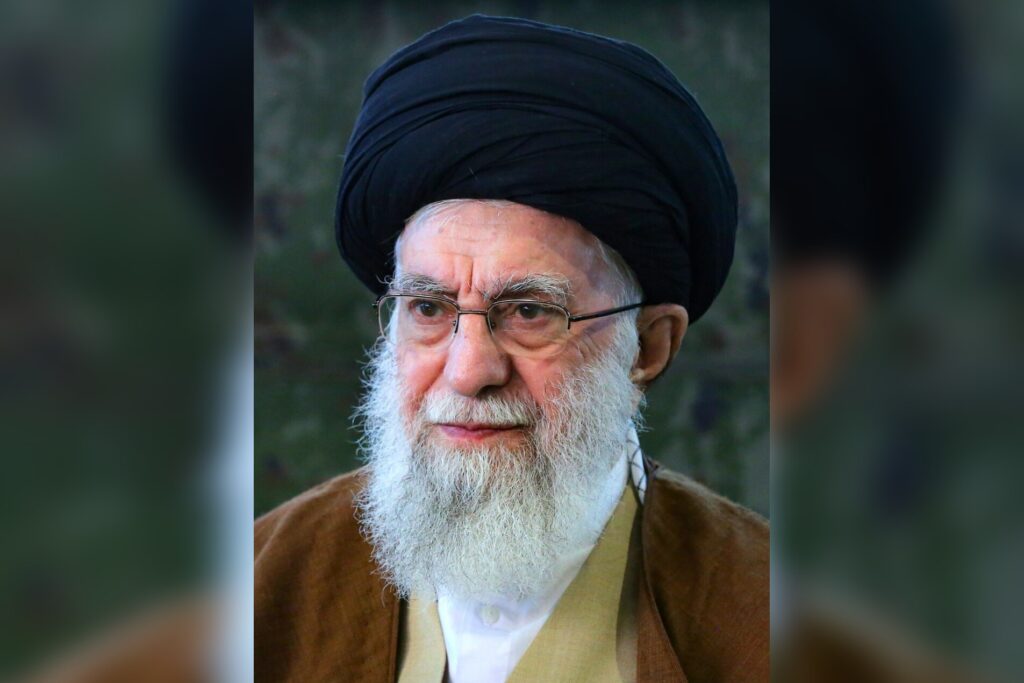
For households from Tokyo to Jakarta, the price of gasoline and the stability of supply lines often trace back to one man in Tehran: Ali Khamenei, Iran’s Supreme Leader since June 4, 1989. His three-decade-plus tenure has made him the defining figure of the Islamic Republic’s foreign policy, a position that carries enormous weight for global energy markets. Khamenei holds final authority over Iran’s nuclear program, its military, and its diplomatic strategy.
That concentration of power has fueled tensions that ripple through the Strait of Hormuz, a narrow waterway that carries a significant portion of the world’s oil. For economies from the Philippines to Japan, which depend on steady shipments through the strait, Khamenei’s decisions are not abstract policy debates but direct factors in everyday costs.
Born April 19, 1939, in Mashhad, Iran, Khamenei rose through the ranks of the Islamic Revolution. He studied Shia theology in Qom under Ruhollah Khomeini, the revolution’s founder. He opposed the monarchy of Mohammad Reza Pahlavi, was arrested multiple times, and was briefly exiled in the 1960s.
After the 1979 Islamic Revolution, he held key posts, including the presidency during the Iran–Iraq War. When Khomeini died in 1989, the Assembly of Experts chose Khamenei as supreme leader, though he initially lacked the highest clerical rank required by the constitution.
The Assembly later amended the rules and formally installed him, solidifying his authority. He is now the second and longest-serving Supreme Leader in Iran’s history.
Nuclear advances and the Strait of Hormuz
Khamenei’s tenure has seen a significant expansion of Iran’s nuclear capabilities. After the United States withdrew from the Joint Comprehensive Plan of Action in 2018, Iran’s uranium enrichment program accelerated. By February 2025, the International Atomic Energy Agency reported that Iran had reached 84% purity in its enrichment efforts.
That figure, just short of weapons-grade, raised alarms across the international community and deepened the sense of crisis for nations dependent on stable oil flows through the Strait of Hormuz. Khamenei has consistently supported the Islamic Revolutionary Guard Corps’ role in the Strait of Hormuz, a vital chokepoint for global energy supplies.
In 2019, he stated that Iran would “close the strait if necessary.” The IRGC, which he oversees, has an estimated 190,000 personnel and controls the approaches to the strait. For families across Asia, where many economies rely on oil shipments passing through these waters, such threats are not abstract policy debates — they are potential disruptions to daily life and livelihoods. Khamenei has repeatedly called for the destruction of Israel and, since 2018, has opposed direct negotiations with the United States.
His office issued a statement in response to a toll announcement on March 18, 2025, characterizing it as “economic warfare” and threatening retaliation. That language signals a leadership unwilling to de-escalate even as global pressure mounts.
Survival, succession, and regional consequences
Khamenei survived an assassination attempt in 1981 and has been under U.S. sanctions since 2019. His health has been a subject of speculation, with reports in 2024 indicating he underwent prostate surgery.
Questions about succession have lingered, and rumors have circulated that his daughter, Mojtaba Khamenei, is a potential successor. For now, the leader remains firmly in control, shaping Iran’s confrontational path. Domestically, Khamenei promoted privatization and positioned Iran as a major energy player, while reinforcing the IRGC’s dual role as both a military force and internal enforcer.
His foreign policy, rooted in Shia Islamism and opposition to Western influence, has seen Iran become a regional power, backing allied groups across multiple conflicts and maintaining a confrontational stance toward Israel. For communities across the region, the question is what comes next.
Khamenei’s hardline stance on the nuclear program, his support for the IRGC, and his refusal to engage with the United States all point to continued instability. The Strait of Hormuz, a narrow waterway that carries a significant portion of the world’s oil, remains a flashpoint. Families from Japan to the Philippines, who have seen fuel prices spike during previous tensions, are watching closely.




