
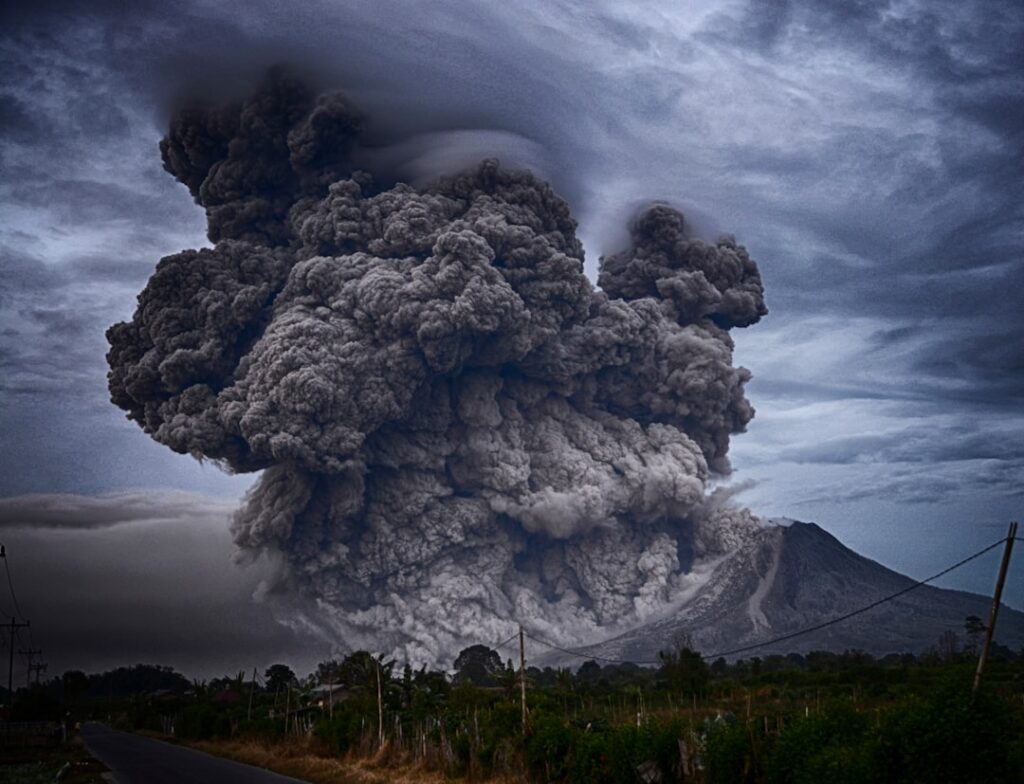
A volcano in Ethiopia’s Afar Region that had remained silent for nearly 12,000 years erupted on November 23, sending ash plumes across the Red Sea and causing widespread flight disruptions throughout the Arabian Peninsula. The Hayli Gubbi volcano, a shield type located in the Erta Ale Range, has created a regional crisis as ash drifts over Oman and Yemen, forcing airlines to cancel and reroute flights.
Travelers heading to or from the Arabian Peninsula and South Asia face delays and cancellations as carriers burn extra fuel navigating around the ash plume. The full economic cost of the disruptions has not yet been calculated. Scientists had long known the volcano could erupt. Studies conducted in 1969 and 1970 identified lava flows on Hayli Gubbi’s southern flank that had overflowed rock formations approximately 8,200 years old.
Dr. John Taylor, a geologist at the University of California, noted that these findings indicated the volcano had erupted sometime after the 8,250-year mark. However, researchers had no data on the timing or frequency of past eruptions.
The current event provides scientists with their first opportunity to study the volcano in real time. Researchers are collecting data on ash volume, lava chemistry, and gas emissions as they work to understand what triggered the awakening and what might come next—whether further eruptions or a return to dormancy. Public health concerns have emerged alongside the aviation crisis.
Dr. Maria Rodriguez, a public health expert at the World Health Organization, has advised people in affected areas to wear masks and stay indoors when possible. In parts of Oman and Yemen, ash and debris have settled on streets, roofs, and water supplies, creating additional challenges for residents.
Dr. Sophia Patel, a volcanologist at the University of London, described the eruption as a significant event. The Afar Region sits at a triple junction where three tectonic plates pull apart, making it geologically active, but Hayli Gubbi had been dormant with no direct records of previous eruptions. The 1969 and 1970 studies provided the only clues about its past activity.
The volcano remains active, and the ash plume continues to drift. The WHO’s advice stands: masks help, staying indoors helps, and waiting is the only option for those in affected areas.
The volcano that built up pressure for 12,000 years released it over a matter of days, and the fallout continues to spread.




