
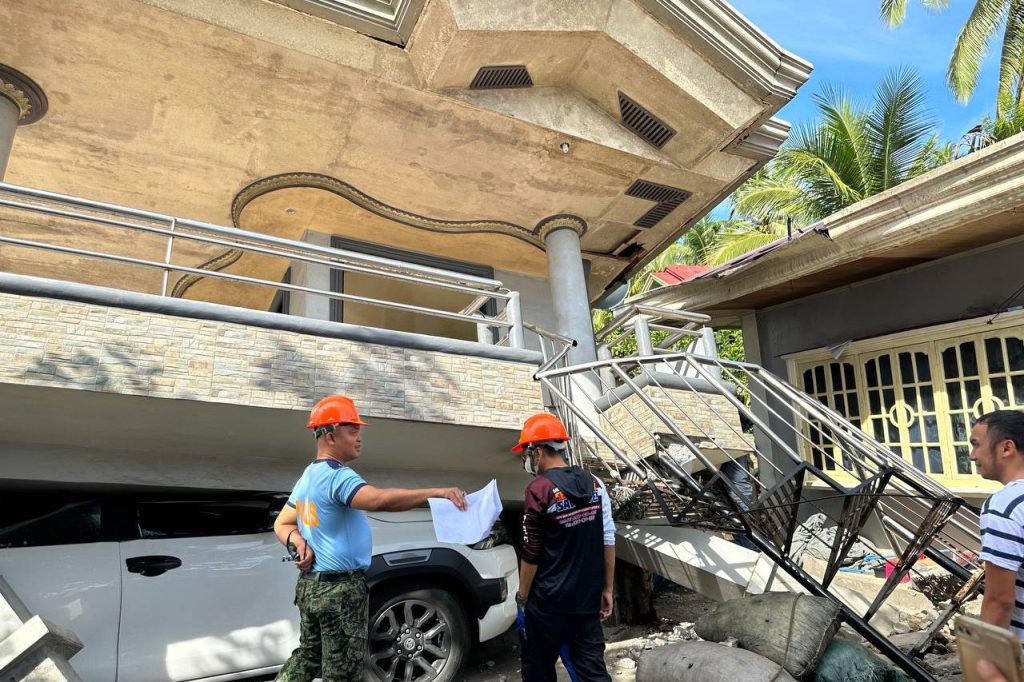
SARANGANI, Philippines, July 25 — A magnitude 5 earthquake struck 57 km south of Sarangani, Philippines, at 06:46 UTC on July 25, 2026, according to the U.S. Geological Survey (USGS). The quake occurred at a depth of 52.163 km, placing it in the shallow category, as events less than 70 km deep typically produce stronger shaking at the surface than deeper earthquakes of the same magnitude. No tsunami warning was issued.
The epicenter lies in one of the most seismically active zones on the planet. USGS records show that within a 300 km radius of this location, at least 500 earthquakes of magnitude 5.0 or greater have been recorded over the past two decades.
The largest during that period was a magnitude 7.8 earthquake—also in 2026.
Event Details
At magnitude 5, this earthquake is considered moderate. Seismologists classify magnitude 5 events as capable of causing minor to moderate damage near the epicenter, depending on local building standards and ground conditions. The shallow depth, however, means the energy release was concentrated closer to the surface, raising the potential for more noticeable shaking in the immediate area.
The USGS detected the earthquake in real time through its global seismic monitoring network, a system that continuously tracks ground motion worldwide. The agency’s automated systems quickly calculated the location, depth, and magnitude, enabling rapid dissemination of information to emergency managers and the public.
Seismic Context
The Philippines sits along the Pacific Ring of Fire, an arc of intense tectonic activity stretching from Japan through Southeast Asia and across the Pacific. The region around Sarangani is no exception. The record of more than 500 magnitude 5-plus earthquakes in the past two decades underscores the persistent seismic hazard.
The occurrence of a magnitude 7.8 quake earlier in 2026 highlights the capacity for far more powerful events in the same fault systems. The current earthquake, while smaller, follows a pattern of ongoing stress release in the crust.
Seismologists note that aftershocks are common after a magnitude 5 event. Such secondary shakes can continue for days or weeks, and authorities advise local populations to remain alert for further shaking. Buildings already weakened by the initial quake may be vulnerable to aftershocks.
Looking Forward
The USGS continues to monitor the region. While no immediate reports of casualties or damage have been confirmed, the agency’s data provides a foundation for local disaster response. The earthquake’s moderate size and depth may have limited its destructive reach, but the history of the area demands caution.
Residents in communities near the epicenter—including those in Sarangani Province and nearby coastal towns—are generally advised to be prepared for aftershocks and to follow guidance from local officials. The precise geological consequences of the event will be analyzed in the coming days as seismologists examine the rupture mechanics and any subsequent seismic activity.
This is a developing story. Further updates will follow as more information becomes available from the USGS and other monitoring agencies.




