
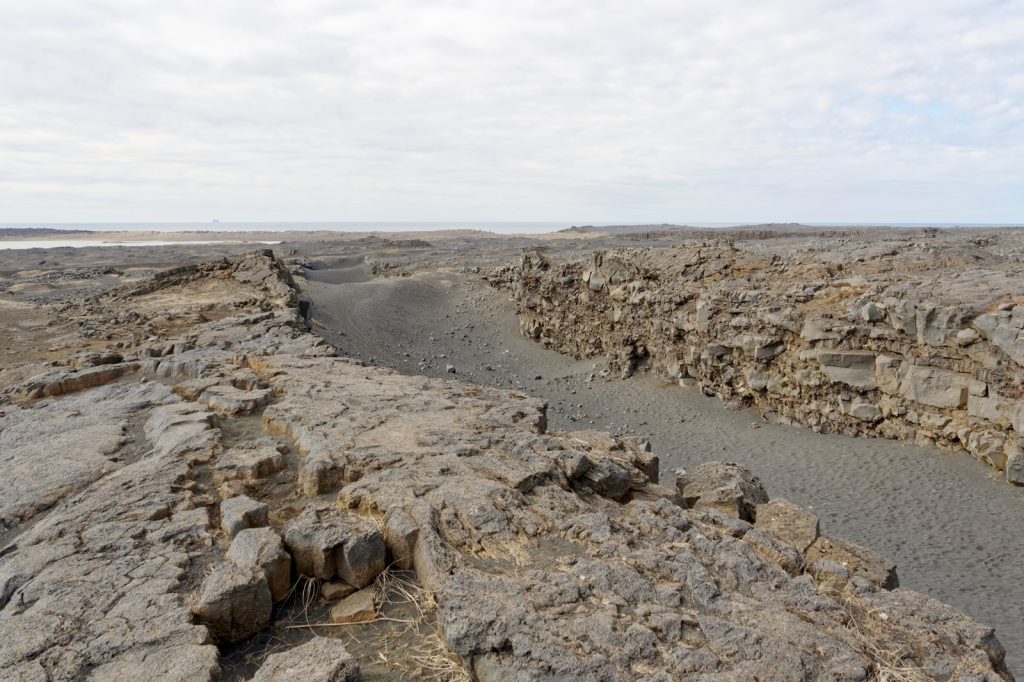
The Reykjanes Ridge is a place where the Earth’s crust is actively pulling apart. Tuesday morning, it did so with a jolt. A magnitude 5.3 earthquake struck at 05:55 UTC, the U.S. Geological Survey reported.
The quake was shallow — only 10 kilometers down. That matters.
Shallow earthquakes shake harder. No tsunami warning came. The USGS picked it up on its global monitoring network, which tracks seismic activity in real time.
The network gave a quick location and magnitude estimate. That speed is critical for a region like this one, where the ground is rarely still for long.
The Reykjanes Ridge is part of the Mid-Atlantic Ridge system. Tectonic plates here are spreading apart. That spreading generates earthquakes.
Most are small. Some are not. Over the past two decades, at least 45 quakes of magnitude 5.0 or greater have hit within about 300 kilometers of Tuesday’s epicenter.
The largest among them was a magnitude 5.9 event in 2019. Tuesday’s quake was smaller, but still in the moderate range.
Earthquakes of this size can cause minor to moderate damage near the epicenter. How much depends on local building standards and how many people live there. At a depth of 10 kilometers, this was a shallow earthquake.
Seismologists classify anything less than 70 kilometers deep as shallow. The shallower the quake, the stronger the shaking at the surface.
That is basic physics. The energy has less rock to travel through before it hits the ground above. Aftershocks are common after a quake this size.
They can continue for days or weeks. People in the area are generally advised to prepare for more shaking. That is standard advice for any seismic event of this magnitude.
The ground does not always settle quickly. The July 7 event adds to a long pattern of sustained seismic activity along the Reykjanes Ridge.
The ridge is not quiet. It is a place where the planet’s outer shell is constantly being reshaped. The spreading process is slow but relentless.
It produces a steady drumbeat of small to moderate earthquakes. Tuesday’s quake was not a freak occurrence.
It was part of that drumbeat. The 2019 magnitude 5.9 quake stands as the largest recorded in the region over the past two decades. Tuesday’s 5.3 was smaller, but it was still a reminder that the ridge is active.
The USGS data show that quakes of this size are not unusual here. For those on the ground, the experience would have been a sudden, sharp shake. A shallow 5.3 can rattle buildings.
It can knock items off shelves. It can crack walls.
It is not a catastrophic event, but it is not a minor one either. The shaking is real. The aftershocks that follow are real.
The Reykjanes Ridge is remote. That limits the human impact.
But the seismic activity there is closely watched. The USGS network provides continuous coverage. It allows scientists to track patterns and issue warnings when needed.
Tuesday’s event was detected quickly. The information was released rapidly. That is how the system works.
No tsunami warning was issued. That was the right call.
The quake’s location and depth did not pose a tsunami risk. The focus now is on aftershocks. They will come.
They always do after a 5.3. Some will be small.
Some might be larger. The region is used to it. The ridge is used to it.
The spreading continues.




