
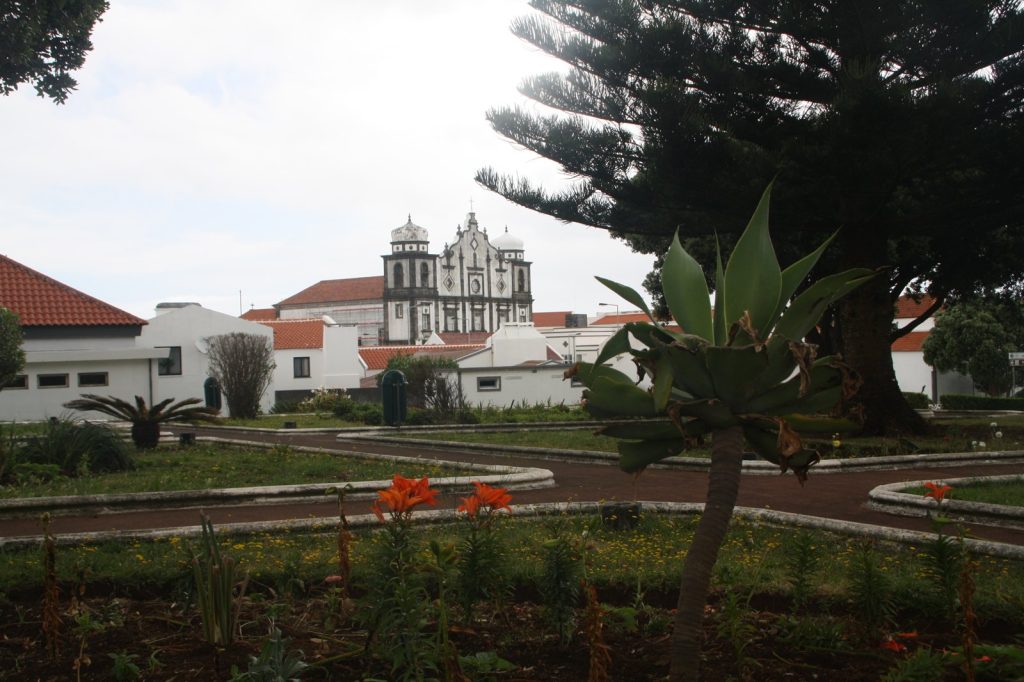
SANTA CRUZ DAS FLORES, July 21 — The remote mid-Atlantic archipelago of the Azores felt the earth move again on Tuesday afternoon, as a magnitude 5.3 earthquake struck 132 kilometres east-northeast of Santa Cruz das Flores, Portugal, at a depth of just under seven kilometres. The U.S. Geological Survey recorded the event at 13:13 UTC, placing the epicentre well offshore in the seismically restless zone that marks the triple junction of the North American, Eurasian and African tectonic plates. No tsunami warning was issued.
At 6.736 kilometres deep, this was a shallow earthquake. Seismologists note that events shallower than 70 kilometres typically transmit far more energy to the surface than deeper ones of the same magnitude.
For communities nearest the epicentre, that means the shaking — though moderate in absolute terms — would have arrived abruptly and with considerable force. Against this backdrop, the numbers tell a story of a region accustomed to tectonic activity. At least 32 earthquakes of magnitude 5.0 or greater have been recorded within roughly 300 kilometres of this area over the past two decades.
The strongest among them was a magnitude 5.5 event in 2009. A magnitude 5.3 earthquake sits in the moderate range on the seismic scale.
Such events are capable of causing minor to moderate damage near the epicentre — cracked walls, broken windows, dislodged objects — though the remote oceanic location of this particular tremor likely spared any inhabited areas the worst of its effects. What is at stake in the days ahead is the familiar pattern of aftershocks. Earthquakes in this magnitude range commonly produce a sequence of smaller tremors that can persist for days or even weeks.
People in the wider region are generally advised to remain prepared for further shaking as the crust adjusts to the sudden release of stress. The U.S. Geological Survey detected the event through its real-time global seismic monitoring network, a system that tracks earthquakes as they happen anywhere on the planet. The agency’s rapid reporting allows scientists and local authorities to assess the likely impact within minutes of an event.
The wider picture for the Azores is one of continuous, low-level seismic unrest. The islands sit astride the Atlantic’s most active plate boundary, where the Mid-Atlantic Ridge pushes new crust westward even as old crust subducts beneath the Eurasian margin.
This geological reality means that for residents of the western Azores, tremors are less a matter of if than of when.




