
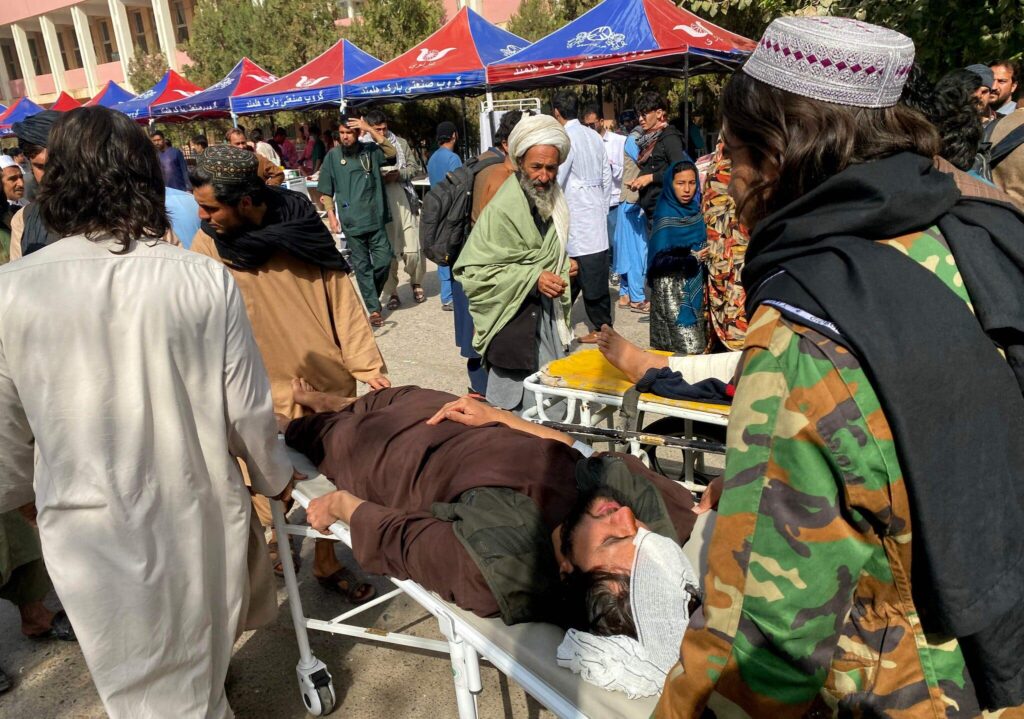
A 6.3-magnitude earthquake struck Afghanistan’s Herat Province on October 15, 2023, killing four people and injuring more than 150. The quake hit a region already reeling. Just days earlier, a series of earthquakes had killed over 1,000 people in the same area.
The difference in death tolls — four versus more than 1,000 — tells two stories. One is about the raw power of the ground shaking.
The other is about what happens when a disaster strikes a place that has already been broken open. The October 15 quake registered a 6.3 on the moment magnitude scale. That scale measures the size of an earthquake by calculating the seismic moment — the total energy released.
It is logarithmic. A jump from one whole number to the next means about 32 times more energy.
A 6.3 is a strong quake. It can topple buildings. It can kill.
But it did not kill 1,000 people. The earlier series of quakes, also reported as 6.3 magnitude, did. The difference was not the number on the scale.
It was the condition of the ground and the buildings when each quake hit. The first series struck unprepared ground.
Buildings collapsed. Rubble buried people. The death toll climbed past 1,000.
Then, days later, the October 15 quake hit the same province. The ground was already unstable.
Structures were already damaged. Some were piles of debris. But many people had already fled, or were living in tents, or were too afraid to go back inside.
The four killed and 150 injured were not the result of a weaker quake. They were the result of a population already displaced and a landscape already shattered. The moment magnitude scale was developed in 1979 by Thomas C.
Hanks and Hiroo Kanamori. It replaced the older Richter scale as the authoritative measure for ranking earthquakes, though media reports often still use the term “Richter scale.” The scale itself is a tool.
It tells scientists and responders how much energy was released. It does not tell them how many people will die. That depends on where the energy is released, what is in its path, and what condition that path is in.
Herat Province is now a test case for that reality. The international community is rallying to provide support.
Medical supplies, food, and shelter are flowing in. Local resources were overwhelmed after the first wave of quakes. After the second, they are stretched even thinner.
The aid is essential. Without it, the four dead and 150 injured from October 15 could easily become more. A third quake, even a smaller one, could hit a population with no shelter, no clean water, and no medical care.
The death toll would not reflect the magnitude. It would reflect the absence of aid.
The region faces a long recovery. The ground is still seismically active. The people are still vulnerable.
The numbers from October 15 — four dead, 150 injured — are not the final measure of the disaster. They are a measure of what was left after the first catastrophe.
The real question is what happens next. Another quake could come. Aid could slow.
The scale could read the same number, but the outcome could be very different.




