
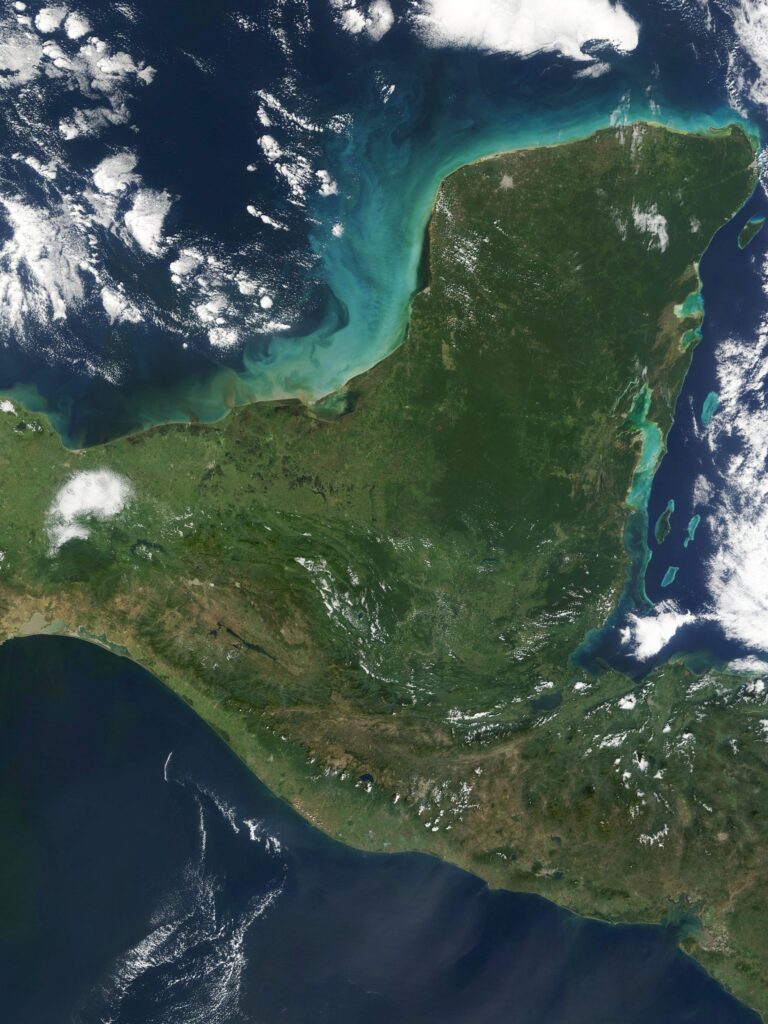
On July 5, 2024, Hurricane Beryl made landfall on Mexico’s Yucatán Peninsula, bringing threats of severe damage and disruption to the region. The storm arrived after already claiming 12 lives across the Caribbean, prompting emergency services and relief teams to remain on high alert as residents prepared for the worst. The Yucatán Peninsula, a low-lying area in southeast Mexico covering roughly 181,000 square kilometers, is composed almost entirely of porous limestone. This geological characteristic makes the region particularly vulnerable to flooding and storm surges.
The peninsula hosts a variety of ecosystems, including dense jungle and coastal wetlands, raising concerns about the storm’s potential impact on these sensitive environments, as well as on local infrastructure and communities. As Hurricane Beryl moved ashore, it passed through the Yucatán Channel, which separates the Gulf of Mexico from the Caribbean Sea.
This geographic positioning leaves the peninsula exposed to powerful winds, heavy rainfall, and storm surges from such storm systems. To the west lies the Isthmus of Tehuantepec, the peninsula’s narrowest point, which also makes the area susceptible to storms developing in the Pacific and moving eastward. In the aftermath of Hurricane Beryl, attention has turned to the importance of preparedness for severe weather events and the need for sustainable, resilient infrastructure.
The storm’s deadly impact in the Caribbean, where it killed 12 people, underscores the destructive force of such systems. As damage assessments begin and affected communities receive aid, renewable energy sources—such as solar and wind—are being considered for their potential to support relief efforts and enhance energy security.
With declining costs, these technologies are becoming more viable for communities aiming to reduce reliance on fossil fuels and promote sustainable development. Rebuilding and recovery from Hurricane Beryl will require a coordinated push for sustainable development, investment in resilient infrastructure, and expanded use of renewable energy. The path forward involves addressing these challenges to create a future less vulnerable to severe weather and more capable of withstanding adversity.
International support, including financial and technical assistance, as well as knowledge sharing in disaster risk reduction and renewable energy, could play a key role in helping affected communities recover. As the Yucatán Peninsula and the broader Caribbean region begin to rebuild, the experience highlights the need for a commitment to sustainability, resilience, and the well-being of both people and the environment.
The recovery process is expected to be lengthy, but with focused effort, the region may emerge stronger and more prepared for future storms.




