
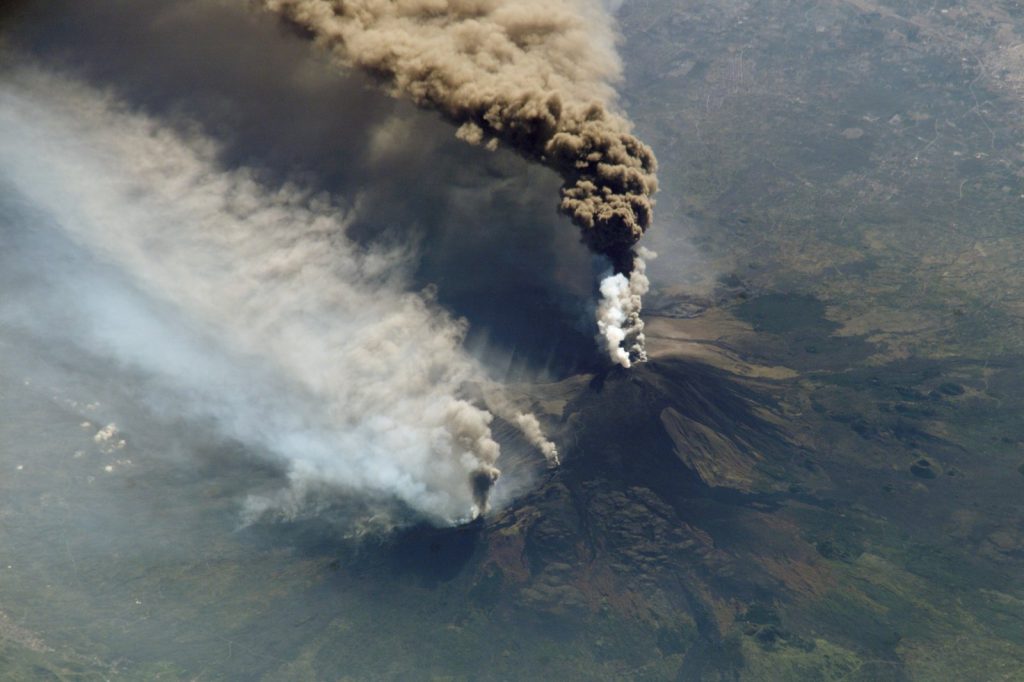
On 5 July 2024, the Italian island of Sicily experienced simultaneous volcanic activity at Mount Etna and Mount Stromboli. The eruptions were powerful enough to compel authorities to close Catania–Fontanarossa Airport for a short period, a move taken to safeguard passengers, airport personnel and aircraft from volcanic ash and debris.
Mount Etna, standing at 3,403 metres (11,165 feet), is one of Europe’s highest active volcanoes. Its position above the convergent boundary where the African Plate meets the Eurasian Plate makes it a persistent source of seismic and volcanic events. The volcano’s summit has been reshaped repeatedly; for instance, the southeastern crater measured 3,357 metres (11,014 feet) in 2021, while the Voragine crater surpassed that height after the summer eruptions of 2024. This ongoing growth reflects Etna’s dynamic nature, which has long influenced Sicily’s landscape.
Mount Stromboli, another of Sicily’s famed volcanoes, erupted alongside Etna on the same day, adding to the atmospheric load of ash, gases and rock fragments. The combined output raised immediate concerns for air travel, as volcanic ash can be ingested by jet engines, leading to severe damage and flight disruptions. Consequently, the rapid shutdown of Catania–Fontanarossa Airport was deemed a necessary precaution.
The environmental repercussions of the twin eruptions are significant. Ash fall and potential pyroclastic flows threaten the island’s fertile soils and diverse wildlife. Sicily’s countryside, renowned for its rich agricultural land, faces the risk of long‑term ecological damage if ash deposits persist. Authorities are monitoring air quality and deposition patterns to assess the extent of impact on both natural habitats and human activities.
Emergency response teams acted swiftly to implement the airport’s closure and evacuate travelers. The coordinated effort underscores the effectiveness of existing disaster‑preparedness plans in the region. By prioritising safety, officials have minimized immediate risks to people and infrastructure while allowing volcanic activity to be observed and managed.
Beyond the immediate crisis, the eruptions have reignited discussions about Sicily’s energy future. Experts point to renewable sources such as solar and wind power as pathways to reduce dependence on fossil fuels and enhance energy security. Investing in clean energy not only aligns with environmental goals but also offers economic advantages by providing reliable, cost‑effective power.
Looking forward, the dual eruption serves as a reminder of the need to protect natural landscapes while preparing for geological hazards. Continuous monitoring of Etna and Stromboli will remain essential, as will the reinforcement of emergency protocols for airports and other critical infrastructure. The episode highlights how swift, coordinated action can mitigate the disruptive effects of volcanic events on transportation and the broader community.
As Sicily recovers from the sudden volcanic activity, residents and observers worldwide will watch the unfolding situation closely, hoping for a rapid return to normalcy and a sustained commitment to sustainable practices that preserve the island’s unique natural beauty for future generations.




