
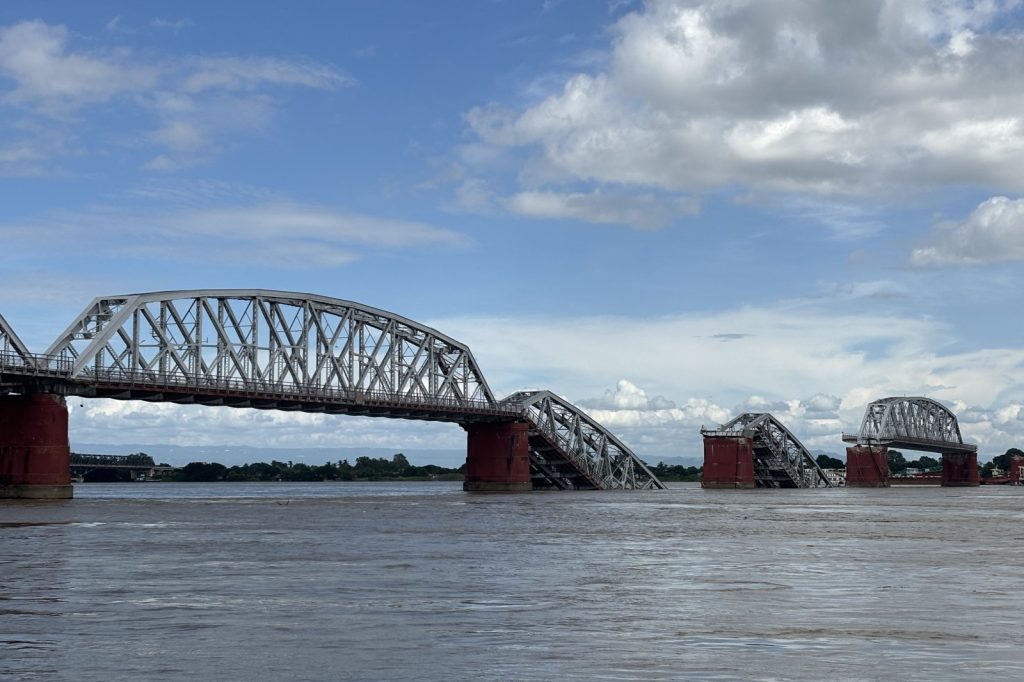
On 28 March 2025 a powerful earthquake struck Myanmar’s Mandalay Region, inflicting extensive damage on the nation’s infrastructure. Among the most visible impacts was the partial failure of the historic Ava Bridge, which spans the Irrawaddy River and links the towns of Ava and Sagaing. The damage has halted a key transport corridor, disrupting both local travel and commercial activity.
Built by the British in 1934, the Ava Bridge has long been a landmark of Myanmar’s engineering heritage. Destroyed during World War II, it was reconstructed in 1954 following the country’s independence and served for decades as the sole crossing over the Irrawaddy River.
Although newer structures such as the Irrawaddy Bridge—completed in 2008—have lessened its exclusive role, the Ava Bridge remains an important cultural symbol and a functional part of the regional road network. Initial assessments attribute the bridge’s partial collapse to severe ground fissures that opened around its foundations during the quake. These soil cracks, described by engineers as evidence of the earthquake’s magnitude, threaten further instability in the surrounding area and will require detailed geotechnical analysis before any repair work can proceed.
The interruption of traffic has immediate economic repercussions for communities that rely on the bridge for the movement of goods and people. At the same time, authorities are voicing concerns about possible environmental consequences, particularly the risk of pollutants entering the Irrawaddy River as a result of the structural damage.
Rescue and recovery teams have begun operations, emphasizing the need to protect the river’s ecosystem while clearing debris and assessing structural integrity. Officials stress that any reconstruction effort must incorporate measures to prevent contamination, safeguard wildlife habitats, and preserve the natural landscape surrounding the bridge. Rebuilding the Ava Bridge will demand a significant allocation of resources, including funding, materials, and technical expertise.
Yet the situation also presents an opportunity to adopt more sustainable design principles. Stakeholders are discussing the integration of renewable‑energy technologies and energy‑efficient construction methods, aiming to reduce reliance on fossil fuels and enhance long‑term resilience.
Achieving a balance between swift restoration of the transport link and the pursuit of environmentally responsible development will require coordinated planning among government agencies, local communities, and international partners. Collaborative efforts are expected to focus on minimizing waste, employing eco‑friendly building practices, and ensuring that the rebuilt bridge can better withstand future natural hazards. The collapse of the Ava Bridge serves as a stark reminder of the importance of reinforcing critical infrastructure against seismic threats. As Myanmar moves forward with recovery, the emphasis on sustainability and environmental stewardship could set a precedent for future projects across the country.
International aid and expertise are being mobilized to support the reconstruction, with a shared goal of delivering a bridge that not only restores connectivity but also aligns with broader objectives of clean energy use and ecological protection. The outcome of these efforts may become a model for resilient, green infrastructure development in Myanmar and the wider region.




