
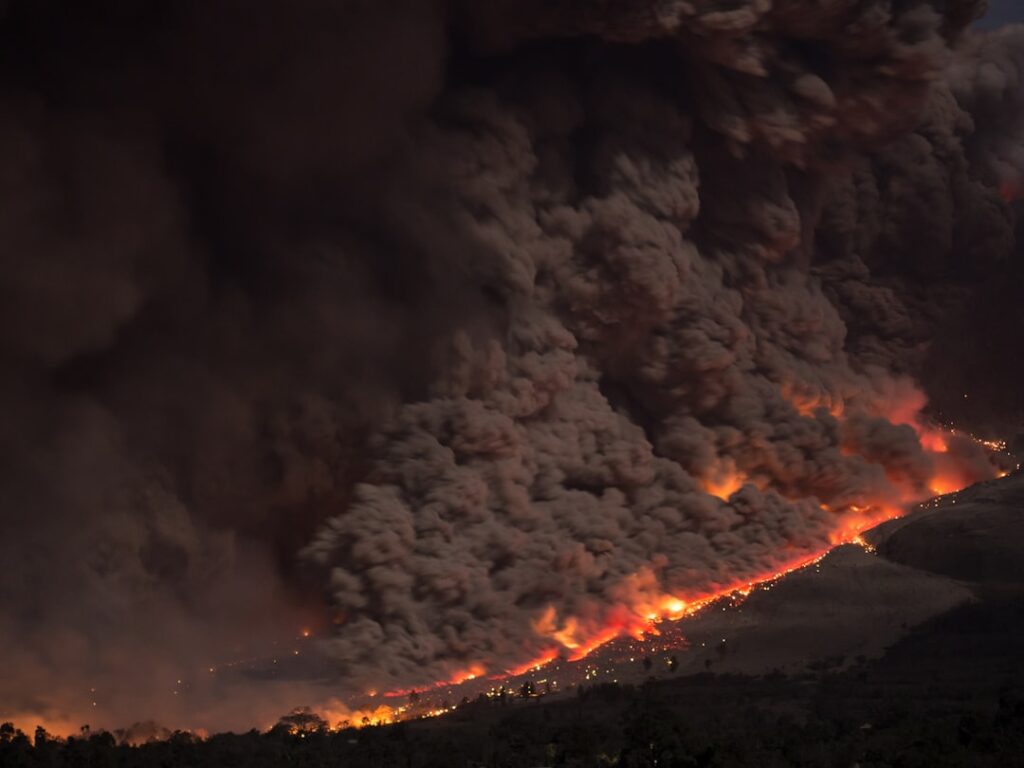
A wildfire that began on February 26 in the northeastern Texas panhandle and western Oklahoma is drawing intense scrutiny from emergency responders. The Smokehouse Creek Fire is not being treated as a routine grassland blaze.
Available assessments indicate the fire has the potential to become one of the most significant wildfires in recent history, a designation that is driving the current response strategy. The fire has already caused substantial damage in Hemphill and Roberts counties. The town of Canadian lies directly in the fire’s path.
However, the scope of the threat extends beyond any single municipality. The blaze is part of a broader outbreak of wind-driven wildfires sweeping across the Great Plains, a region made vulnerable by dry conditions and strong winds.
The Smokehouse Creek Fire represents the full realization of those dangerous conditions. While exact acreage figures are not provided in the report, the assessment of the fire’s trajectory is clear. Strong winds continue to push the flames forward.
Until containment efforts succeed, the fire will keep spreading. The equation is straightforward: more wind combined with more fuel produces more fire.
The only factor that can alter the outcome is the containment effort, which depends on the response from local authorities and emergency services. The report makes explicit that this response will be critical in determining the final result. Communities in the northeastern Texas panhandle and western Oklahoma are familiar with wildfire risks. The region is prone to such events, particularly when weather patterns turn dry and windy.
Familiarity, however, does not reduce the devastation when a fire arrives. The Smokehouse Creek Fire serves as a stark illustration of why prevention and management matter in these areas—a lesson being written in real time with real consequences.
The environmental toll is another significant concern flagged in the report. A fire of this scale does more than burn grass and trees. It alters the landscape, affects wildlife, and changes what regrows and how long that process takes.
For residents who live and work on that land, the effects will persist long after the flames are extinguished. This environmental damage is part of the significance the report warns about—not just immediate destruction, but long-term consequences.
The town of Canadian remains a focal point. The report does not specify how many homes have been lost or how many people have evacuated. The fact that a town lies in the path of a fire with this potential is sufficient to convey the gravity of the situation.
Residents are living through uncertainty, watching the wind, and waiting for updates on containment. That is the human reality behind the headlines.
This fire is not an isolated event. It is part of a larger pattern of wind-driven wildfires across the Great Plains, a reminder of the region’s vulnerability. The Smokehouse Creek Fire is the most dangerous example currently, but the conditions that allowed it to ignite and spread exist elsewhere.
The report frames this as a concern that should not be dismissed. The coming days will be decisive.
Containment efforts will either slow the fire or they will not. The potential for this to become a historic wildfire is real, based on what is happening on the ground. The Smokehouse Creek Fire is a test of preparedness, response, and resilience.
The outcome remains unwritten.




