
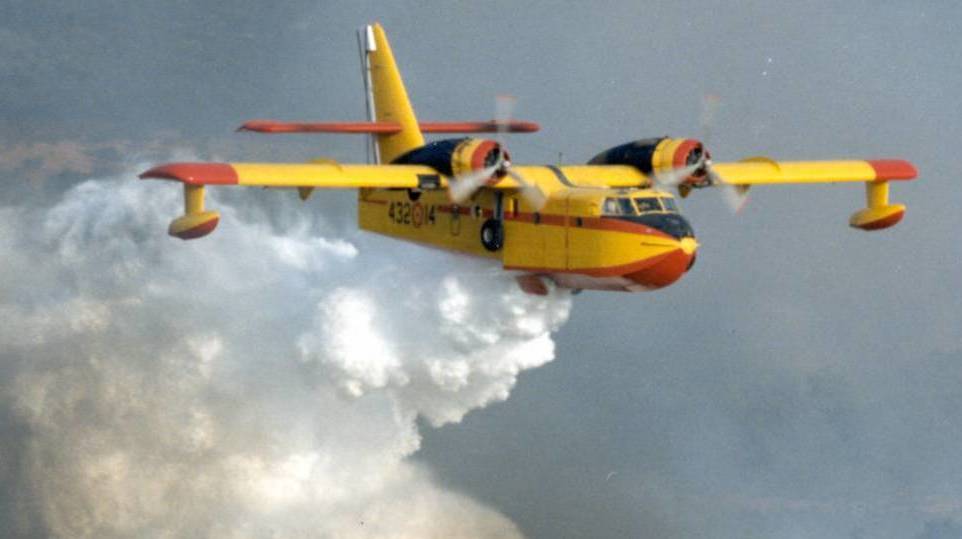
ROME, July 25 — Against the backdrop of another punishing wildfire season across southern Europe, the distinctive silhouette of the Canadair CL-415, known to many as the Super Scooper, has become a familiar sight over burning forests and parched hillsides. These amphibious aircraft, capable of scooping water directly from lakes and rivers, are a linchpin of aerial firefighting operations in France, Italy, and Spain. The CL-415 is the culmination of a design lineage that began with the CL-215, the first aircraft ever built specifically as a water bomber.
That earlier model entered service in 1966, and by May 1990, 125 examples had been built. In 1987, Canadair began retrofitting CL-215 airframes with Pratt & Whitney Canada PW123AF turboprop engines, a modification that delivered a power increase and improved reliability; those upgraded aircraft were designated CL-215T.
The success of the CL-215T program led to development of the CL-415, which first flew on 6 December 1993. Deliveries began in November 1994. By July 1996, 37 CL-415s were in service with operators in Canada, France, Italy, and Spain.
Starting in 1998, assembly took place at Bombardier’s facility near North Bay/Jack Garland Airport in Ontario, with testing on Lake Nipissing. Production continued until October 2015, when Bombardier closed the line after completing 95 aircraft.
During the 2010s, sales declined. Bombardier continued marketing and support beyond 2015.
A Proven Design, A Future Under New Ownership
In October 2016, Viking Air acquired the CL-415 program. The company now aims to produce an updated version, the De Havilland Canadair 515 (DHC-515), which would be built in Victoria and Calgary. That future model represents the continuation of a design philosophy that has proven its worth in demanding firefighting conditions.
The CL-415’s ability to skim across a lake, fill its tanks, and return to the blaze without landing has made it indispensable. Its role is not limited to firefighting; the aircraft is also used for search and rescue and utility transport.
European countries, particularly France and Spain, rely heavily on these machines during wildfire seasons, sometimes leasing or purchasing additional units to bolster their fleets. For nations along the Mediterranean, where hot, dry summers often turn forests into tinderboxes, the Super Scooper is more than a piece of aviation hardware — it is a critical tool in a recurring battle. The wider picture is that as fire seasons grow more intense, the demand for such specialised aircraft shows no sign of diminishing.
What is at stake is the ability to protect both natural landscapes and inhabited areas from the spread of uncontrollable blazes.
European Operators and the Road Ahead
France and Spain remain key operators of the CL-415, maintaining a capability that smaller countries often lack. The aircraft’s design, born from a Canadian manufacturer with roots in the 1960s, has found a lasting home in Europe’s firefighting fleets. In civil protection agencies, discussions continue about upgrading ageing airframes and securing new production slots for the forthcoming DHC-515.
The CL-415 program is now in a transition phase. Viking Air’s plans to build the DHC-515 in Victoria and Calgary signal a renewed commitment to the concept, but production has yet to ramp up.
For now, the existing fleet of 95 aircraft remains the backbone of amphibious aerial firefighting worldwide. As the 2026 fire season progresses, attention will be on how long these workhorses can keep flying, and whether the next chapter of the Super Scooper story will arrive in time.




