
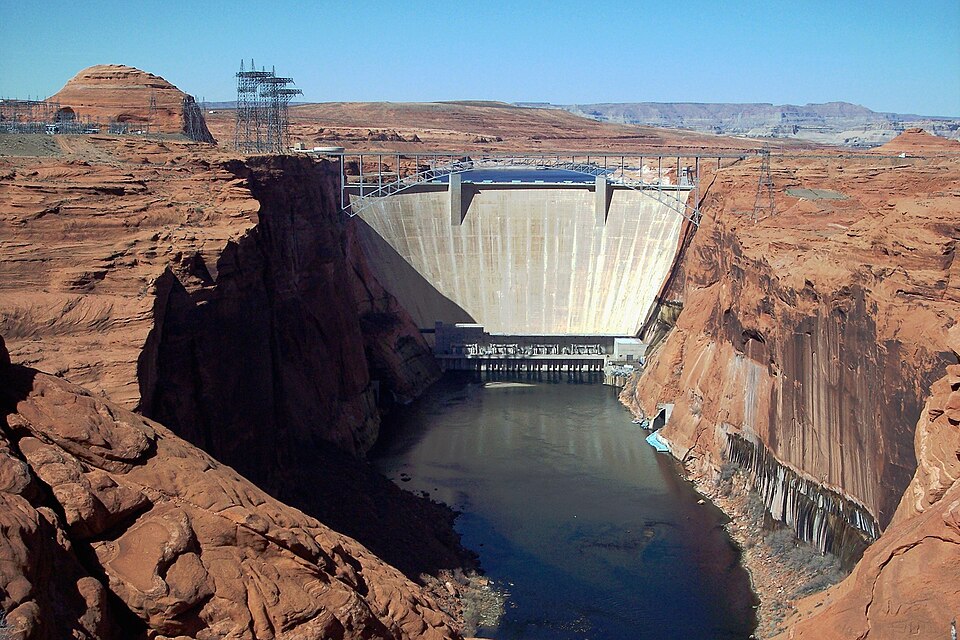
FLAGSTAFF, August 8 — Federal officials have decided against releasing cool water from Glen Canyon Dam this year, opting to safeguard hydropower generation over the survival of the threatened humpback chub in the Colorado River basin.
The Bureau of Reclamation, in an internal email obtained by The Associated Press, confirmed that no water would be discharged from the dam in northern Arizona, citing ‘significant hydropower generation concerns under already strained system conditions.’ The move underscores the growing tension between energy demands and ecological preservation as the Colorado River and its reservoirs continue to shrink under the dual pressures of overuse and a changing climate.
Glen Canyon Dam, a linchpin in the region’s power grid, has long balanced two competing priorities: keeping the lights on for millions and maintaining the delicate aquatic ecosystem downstream. The humpback chub, a native fish species, relies on cooler water releases to survive in an increasingly warm river system. But this year, as ever, the detail that matters is the tradeoff—and the tradeoff has swung decisively toward electricity.
The Colorado River basin, which supports over 40 million people across seven U.S. states, tribal nations, and Mexico, is reeling from its worst recorded snowpack. Farmers, industries, wildlife, and hydropower producers all depend on its dwindling flow.
With reservoirs at historically low levels, the Bureau’s decision reflects a hard calculation: the immediate need to stabilise energy costs for ratepayers outweighs the long-term risks to a single, if ecologically significant, species. States most exposed to the river’s vicissitudes—California, Colorado, and Arizona—are now grappling with the fallout. The announcement lands just a week after federal officials floated new measures to address the broader crisis in the Colorado River system, though specifics remain under wraps.
Under the hood
The mechanics of the decision are stark. Cool water releases from Glen Canyon Dam have, in the past, provided a thermal refuge for the humpback chub, mitigating the impact of rising river temperatures. But hydropower generation depends on a steady, controlled flow—and with the system already under strain, diverting water for ecological purposes is a luxury the Bureau appears unwilling to afford.
What’s not in doubt is the scale of the challenge. The Colorado River’s reservoirs, Glen Canyon among them, have been shrinking for years.
The basin’s snowpack, a critical source of replenishment, has hit record lows, leaving managers with a dwindling margin for error. Hydropower, a relatively stable and renewable energy source in the region, is now being prioritised not just for its economic value but as a bulwark against further instability in a grid that can ill afford it.
What comes next
The immediate focus will be on how the humpback chub fares without its usual reprieve from the heat. Conservation groups are likely to push back, arguing that the fish’s decline could have cascading effects on the river’s already fragile ecosystem. Meanwhile, energy providers will be watching the water levels—and the weather—closely.
Another dry winter could force even harder choices. For now, the message from the Bureau is clear: in a system stretched to its limits, some priorities must give way.
And this year, the humpback chub is on the losing side of the equation.




