
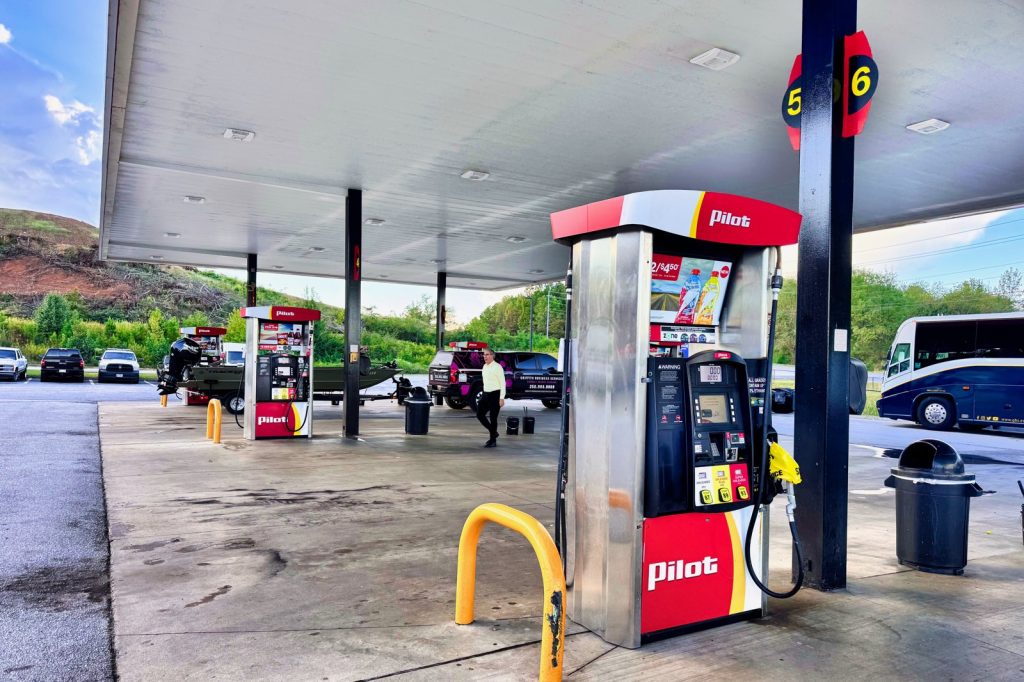
BUDA, September 14 — At a Pilot gas station off the interstate here, the diesel pump tells the story of a war half a world away. The national average price for diesel in the United States reached $6.23 per gallon as of September 14, 2026, according to a Getty Images caption from Buda, Texas — a figure attributed to the ongoing conflict involving Iran and disruptions around the Strait of Hormuz, which continue to strain global fuel production and transportation. The squeeze is not confined to American forecourts.
A separate Getty Images caption from Berlin, Germany, dated September 15, 2026, notes that petrol prices there have reached record high levels as oil supplies from the Middle East are hampered by the ongoing U.S.-Iran conflict.
Berlin promises counter measures
German Chancellor Merz announced on September 15, 2026, that his government will enact counter measures to alleviate the price shock for consumers. The announcement came the same day the Berlin caption recorded record petrol prices in the country. The pressure traces to the Middle East, where Houthi escalation is placing new strain on oil routes.
The Strait of Hormuz, the chokepoint through which a substantial share of the world’s seaborne crude moves, remains disrupted by the conflict involving Iran — a disruption that ripples through global fuel production and transportation and lands, eventually, on the price board at stations like the one in Buda.
The cost at Dover
The war’s toll is not measured only in dollars per gallon. A third Getty Images caption from Dover, Delaware, dated July 22, 2026, shows President Donald Trump and Secretary of War Pete Hegseth arriving for a dignified transfer at Dover Air Force Base for military casualties of the war with Iran. The caption names Army 1st Lt. Tyler James Feehan, Staff Sgt. Michael Emmanuel Swinton, Army Sgt. Angel S.
Rampersad, and Army Pvt. Isabella Gonzales.
For American drivers, the immediate question is whether the price at the pump keeps climbing. The Berlin record and the German government’s planned counter measures suggest European capitals are already treating the fuel shock as a crisis to be managed. In Washington, the focus remains the conflict itself.
What to watch next: whether the Strait of Hormuz disruption eases, and whether the Merz government’s counter measures — and any comparable steps on this side of the Atlantic — blunt the pass-through to consumers. By nightfall on September 15, the direction of travel was still upward.




