
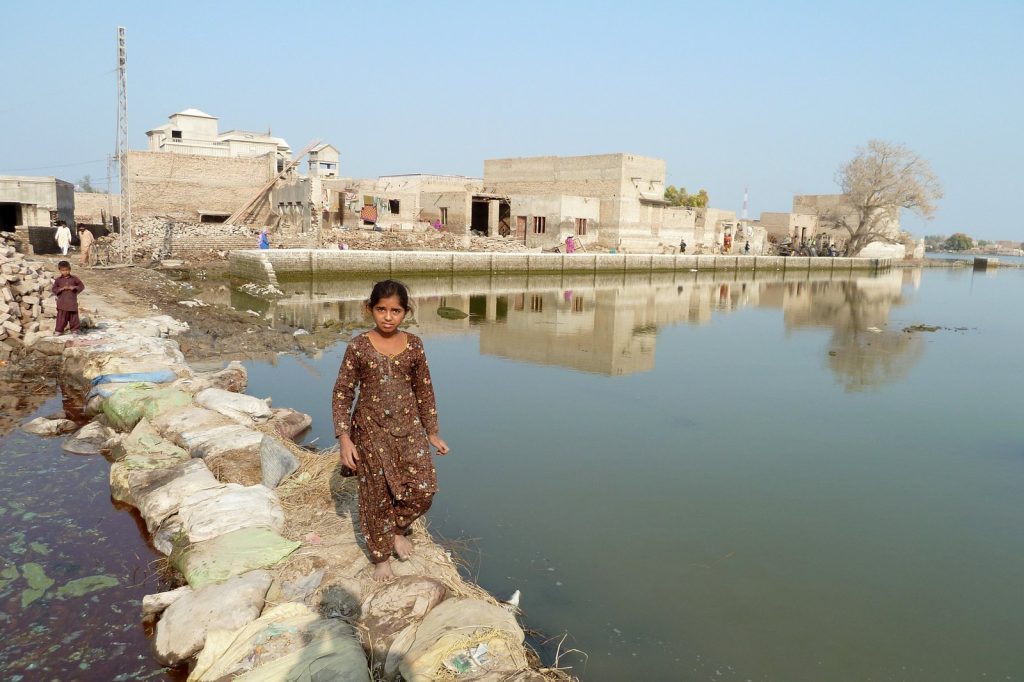
Early Warning Signs
Before the rains arrived, Pakistan endured a severe spring heat wave, with temperatures in some areas climbing above 50 °C. Scientists noted that this extreme heat sped up the melting of Himalayan glaciers, adding extra water to river systems.
Unprecedented Monsoon and Combined Effects
From mid‑June onward the monsoon delivered rainfall of an intensity and duration not seen in decades. The heavy rains combined with the accelerated glacier melt, causing rivers to overflow far beyond their usual banks.
The convergence of these two forces produced a flood that, according to the latest official count, claimed 1,739 lives and inflicted an estimated US$40 billion in damage.
Economic and Human Impact
The $40 billion loss places the 2022 event among the costliest natural disasters recorded worldwide. For a nation already facing economic strain, the financial blow is immense. Vast tracts of farmland were submerged, destroying crops, while roads, bridges and power lines collapsed. Officials acknowledge that recovery will require years, not months.
State of Emergency and Response
On August 25, 2022 the government declared a state of emergency. The declaration was more than procedural; it signaled that domestic resources were overwhelmed and that international assistance was urgently needed.
It authorized the mobilization of military units, the reallocation of funds and the coordination of evacuations. Despite these measures, responding was complicated by geography—floodwaters at their peak covered roughly one‑third of the country, displacing millions of people.
Immediate Causes and Climate Links
The direct triggers were heavier‑than‑usual monsoon rains that caused rivers to burst their banks, and the earlier heat wave that melted glaciers at an abnormal rate, feeding additional water into already swollen channels. Climate scientists have concluded that both phenomena are linked to a warming planet: warmer air holds more moisture, fueling intense rainfall, and higher temperatures accelerate glacial melt. Although Pakistan contributes only a tiny fraction of global greenhouse‑gas emissions, it found itself on the front line of these climate‑driven impacts.
Historical Context
The 2022 floods are now the deadliest since the 2020 South Asian floods and are described as the worst in Pakistan’s recorded history. By comparison, the 2010 flood killed about 2,000 people and caused roughly $10 billion in damage.
The recent event has already surpassed that economic toll by a factor of four. While the loss of life is lower than in 2010, the human toll remains catastrophic, with entire villages washed away and families losing all possessions.
Ongoing Relief Efforts
The state of emergency remains a central tool in the response, enabling the deployment of emergency services to the hardest‑hit provinces, particularly Sindh and Balochistan. Relief camps have been established, and food, clean water and medical supplies are being distributed. Nevertheless, the scale of need continues to outpace the aid arriving.
International organizations and foreign governments have pledged support, but a persistent gap exists between promised contributions and delivered assistance.
What Sets This Disaster Apart
What distinguishes the 2022 catastrophe from previous floods is the simultaneous occurrence of monsoon overflow and glacier‑melt‑induced swelling, both driven by the same underlying factor: a warming climate. This convergence created a disaster of extraordinary breadth and destruction.
Scientists warn that similar patterns will emerge elsewhere as climate change intensifies extreme weather events.
Long‑Term Consequences
For now Pakistan must reckon with the cost. The $40 billion figure will shape national budgeting, infrastructure planning and foreign policy for years to come.
The 1,739 lives lost will shape the nation’s collective memory. The state of emergency, a legal measure, reflects the gravity of the moment. Together these numbers tell a single story: a disaster that cannot be classified as natural in the traditional sense.




