
WASHINGTON, July 20 — The cell door clangs shut, and a citizen sits inside, not for a crime of violence or theft, but for the deliberate, public refusal to obey a law. This is the enduring image of civil disobedience, a tradition that threads through Western and global history from ancient Thebes to the streets of modern capitals.
It is the active, professed refusal to obey certain laws, demands, or commands of a government, and by many definitions, it must be nonviolent to earn the label ‘civil.’ Henry David Thoreau’s essay “Resistance to Civil Government,” first published in 1849 and later known as “Civil Disobedience,” gave the practice its popular name in the United States. But the idea predates Thoreau by millennia.
In Sophocles’ play “Antigone,” the title character defies King Creon’s decree, insisting she must follow her conscience rather than human law as she seeks to bury her brother. The Anabaptist Conrad Grebel also advocated civil disobedience against oppression in the 16th century, while Étienne de La Boétie theorized non-cooperation as a form of nonviolent disobedience in his 1552 work “Discours de la servitude volontaire ou le Contr’un.”
From the Glorious Revolution to the Peterloo Massacre
In the years leading up to England’s Glorious Revolution—when the Bill of Rights was documented, the last Catholic monarch was deposed, and joint monarchs were elevated—the English Midland Enlightenment developed its own method: voicing objection to illegitimate laws and accepting the consequences. This meant refusing to swear allegiance to the king and willingly going to prison. That same willingness to accept punishment became central to later movements.
After the Peterloo massacre of 1819, the poet Percy Shelley wrote “The Mask of Anarchy.” According to scholar Ashton Nichols, it is perhaps the first modern statement of the principle of nonviolent protest. That poem would later influence both Thoreau and Mahatma Gandhi’s doctrine of Satyagraha.
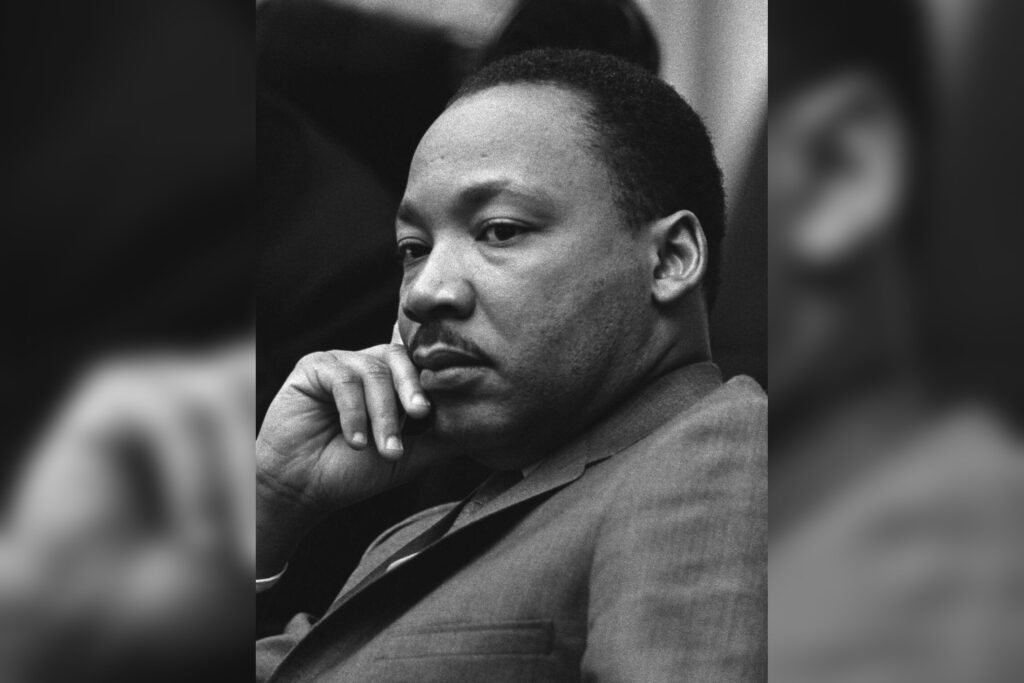
Historical figures who have carried the banner of civil disobedience include American women’s suffrage leader Susan B. Anthony in the late 19th century, Egyptian nationalist Saad Zaghloul during the 1910s, and Indian nationalist Mahatma Gandhi in 1920s British India, as part of the Indian independence movement. In the United States, Martin Luther King Jr. and James Bevel employed peaceful, nonviolent protests during the civil rights movement of the 1960s, often incorporating elements of civil disobedience.
King’s View: ‘The Very Highest Respect for the Law’
Although civil disobedience is rarely justifiable in court, King regarded it as a display of reverence for the law itself. “Any man who breaks a law that conscience tells him is unjust and willingly accepts the penalty by staying in jail to arouse the conscience of the community on the injustice of the law is at that moment expressing the very highest respect for the law out of all other freedom struggles,” King said.
That formulation—break the law, accept the penalty, stir the public conscience—remains the moral engine of the practice. By nightfall, the debate over the legitimacy and limits of civil disobedience continues in courtrooms, on editorial pages, and on sidewalks where protesters sit down or refuse to move.
The tradition endures, rooted in a single, stubborn conviction: that some laws must be openly defied to be changed, and that the penalty for that defiance is part of the argument. What comes next will likely depend on whether the next wave of protesters—those who invoke Thoreau, Gandhi, and King—can sustain that delicate balance between nonviolence and civil obligation.
Sources
{“@context”: “https://schema.org”, “@type”: “NewsArticle”, “headline”: “Civil Disobedience: From Antigone to Martin Luther King Jr.”, “description”: “WASHINGTON, July 20 — The cell door clangs shut, and a citizen sits inside, not for a crime of violence or theft, but for the…”, “datePublished”: “2026-07-20T09:30:00+00:00”, “author”: {“@type”: “Person”, “name”: “Isabella Moore”}, “publisher”: {“@type”: “Organization”, “name”: “InfoPulse Today”, “url”: “https://newsfeed.2bme.xyz/”}, “citation”: [{“@type”: “CreativeWork”, “url”: “https://en.wikipedia.org/wiki/Civil_disobedience”}]}




