
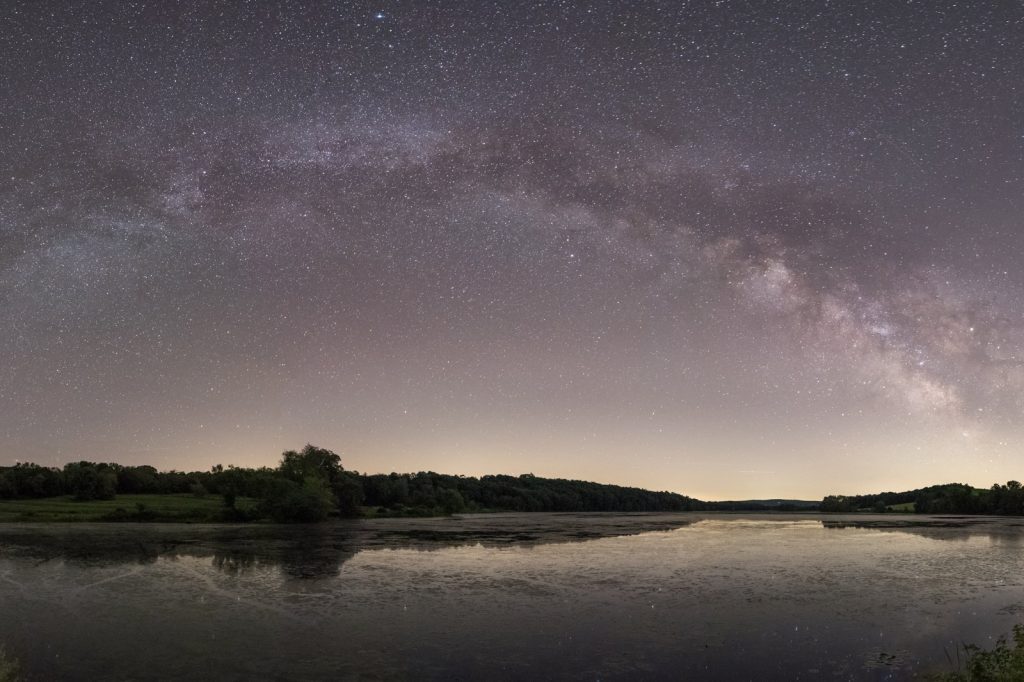
WASHINGTON, July 20 — An estimated 83 percent of the world’s population now lives under light-polluted skies. The bottom line: artificial light is reshaping the night faster than most people realize, and the shift carries measurable costs for health, ecology, and even the simple act of looking up. By the numbers, the trend is stark.
Light pollution globally increased at least 49 percent between 1992 and 2017, and another 16 percent between 2014 and 2022. In North America, 80 percent of people can no longer see the Milky Way from their own backyards.
About 23 percent of the world’s land area is now affected by skyglow—the diffuse haze of wasted light that washes out stars.
What drives the growth
Urbanization is the primary engine. More city lights, more inefficient fixtures, and more 24-hour activity mean the natural dark-light cycle is interrupted over vast areas. The problem includes specific categories: light trespass (unwanted light spilling onto neighboring property), over-illumination (lighting that is brighter than needed), glare, light clutter, and skyglow.
For meteor observation, the effect is direct: light pollution reduces visibility of stars and meteors, especially in dense urban zones. Astronomers and casual stargazers alike lose access to the night sky.
The health and ecosystem consequences are serious, though not always visible from a city street. Light pollution disrupts human sleep cycles and circadian rhythms. It also disorients wildlife—migrating birds, sea turtles, and insects that rely on natural darkness to navigate.
A problem with a long tail
Awareness of artificial light’s impact dates to the second half of the 19th century, with organized efforts beginning in the 1950s. The global dark-sky movement took institutional form in the 1980s. Solutions exist and are largely about better design: adjusting the angle of fixtures so light points downward, switching to efficient bulbs that produce less wasted illumination, and public education campaigns aimed at driving legislative change.
Policy that works
France cut its light pollution by 33 percent between 2014 and 2022. That drop shows that regulation—when paired with enforcement and public buy-in—can reverse a trend that otherwise keeps climbing. Political, social, and economic factors all come into play.
Lighting is tied to perceptions of safety, to commerce, and to municipal budgets. Reducing unnecessary lighting can also cut energy costs, but the trade-offs must be weighed street by street.
Investors will note that the market for efficient outdoor lighting and smart controls has room to grow. As more cities and countries adopt lighting ordinances, demand for fixtures that limit skyglow and glare will rise. What to watch next: whether the U.S. follows France’s lead with state or federal policy, and whether the 80 percent of North Americans who cannot see the Milky Way will start to push for change.
The data is clear. The night is shrinking.
Whether that matters enough to act may be the next story.
Sources
{“@context”: “https://schema.org”, “@type”: “NewsArticle”, “headline”: “Light pollution blocks night skies for 83% of world, threatens stargazing”, “description”: “WASHINGTON, July 20 — An estimated 83 percent of the world’s population now lives under light-polluted skies. The bottom line: artificial light is reshaping the…”, “datePublished”: “2026-07-20T09:30:00+00:00”, “author”: {“@type”: “Person”, “name”: “Ava Anderson”}, “publisher”: {“@type”: “Organization”, “name”: “InfoPulse Today”, “url”: “https://newsfeed.infopulsetoday.com/”}, “citation”: [{“@type”: “CreativeWork”, “url”: “https://en.wikipedia.org/wiki/Light_pollution”}]}




