
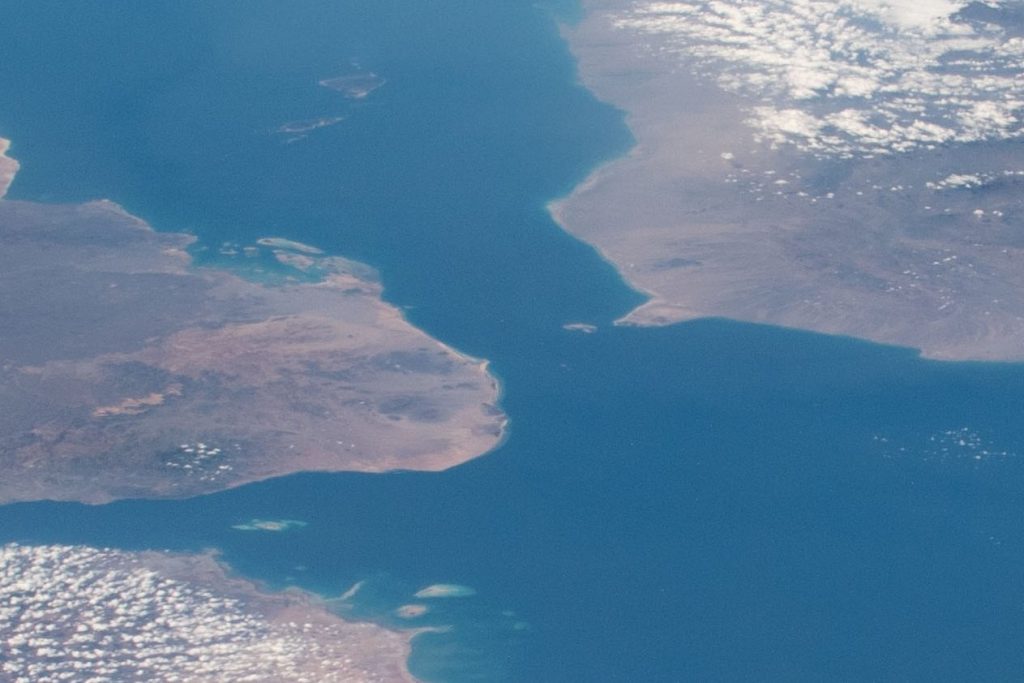
NEW DELHI, July 20 — Indian refiners, already navigating volatile crude markets, are bracing for a severe supply disruption if a sustained Houthi blockade of Saudi tanker traffic chokes the Bab el-Mandeb strait. Asia sources 20% of its crude imports via the Red Sea route, and the U.S. Congressional Research Service has estimated that a prolonged closure could reduce global oil supply by 5–6 million barrels per day, driving Brent crude above $150 per barrel.
Analysts note that India’s refineries—especially those on the west coast that depend on Saudi and Iraqi grades—would face immediate shortages. The impact would be felt most acutely across the Mediterranean and South Asia, where the Red Sea is a critical artery for seaborne crude.
Any extended blockage will hit Indian imports directly. We are already seeing the effects in higher freight costs and insurance premiums.
Historical context and price shocks
Brent crude, the global benchmark, has historically reacted sharply to Middle Eastern disruptions. During the 1973 oil crisis, prices quadrupled. In 1990, the Gulf War sent Brent from $17 to $35 per barrel.
The current scenario—a blockade that could last weeks or months—raises the prospect of a repeat of those shocks, magnified by a tighter global supply cushion. Europe, which sources 15% of its crude imports via the Red Sea, would also be squeezed.
But for Asia, the stakes are even higher. The continent’s refineries rely on the passage for a fifth of their total crude intake. Shipping data shows spot charter rates for supertankers have climbed since the blockade declaration, and insurance premiums for Red Sea voyages have risen as underwriters reassess risk.
Potential workarounds: pipelines, reserves, and releases
One immediate mitigation is Saudi Arabia’s East-West Pipeline, known as Aramco’s Petroline. The 1,200-km pipeline can carry 5 million barrels per day from the Eastern Province to Yanbu on the Red Sea, bypassing the Bab el-Mandeb. However, the line has been operating at 80% capacity due to delays in expansion, limiting its ability to fully compensate for lost tanker traffic through the strait.
The United States Strategic Petroleum Reserve, which held approximately 375 million barrels as of October 2023, could be tapped. The International Energy Agency may also activate a collective oil release, as it has done during past supply emergencies.
These measures, while providing temporary relief, would not replace a sustained loss of 5–6 million bpd from global markets. A prolonged crisis would accelerate two structural shifts: investment in alternative energy sources and expansion of non-OPEC production. U.S. shale added 1 million barrels per day in 2023, and further growth could help offset some of the shortfall, though it would take months to ramp up.
What to watch next
Market participants are now watching for signals from Riyadh regarding the status of the East-West Pipeline and potential rerouting of tanker traffic around the Cape of Good Hope. Any diplomatic breakthrough in the Red Sea region could quickly deflate prices, but the current trajectory points to sustained pressure on Brent crude and on supply chains that connect Asia to Middle Eastern producers. For India, the coming weeks will test the resilience of both its strategic crude reserves and its ability to negotiate alternative supply deals.
The blockade’s impact will be felt not just in benchmark prices but in the daily operations of refiners.




