
WASHINGTON, July 25 — Light pollution has escalated into a global environmental crisis that now affects the overwhelming majority of humanity, according to established data. Strategically, the issue cuts across energy policy, public health, ecological stability, and even national security — though its geopolitical dimensions are often overlooked. The calculus is stark: 83 percent of the world’s population lives under light-polluted skies, and 23 percent of the planet’s land area is now bathed in artificial skyglow.
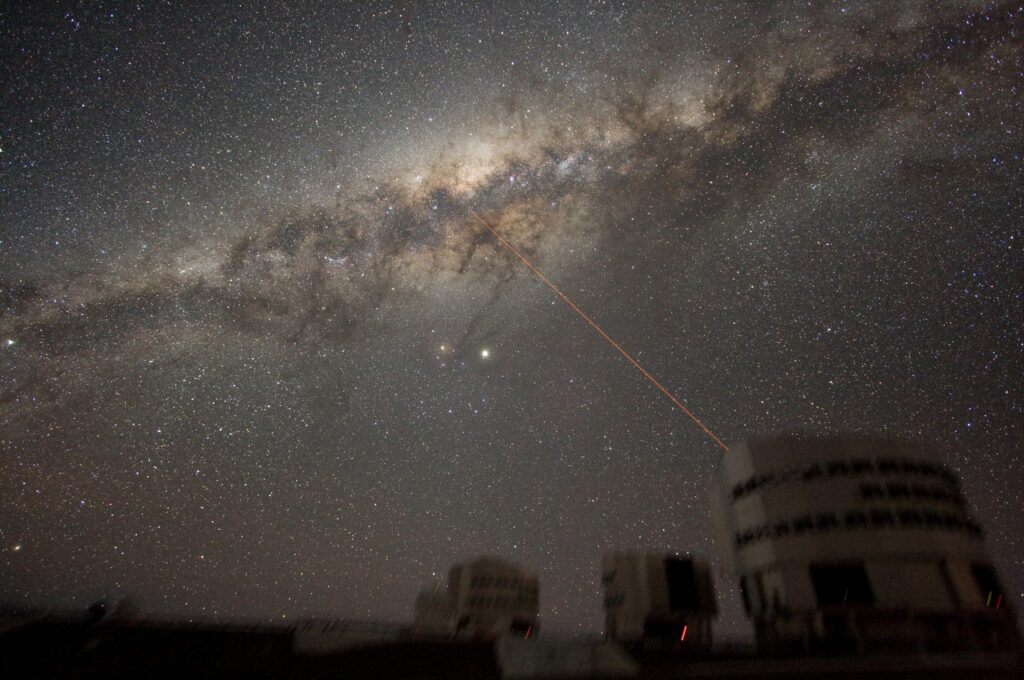
In North America, 80 percent of residents can no longer see the Milky Way galaxy from their homes. Globally, light pollution increased by at least 49 percent between 1992 and 2017, and by another 16 percent from 2014 to 2022.
What this signals is a steady intensification of a problem that was first recognized in the second half of the 19th century, yet only began to see organized action in the 1950s. The broader stakes involve not just astronomy or aesthetics, but the operational effectiveness of energy infrastructure and the health of entire ecosystems.
A Global Problem With Regional Variance
The most severely affected regions are the highly industrialized and densely populated areas of North America, Europe, Asia, and major Middle Eastern and North African cities such as Tehran and Cairo. Yet the trend is not uniform. France, for instance, bucked the global pattern by reducing its light pollution by 33 percent during the 2014-2022 period through targeted policy measures.
That divergence underscores the importance of legislative will — and highlights the political nature of the problem. Light pollution takes several distinct forms: light trespass, where unwanted artificial light spills onto neighboring properties; over-illumination, using more light than necessary; glare, which reduces visibility; light clutter, the excessive grouping of lights; and skyglow, the diffuse brightening of the night sky over populated areas.
A single source — like a poorly shielded streetlamp or an illuminated sports venue — often falls into multiple categories simultaneously. The effects are magnified at night, when natural darkness is most starkly altered. The sources are ubiquitous: building exterior and interior lighting, streetlights, advertising displays, car parks, and illuminated sporting venues.
Even remote, mountainous regions are not immune. Because of the contrast between dark skies and even small amounts of artificial light, the impact there is often more noticeable than in already-bright urban cores.
The Toll on Health, Ecosystems, and Aesthetics
Light pollution is blamed for compromising human health — disrupting circadian rhythms and sleep patterns — as well as disrupting ecosystems. Nocturnal animals, migratory birds, and insects depend on natural light-dark cycles; artificial lighting can alter feeding, mating, and navigation behaviors. The aesthetic environment is also spoiled: the loss of starry night skies erodes cultural heritage and scientific inspiration.
The global dark-sky movement emerged in the 1980s. Since then, awareness has grown, but action remains uneven.
Solutions include adjusting light fixtures to reduce glare and spill, using more appropriate bulbs that minimize blue-light emission, public education campaigns, and legislative change. Yet addressing light pollution involves broader political, social, and economic considerations — it is not merely a technical fix. The energy waste from over-illumination alone represents a strategic inefficiency for nations dependent on imported energy or facing grid strain.
For a journalist accustomed to covering conflict and power calculations, the light pollution story reads like a slow-motion strategic failure. Nations that ignore the problem waste electricity, harm their populations’ health, and degrade natural capital.
Those that act — as France has demonstrated — can reverse the trend within a decade. What this signals is that the issue is tractable, but only if decision-makers treat it as a matter of national priority rather than an afterthought. The coming years will test whether other major economies follow France’s lead or continue to let the night sky fade from view.
The broader stakes are clear: a darkness deficit is not just an environmental nuisance, but a strategic drain on resources, health, and security.
Sources
{“@context”: “https://schema.org”, “@type”: “NewsArticle”, “headline”: “Global Light Pollution Blocks Milky Way For Majority Of Population”, “description”: “WASHINGTON, July 25 — Light pollution has escalated into a global environmental crisis that now affects the overwhelming majority of humanity, according to established data….”, “datePublished”: “2026-07-25T09:30:00+00:00”, “author”: {“@type”: “Person”, “name”: “Noah King”}, “publisher”: {“@type”: “Organization”, “name”: “InfoPulse Today”, “url”: “https://newsfeed.2bme.xyz/”}, “citation”: [{“@type”: “CreativeWork”, “url”: “https://en.wikipedia.org/wiki/Light_pollution”}]}




