
MOUNTAIN VIEW, Calif., July 26 — The search for extraterrestrial intelligence has entered a new phase of strategic coordination, with once-fragmented research groups now operating under a unified data-sharing framework dedicated to Dyson sphere searches. The collaboration, formalized after a 2024 workshop involving the field’s dominant institutions, signals a shift in the calculus of SETI. For decades, the search has been managed by multiple independent organizations, each pursuing its own strategy.
That approach has now given way to a consolidated front. The joint data-sharing platform connects the SETI Institute, the Berkeley SETI Research Center, MIT’s Kavli Institute for Astrophysics and Space Research, and Breakthrough Listen — the $100 million, 10-year initiative funded by Yuri Milner and launched in 2015.
The 2024 workshop drew researchers from Harvard’s Institute for Theory and Computation, Penn State’s Center for Exoplanets and Habitable Worlds, and NASA’s Goddard Space Flight Center. That last participant is strategically significant. Goddard’s involvement bridges the divide between civilian space science and the broader SETI community, lending institutional credibility to a field that has sometimes struggled for mainstream scientific acceptance.
Berkeley’s SETI@home project, which ran from 1999 to 2020, mobilized millions of volunteers in distributed computing. That effort has ended, but the infrastructure and the data it generated remain part of the ecosystem.
The new platform builds on that legacy, but the target has narrowed with precision: Dyson spheres, hypothetical megastructures that could signal the presence of advanced technological civilizations. The focus on Dyson spheres reflects a strategic calculation. Rather than casting the widest possible net across all frequencies and signal types, the collaborating institutions have identified a specific, testable signature that could survive interstellar distances.
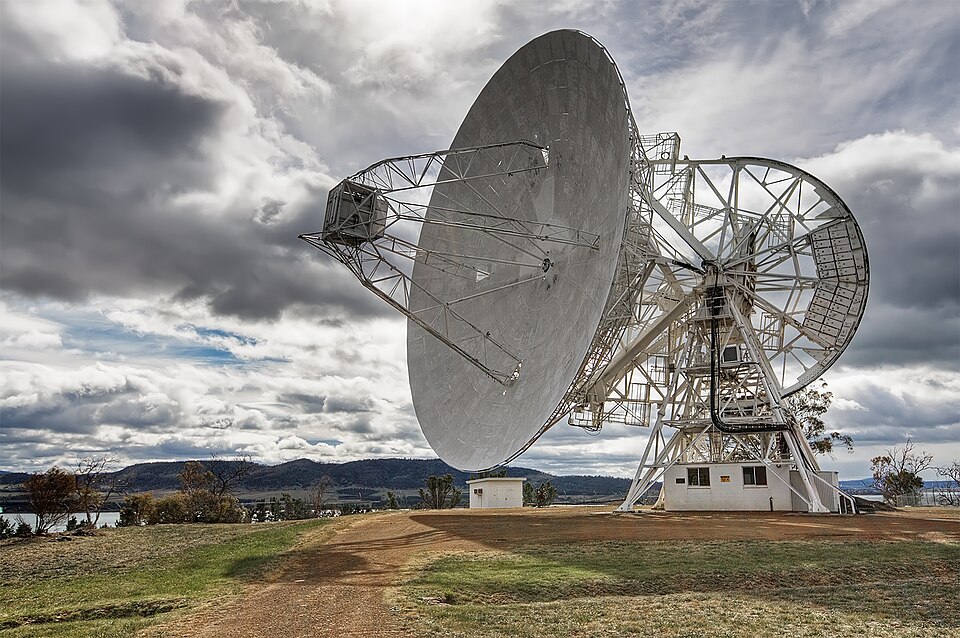
If such structures exist, the combined observational power of the Allen Telescope Array, Green Bank, Parkes, and the Automated Planet Finder gives this coalition a realistic chance of detection. The platform standardizes how that data is shared, analyzed, and compared. The broader stakes are clear.
This is not merely an academic exercise. If a Dyson sphere is found, the implications would reshape humanity’s understanding of its place in the universe.
The discovery would demonstrate that technological life not only exists elsewhere but has reached a scale of engineering that dwarfs our own. And if nothing is found after sustained, coordinated observation, the null result itself carries weight — it sets empirical constraints on the prevalence of advanced technological life in the galaxy. The calculus of long-term SETI investment has always been uncertain.
Breakthrough Listen’s funding runs through 2025, and the institutional commitments beyond that horizon remain unclear. But for now, the major players are aligned.
The platform exists. The data is flowing across institutional boundaries that once stood as barriers. The next move belongs to the telescopes — and to the analysis pipeline that now connects them.
Sources
{“@context”: “https://schema.org”, “@type”: “NewsArticle”, “headline”: “Key Institutions Leading the Global Search for Technosignatures”, “description”: “MOUNTAIN VIEW, Calif., July 26 — The search for extraterrestrial intelligence has entered a new phase of strategic coordination, with once-fragmented research groups now operating…”, “datePublished”: “2026-07-26T09:30:00+00:00”, “author”: {“@type”: “Person”, “name”: “Noah King”}, “publisher”: {“@type”: “Organization”, “name”: “InfoPulse Today”, “url”: “https://newsfeed.infopulsetoday.com/”}, “citation”: [{“@type”: “CreativeWork”, “url”: “https://en.wikipedia.org/wiki/SETI”}]}




