
HAWTHORNE, California, July 27 — Elon Musk, the founder, CEO, and chief engineer of SpaceX, continues to steer the company toward its founding ambition: making spaceflight affordable enough to allow human colonization of Mars. Born in Pretoria, South Africa, on June 28, 1971, Musk has remained the largest shareholder of SpaceX, holding approximately 42 percent of the company as of 2024. The encouraging part of Musk’s approach lies in his focus on full and rapid reusability, a principle embodied in the Starship program.
He has stated that reusability is the key to cutting launch costs by a factor of 100—to roughly $10 per kilogram to low Earth orbit. Early results from aggressive testing, a method he has described as “fail fast, learn fast,” have made the company a central player in commercial space.
Reusability as a Pillar
Musk personally oversees Starship design reviews. His vision of a rapidly reusable rocket is not merely an engineering preference; he has said it is the only way to make interplanetary travel economically viable. The $10-per-kilogram target stands in stark contrast to the cost of traditional expendable rockets.
While the Starship program has experienced setbacks during testing, each iteration has provided data that engineers use to refine the next version.
A Track Record of Firsts
SpaceX began with the Falcon 1, which in 2008 became the first private liquid-fuel rocket to reach orbit. The Falcon 9 achieved the first orbital-class rocket to land its first stage in 2015. The Falcon Heavy, which debuted in 2018, remains the world’s most powerful operational rocket.
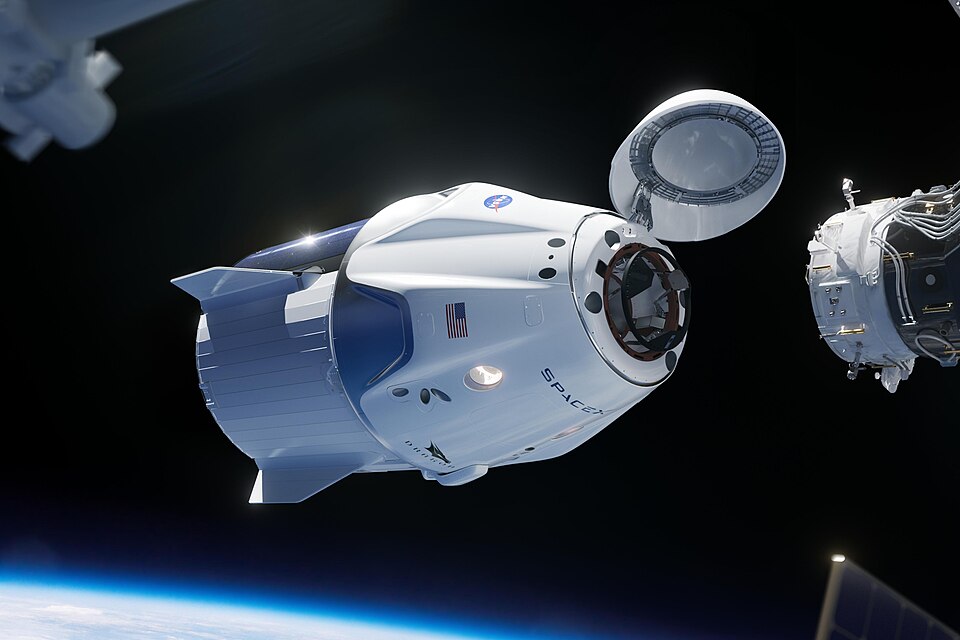
And the Dragon spacecraft became the first private vehicle to dock with the International Space Station in 2012. Each of these achievements built toward Musk’s ultimate objective: a crewed Starship landing on Mars.
As of 2024, Musk’s net worth was estimated at $210 billion, derived primarily from his stakes in Tesla (founded 2003), SpaceX, and X (formerly Twitter, acquired in 2022). He also serves as CEO of Tesla and holds roles at Neuralink, which focuses on brain-computer interfaces, and The Boring Company, a tunnel construction firm.
The Starship Timeline
Musk has publicly targeted a crewed Starship landing on Mars as early as 2029. He frequently shares development updates and timelines on social media, where his active presence keeps the public informed of progress and delays alike. For those following the space industry, the cautious hope is that Musk’s engineering discipline and willingness to push boundaries will continue to yield results.
As with any complex, long-term endeavor, measured optimism is warranted.
Sources
{“@context”: “https://schema.org”, “@type”: “NewsArticle”, “headline”: “Elon Musk: The Visionary Driving SpaceX’s Reusability Quest”, “description”: “HAWTHORNE, California, July 27 — Elon Musk, the founder, CEO, and chief engineer of SpaceX, continues to steer the company toward its founding ambition: making…”, “datePublished”: “2026-07-27T09:30:00+00:00”, “author”: {“@type”: “Person”, “name”: “Muhammad Asim”}, “publisher”: {“@type”: “Organization”, “name”: “InfoPulse Today”, “url”: “https://newsfeed.2bme.xyz/”}, “citation”: [{“@type”: “CreativeWork”, “url”: “https://en.wikipedia.org/wiki/Elon_Musk”}]}




