
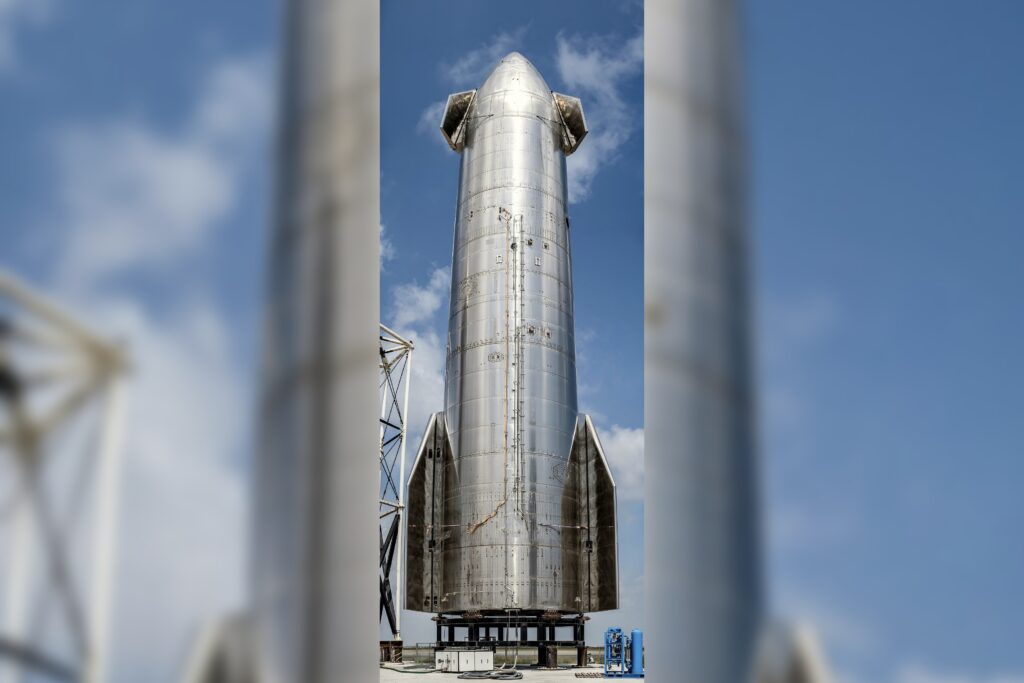
HAWTHORNE, July 27 — SpaceX’s Starship is designed to fly three times a day, per vehicle. But right now, that goal depends on roughly 18,000 hexagonal ceramic tiles — and the glue that holds them on.
Think of it like a massive jigsaw puzzle, glued to the outside of a stainless steel rocket. Each tile is a hexagonal piece made from a silica-based ceramic fiber composite, bonded to Starship’s skin using a room-temperature-vulcanizing silicone adhesive. The hexagon shape isn’t just for looks: it minimizes gap size and interlocks with neighboring tiles to reduce hot airflow penetration during the brutal heating of ascent and reentry.
Those conditions mean the tiles have to withstand temperatures up to 1,400 °C, plus dynamic pressure and intense vibration. And that’s where the trouble starts.
The Challenge of 18,000 Tiles
Early flight tests with prototypes SN15 and SN20 revealed a persistent problem: tiles fall off. The culprit is high-frequency vibration or debris impacts that pop the adhesive bond. The issue became impossible to ignore during Starship’s second integrated flight test on November 18, 2023. Live video clearly showed multiple tiles detaching from the vehicle as it flew.
SpaceX CEO Elon Musk has acknowledged the situation bluntly. He called the current adhesive system “the highest-risk item” for rapid reuse — the single biggest obstacle to turning Starship into a vehicle that can launch, land, and launch again within hours.
In plain terms, the practical upshot is this: if tiles keep popping off after every flight, you can’t just peel them off and slap new ones on by hand — not when your goal is three flights per day per vehicle.
A Lesson From the Space Shuttle
The comparison with NASA’s Space Shuttle is instructive. The Shuttle also relied on a tile-based thermal protection system. But it had a dedicated tile-repair facility, and workers could swap damaged tiles by hand between missions. That process was slow, labor-intensive, and expensive, but it worked for an orbiter that flew a handful of times a year.
Starship’s ambitions are a different order of magnitude. To meet a launch cadence of three flights per day, any repair process must be fully automated. There’s no time for a crew to inspect and hand-replace thousands of tiles between flights.
So here’s what it means: without a fundamentally different approach to thermal protection, the tile-and-glue paradigm may limit Starship to occasional, high-cost flights — exactly the kind of operational tempo the Shuttle had, and exactly what Starship is meant to leave behind.
What Could Replace the Tiles?
The source material points to three alternative approaches that might break out of the tile-and-glue dead end: transpiration cooling, metallic shingles, or a reusable ablative coating. Transpiration cooling involves sweating a coolant through a porous surface; metallic shingles would be bolted rather than glued; a reusable ablative coating would char away and survive multiple flights.
SpaceX has not yet publicly committed to any of these paths. But the company’s iterative test-and-fix philosophy means future Starship prototypes — likely beyond the current generation — will be the proving ground.
For now, the race to rapid reuse is stuck on a single question: how do you keep 18,000 ceramic tiles from falling off a rocket? The answer will determine whether Starship becomes the workhorse of a multiplanetary future, or just a very expensive, very shiny shuttle.
Sources
{“@context”: “https://schema.org”, “@type”: “NewsArticle”, “headline”: “Starship’s Hexagonal Tiles Pose Reusability Challenges”, “description”: “HAWTHORNE, July 27 — SpaceX’s Starship is designed to fly three times a day, per vehicle. But right now, that goal depends on roughly 18,000…”, “datePublished”: “2026-07-27T09:30:00+00:00”, “author”: {“@type”: “Person”, “name”: “Erika Johnson”}, “publisher”: {“@type”: “Organization”, “name”: “InfoPulse Today”, “url”: “https://newsfeed.2bme.xyz/”}, “citation”: [{“@type”: “CreativeWork”, “url”: “https://en.wikipedia.org/wiki/Thermal_protection_system”}]}




