
LOS ANGELES, July 27 — SpaceX, the world’s most valuable private space company, carried a valuation of $180 billion as of December 2024, according to company disclosures. That mark had risen from $125 billion in May 2023, driven by the success of Starship Flight 5 and continued growth in Starlink.
Revenue in 2024 was estimated at $13 billion, up from $8.7 billion the prior year. The record shows that the increase was fueled by Starlink’s $4.2 billion, launch services at $7 billion, and other government contracts.
Contract Portfolio
The company has secured major NASA awards. In 2021 SpaceX received a $2.9 billion Human Landing System (HLS) contract for Starship to land astronauts on the Moon, a figure later modified to $4.05 billion in 2022. A $900 million follow-on option for HLS was awarded in 2023.
SpaceX also holds a $1.4 billion contract for Crew Dragon missions to the International Space Station. On the national security side, the company is the preferred launch provider for U.S. missions through the Space Force’s National Security Space Launch (NSSL) program.
Cost Advantage
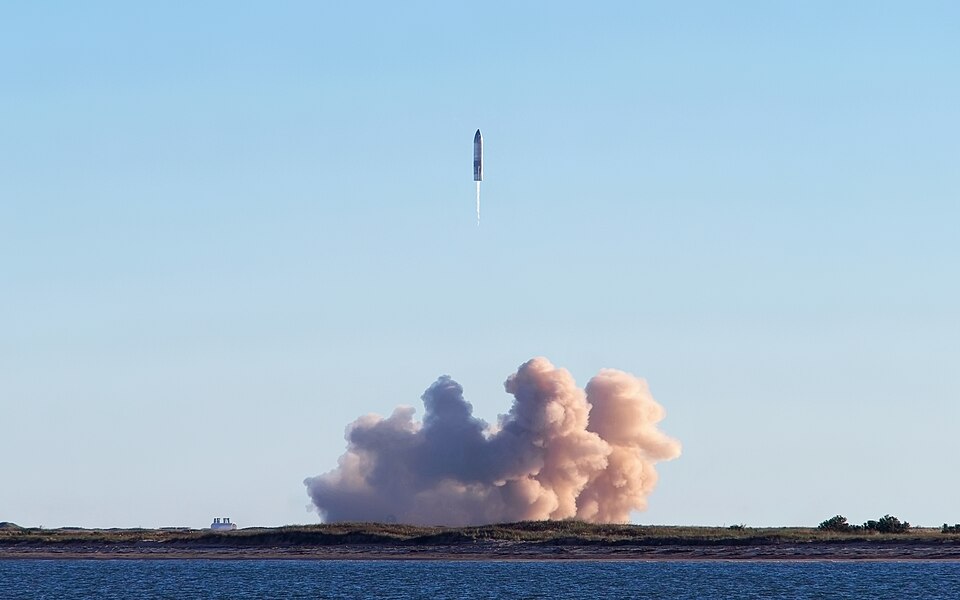
Starship’s reusability is central to the company’s strategy of reducing launch costs. Estimates suggest a cost per launch as low as $10 million. By comparison, Falcon 9 launches at about $62 million.
That price point undercuts international competitors. According to industry data, Arianespace’s Ariane 6 costs roughly $85 million per launch, United Launch Alliance’s Vulcan Centaur runs $110 million, and Blue Origin’s New Glenn is in the $60–80 million range.
Starship’s payload capacity—100 tonnes in reusable mode—would enable mega-constellation deployment. The company has FCC approval for up to 42,000 Starlink satellites, broken into an initial 12,000 and an additional 30,000 approved in a 2019 filing.
As of January 2025, approximately 6,000 Starlink satellites were in orbit. Each Starship flight could launch between 200 and 400 satellites depending on configuration, accelerating deployment.
Proven Reuse Track Record
Falcon 9 had flown over 300 missions as of 2024, with booster reuse exceeding 20 flights per core. Starship reusability could extend that paradigm to heavy lift, potentially capturing a global launch market estimated at $20 billion by 2030.
The timeline of Starship’s development and the company’s growing revenue base suggests SpaceX is positioning itself to dominate that market. Sources familiar with the industry note that the combination of low cost per flight and high payload capacity gives the company a structural advantage over rivals.
What remains to be seen is whether Starship will achieve the reliability and flight cadence needed to convert its theoretical cost advantage into actual market share—and how international competitors and national security customers will respond.




