
BEIJING, July 10 — There is a quiet, methodical revolution happening inside China’s rocket programme, and its chief architect is a man named Zhang Zhi. Born in Xi’an in 1975, Zhang did not rise to prominence through flashy announcements. He earned his place the old-fashioned way: by making things work.
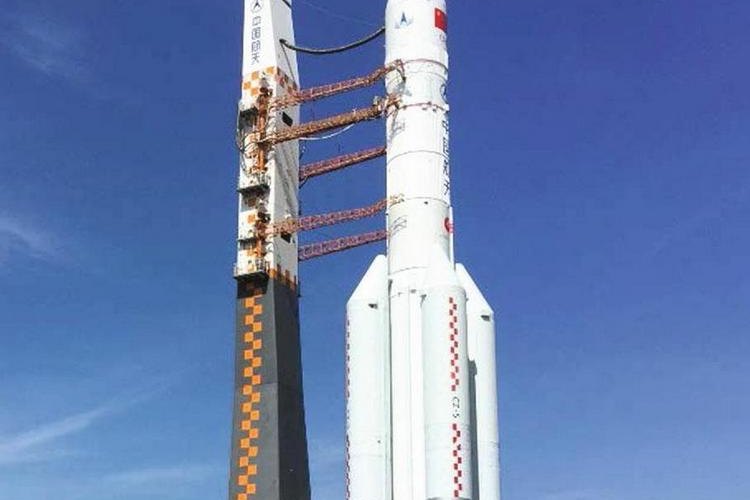
After graduating from Beihang University in 1998 with a degree in aerospace engineering, he joined the China Academy of Launch Vehicle Technology (CALT) in 1999. His first major assignment was working on the guidance and control systems for the Long March 5 rocket, the heavy-lift vehicle that first launched on November 3, 2016.
That experience shaped him. Guidance and control is the nervous system of any rocket—the part that keeps it pointed in the right direction through the violent physics of ascent. Zhang learned how to build that nervous system for one of China’s most ambitious rockets.
From deputy to chief designer
In 2016, the same year the Long March 5 first flew, Zhang was serving as deputy chief designer for the Long March 7 rocket, which made its debut on June 25 of that year. The Long March 7 was a medium-lift vehicle designed to replace older, toxic-fuel rockets with a cleaner kerosene-liquid oxygen engine. It was also the first Chinese rocket designed from the ground up for digital design and manufacturing.
Then came the jump. In 2020, Zhang was appointed chief designer of the Long March 10 family of rockets.
This was not just a promotion; it was a mandate to build something fundamentally new. The Long March 10 is China’s answer to reusable rocket technology—the same kind of engineering that allowed SpaceX to land its Falcon 9 boosters on drone ships and launch pads. The science behind reusability is brutally difficult.
A rocket engine that has just endured the heat and pressure of launch must be throttled, relit, and guided to a pinpoint landing. The margins are razor-thin.
Under Zhang’s leadership, the team conducted over 200 ground tests of the YF-100K engine—the kerosene-liquid oxygen powerplant that will be used on the Long March 10B. They also ran 50 simulated landing tests, working out the control algorithms and sensor fusion needed to bring a rocket stage back to Earth.
Patents and papers
Zhang is not just a manager of tests. He has published 30 papers on rocket guidance and control, and holds 15 patents related to reusable launch vehicles. That combination of academic rigour and hands-on engineering is rare.
It suggests a designer who understands both the theory and the grimy reality of making hardware survive re-entry. In 2023, Zhang was elected to the Chinese Academy of Engineering, one of the highest honours for an engineer in China.
It is a recognition of his role in pushing the country’s rocketry into a new era. The Long March 10B is the variant that matters most for deep space. In a state media interview, Zhang said that the rocket’s success “lays the foundation for China’s future deep-space exploration.” That is not just rhetoric.
The Long March 10 family is designed to support China’s crewed lunar missions and, eventually, more ambitious destinations like Mars. Reusability is the key; without it, the cost of launching the heavy payloads needed for deep space becomes prohibitive.
What the tests revealed
The 200 ground tests of the YF-100K engine were not merely a box-ticking exercise. They were designed to push the engine to its limits—to find the failure modes, the wear patterns, the unexpected interactions between hot gas and metal. Each test generated data that fed back into the control algorithms Zhang and his team have spent years refining.
The 50 simulated landing tests are equally telling. Landing a rocket stage is a problem of precision: the vehicle must cancel its horizontal velocity, align itself vertically, and throttle its engine to a near-hover before touching down.
The simulations test the guidance software against a range of failure scenarios—wind gusts, sensor noise, engine lag. Zhang’s background in guidance and control, honed on the Long March 5 and 7, is directly applicable here. He is not learning reusability from scratch; he is applying decades of experience in a new context.
The road ahead
The Long March 10B has not yet flown, but the ground work is extensive. With Zhang as chief designer, the programme has moved from concept through component testing into integrated system validation. The next step will be a full-up flight test, likely within the next year or two.
What researchers found during those 200 engine tests and 50 landing simulations will inform not just the Long March 10B, but the next generation of Chinese launch vehicles. Zhang’s patents and papers are already shaping the field.
His election to the Chinese Academy of Engineering cements his influence. For now, the rocket programme proceeds with the quiet intensity that has characterised Zhang’s entire career. The foundation for deep-space exploration is being laid, one ground test at a time.
{“@context”: “https://schema.org”, “@type”: “NewsArticle”, “headline”: “Zhang Zhi leads China’s reusable rocket breakthrough as chief designer”, “description”: “BEIJING, July 10 — There is a quiet, methodical revolution happening inside China’s rocket programme, and its chief architect is a man named Zhang Zhi….”, “datePublished”: “2026-07-10T09:30:00+00:00”, “author”: {“@type”: “Person”, “name”: “Henry Thomas”}, “publisher”: {“@type”: “Organization”, “name”: “InfoPulse Today”, “url”: “https://newsfeed.infopulsetoday.com/”}}




