
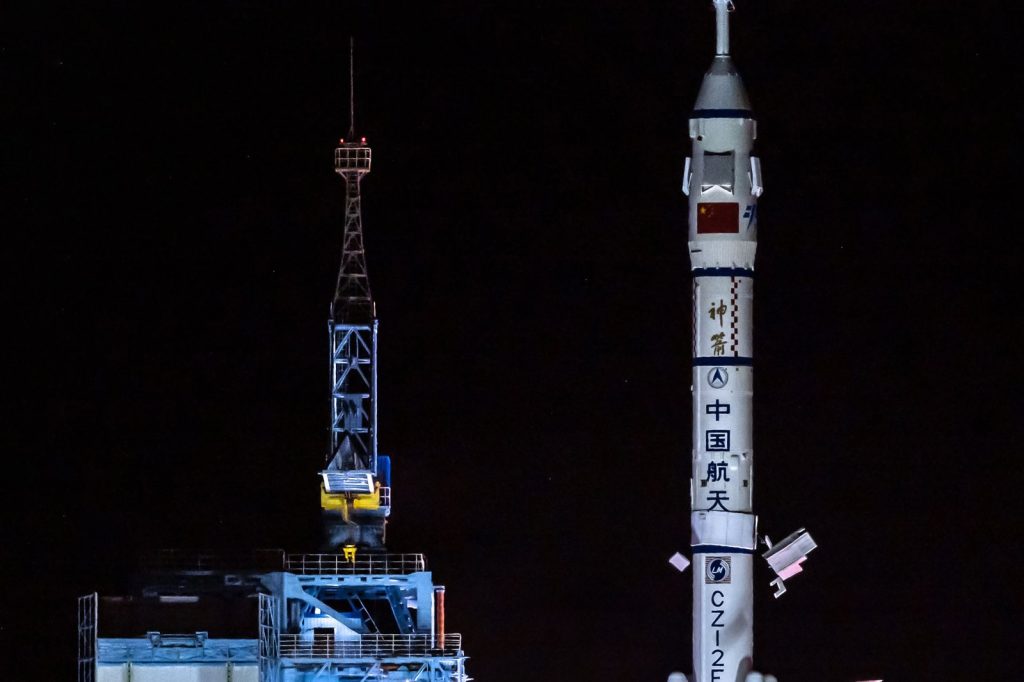
BEIJING, July 10 — The story begins with a simple, relentless economic force: the cost of getting a kilogram of payload off the Earth. For years, China’s state-owned rockets have carried a price tag that made the country a competitive, but not dominant, player in the global launch market. Now, with the development of the Long March 10B, China is making a direct play to challenge the cost structure that has long been SpaceX’s greatest advantage.
At the heart of this shift is reusability. Industry estimates place the current cost of launching a payload to low-Earth orbit on an expendable Long March rocket between $5,000 and $10,000 per kilogram.
SpaceX’s Falcon 9, by contrast, has driven its price down to approximately $2,720 per kilogram for standard missions, thanks to the routine reuse of its first-stage boosters. The China Aerospace Science and Technology Corporation, or CASC, the state-owned giant behind the Long March family, is now targeting a 50 to 80 percent cost reduction with the Long March 10B. The goal, according to the company, is a per-kilogram cost of $2,000 to $3,000 by 2026.
For those involved in China’s rapidly expanding commercial space sector, the implications are enormous. The country already has over 100 registered space startups as of 2023, private companies like Galactic Energy and LandSpace that have grown up in the shadow of the state program.
Lower launch costs would ripple through this entire ecosystem, enabling more frequent launches and, crucially, making large-scale satellite constellation projects economically viable. The global launch services market was valued at $12.5 billion in 2023, according to a report by Euroconsult, and is projected to reach $35 billion by 2030. China is positioning itself to capture a larger share of that growth, particularly in the business of deploying satellite constellations.
The most ambitious of these is the planned GuoWang, or National Network, a broadband constellation that would consist of 13,000 satellites. A launch vehicle that can deliver payloads at a competitive per-kilogram rate is essential to making such a project feasible. What unfolded in the development of the Long March 10B is not just a story of engineering, but of strategic intent.
The rocket is expected to take on multiple roles. Beyond commercial satellite launches, it is designed to support China’s space station resupply missions.
Currently, those missions rely on the Tianzhou cargo spacecraft, which launches atop the Long March 7 rocket. The Long March 10B offers a potential upgrade in efficiency and cost for those regular supply runs as well. The stakes for CASC are clear.
SpaceX has demonstrated that reusability is not just a technical novelty but a business model that reshapes an entire industry. China’s state rocket program has watched that transformation from a distance.
Now, with a target price that undercuts even the Falcon 9’s standard rate, the Long March 10B represents a direct, fact-based challenge to that dominance. For the private Chinese launch companies, the arrival of a cheaper, reusable state rocket could be a double-edged sword. Lower costs open up the market for everyone, but a state-owned vehicle that can undercut private offerings on price may also crowd out the very startups the government has encouraged.
The tension between state capacity and private innovation, a familiar dynamic in China’s tech sector, is likely to define the next phase of the country’s space industry. The numbers tell the story. At $2,720 per kilogram, the Falcon 9 has set a benchmark that has forced every other launch provider in the world to rethink its pricing.
China’s current expendable rockets, with their $5,000 to $10,000 per kilogram range, have been able to compete on reliability and government backing, but not on pure cost. The Long March 10B’s target of $2,000 to $3,000 per kilogram would flip that calculation, putting China’s state rocket on par with, or even ahead of, SpaceX on price.
That price point is not just a marketing figure. It is a fundamental requirement for the economics of the GuoWang constellation. Building and launching 13,000 satellites requires a launch vehicle that can deliver mass to orbit cheaply enough to make the business case work.
At current Chinese launch costs, the arithmetic is difficult. At the Long March 10B’s target rates, it becomes plausible.
The global market for launch services is not static. The Euroconsult projection of growth from $12.5 billion to $35 billion by 2030 reflects a world that is hungrier for bandwidth, for Earth observation, and for the data that only satellites can provide. China’s commercial space sector, with its over 100 registered startups, is already a significant player in that story.
Companies like Galactic Energy and LandSpace have developed their own small-lift rockets and have begun to carve out niches in the market. But the Long March 10B changes the scale of the conversation. A reusable rocket capable of undercutting the Falcon 9 on price is not a niche vehicle.
It is a platform that can compete for the largest commercial launch contracts in the world, including the deployment of competing broadband constellations and the supply of international space stations.




