
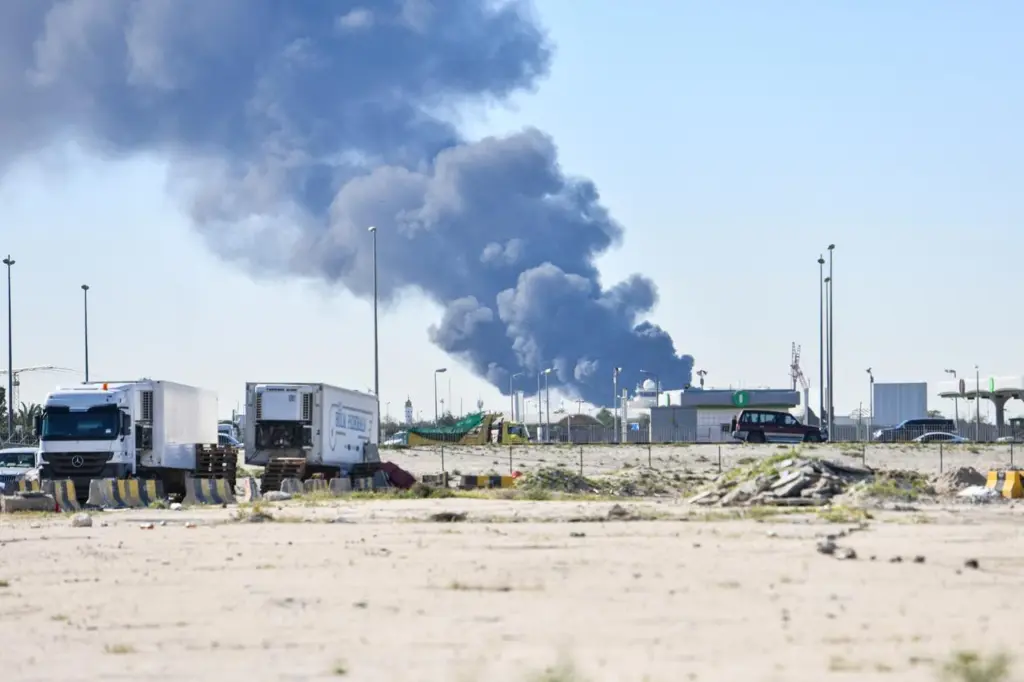
KUWAIT CITY, July 21 — For the Gulf states that have built their modern prosperity on desalinated water, the current attacks on critical infrastructure represent a vulnerability that regional planners have long feared but never had to face. The Gulf Cooperation Council (GCC) states collectively produce over 1.2 billion cubic meters of desalinated water annually, accounting for more than 40% of global desalination capacity. Kuwait is the most dependent of all.
Desalination supplies 90-95% of its municipal water. When you turn on a tap in Kuwait City, what comes out is almost certainly water that has been processed through an energy-intensive reverse osmosis or thermal distillation plant.
This is not a region with abundant freshwater lakes or rivers — it is a region that manufactures its own water from the sea.
A Strategic Reserve and Its Limits
The encouraging part is that Kuwait has prepared for emergencies. The country maintains a strategic water reserve of about 12 million cubic meters stored in groundwater fields. That sounds like a large number, and it is — but a city of millions consumes water at a staggering rate.
Early assessments suggest that while the reserve provides a critical buffer, it is not an indefinite supply. Patients, in a manner of speaking, who depend on this reserve will need to watch their usage carefully.
If the attacks on desalination capacity continue, Kuwait may need to activate emergency interconnections with Saudi Arabia. One such link that could come into play is the Khafji electricity-water connection, a cross-border infrastructure that was designed precisely for moments like this. These interconnections were built as a safety net, but they have never been tested under sustained military pressure.
Regional Cooperation, Untested by War
The GCC established a joint water security framework in 2014. It was a forward-looking agreement, designed to coordinate desalination capacity, share technical expertise, and manage cross-border water transfers. But it has not been tested by war.
Framework documents and emergency drills are one thing; a real regional crisis with simultaneous damage to multiple desalination plants is quite another. The current situation will reveal whether the institutional architecture is as strong as the pipes and pumps it was meant to coordinate.
There is historical precedent that gives specialists pause. The current attacks risk a humanitarian crisis similar to the water shortages of 1991, when allied forces had to truck water from Saudi Arabia to meet basic needs. That was a wartime logistical operation on a scale that few nations could replicate today without advance planning.
The lesson from 1991 is that water security in this region can unravel very quickly when desalination plants are taken offline.
Environmental Risks That Outlast Any Conflict
The International Water Resources Association has issued a warning that goes beyond the immediate crisis. Damage to desalination plants, the association cautions, could cause saltwater intrusion and long-term aquifer contamination. This is not a risk that disappears when the attacks stop.
Once saltwater intrudes into a coastal aquifer, it can take decades — or longer — to reverse the damage. The encouraging part, if one can call it that, is that regional hydrologists are aware of this risk and have been studying mitigation strategies.
But early findings indicate that the window for preventing such contamination is narrow. For residents across the Gulf, the advice from specialists is straightforward: pay attention to official guidance about water use, do not hoard, and trust that the strategic reserves and interconnections were built for exactly this kind of emergency. Talk to your local water authority if you have concerns about supply or quality.
The system has buffers, but those buffers work best when everyone uses them wisely. The coming weeks will tell whether the GCC’s 2014 water security framework is a document or a lifeline.
For now, the reserve holds, the interconnections are available, and the region’s engineers are working to keep the water flowing. That is where hope lies — not in the absence of risk, but in the presence of preparation.
{“@context”: “https://schema.org”, “@type”: “NewsArticle”, “headline”: “Kuwait Desalination Plant Blast Impacts GCC Water Security”, “description”: “KUWAIT CITY, July 21 — For the Gulf states that have built their modern prosperity on desalinated water, the current attacks on critical infrastructure represent…”, “datePublished”: “2026-07-21T09:30:00+00:00”, “author”: {“@type”: “Person”, “name”: “Muhammad Asim”}, “publisher”: {“@type”: “Organization”, “name”: “InfoPulse Today”, “url”: “https://newsfeed.infopulsetoday.com/”}}




