
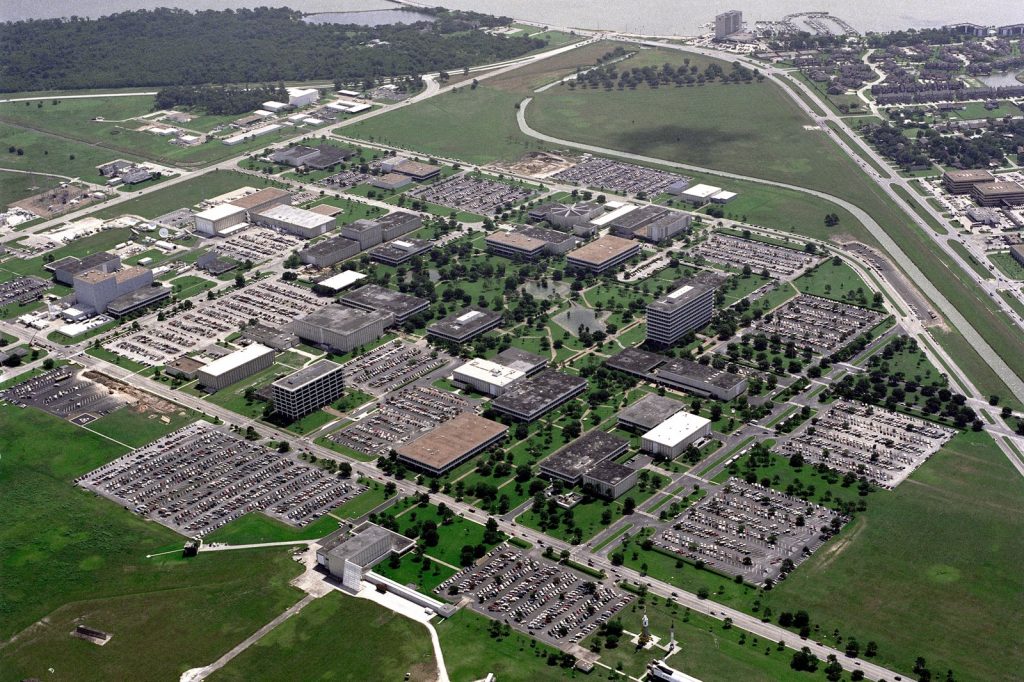
HOUSTON, July 14 — The figure that matters: 1978. That is the year a NASA scientist named Donald J. Kessler published a paper that would eventually define the single biggest threat to humanity’s future in orbit.
His prediction, dismissed by many at the time, now has a name: Kessler Syndrome. Kessler, an American astrophysicist born in 1940, spent his career at NASA’s Johnson Space Center from 1969 to 1996.
In a 1978 paper titled “Collision Frequency of Artificial Satellites: The Creation of a Debris Belt,” he laid out a stark mathematical forecast. Collisions between objects in space, he argued, would generate debris. That debris would then hit other objects, creating more debris.
The cascade would become self-sustaining. The bottom line: a single collision could render entire orbital bands unusable for generations.
For years, the reaction was skepticism. The idea felt too catastrophic, too remote. Then came 2009.
That year, an operational Iridium communications satellite collided with a defunct Russian Cosmos spacecraft. The event was the first major accidental hypervelocity collision between two intact artificial satellites. It was also the moment Kessler’s thesis moved from theoretical paper to real-world event.
The debris field from that crash remains a hazard today. Investors will note the timeline.
Kessler joined NASA in 1969, the year of the first Moon landing. He retired in 1996, the same year he received the NASA Exceptional Service Medal. Fourteen years later, in 2010, the Dirk Brouwer Award followed.
His career spanned the dawn of the space age through its industrialization. By the numbers, his legacy is straightforward.
One paper. One prediction. One name that now anchors an entire field of space safety.
Kessler continues to advocate for debris mitigation and active removal. He is not a relic of the past; he is an active voice in a conversation that grows more urgent with every new satellite constellation launched. His name has become synonymous with the threat of orbital debris, a shorthand used by engineers, policymakers, and investors alike.
The mechanism that matters
The Kessler Syndrome is not a single event. It is a process. A collision in low Earth orbit produces thousands of fragments traveling at high speeds.
Each fragment becomes a potential weapon. Each new collision multiplies the problem.
At a certain density of debris, the cascade becomes inevitable and unstoppable. That density threshold is the figure investors and satellite operators watch most closely. No one knows exactly where it sits.
But the trend line is clear. Kessler’s original 1978 paper, co-authored with Burton G.
Cour-Palais, modeled this exact chain reaction. The paper’s title — “Collision Frequency of Artificial Satellites: The Creation of a Debris Belt” — was precise. It was not about if a debris belt would form.
It was about when.
What comes next
The space industry now faces a paradox. The same orbital environment that enables global communications, navigation, and Earth observation is becoming increasingly dangerous to operate in. Companies like SpaceX, Amazon, and OneWeb are building megaconstellations of thousands of satellites.
Each launch adds mass to the system. Each failure or end-of-life satellite adds potential debris.
Kessler’s work remains the foundational text for anyone trying to solve this problem. The solutions — active debris removal, better end-of-life disposal, collision avoidance systems — all trace back to his 1978 insight. The figure that matters now is not a number.
It is a name. And that name is Kessler.
Sources
{“@context”: “https://schema.org”, “@type”: “NewsArticle”, “headline”: “NASA Scientist Kessler Predicted Space Debris Cascade”, “description”: “HOUSTON, July 14 — The figure that matters: 1978. That is the year a NASA scientist named Donald J. Kessler published a paper that would…”, “datePublished”: “2026-07-14T09:30:00+00:00”, “author”: {“@type”: “Person”, “name”: “Ava Anderson”}, “publisher”: {“@type”: “Organization”, “name”: “InfoPulse Today”, “url”: “https://newsfeed.infopulsetoday.com/”}, “citation”: [{“@type”: “CreativeWork”, “url”: “https://en.wikipedia.org/wiki/Donald_J._Kessler”}]}




