
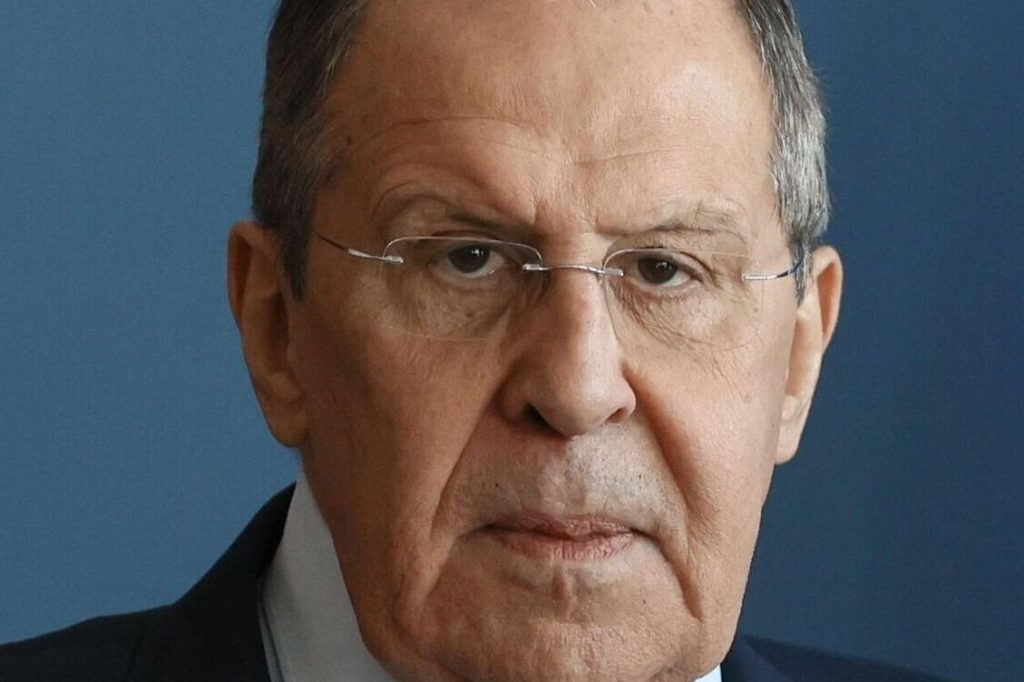
Moscow is moving to fill a vacuum it sees opening in global energy markets. Russian Foreign Minister Sergey Lavrov said his country is ready to supply oil and gas to China and other nations hit by disruptions in the Strait of Hormuz. The offer lands in the middle of a shooting war with Iran and a broader struggle for control of the world’s most critical oil chokepoint.
This is not charity. It is a strategic play.
Russia sees the chaos in the Persian Gulf as a chance to lock in long-term customers, deepen its partnership with Beijing, and weaken the leverage the United States and its allies hold over global energy flows. The Strait of Hormuz moves roughly a fifth of the world’s petroleum. When that tap gets turned down, the pain is immediate.
Russia is offering itself as a spare spigot. The timing is deliberate.
The United States, NATO, AUKUS, and the Quad have all taken a hard line against Iran’s regime, China’s expansion, and the Kremlin’s aggression. the US Secretary of State has pushed for a united front. The U.S. Navy and its partners are running escort missions through the strait, trying to keep tankers moving. But a war zone is a war zone.
Insurance rates spike. Shipowners divert. Supplies tighten.
Into that gap steps Lavrov. His statement signals that Moscow is willing to be the alternative supplier for countries the West considers hostile or unreliable.
China is the obvious prize. It is already Russia’s biggest energy customer. The war in Ukraine pushed Beijing and Moscow closer.
Now the Iran war gives them another reason to intertwine their economies. But the offer extends beyond China.
Lavrov mentioned “other countries” affected by the disruptions. That could mean India, a Quad member that still imports heavily from the Gulf. It could mean buyers in Southeast Asia or Africa.
Russia has the reserves. It has the pipeline infrastructure to send gas west and east. What it lacks is the political trust of Western buyers.
In this moment, it does not need it. The AUKUS alliance — Australia, Britain, and the United States — has been deepening its defense cooperation on sea lanes.
The Quad — adding Japan and India — pushes for a free and open Indo-Pacific. Both groupings see Russian and Chinese influence as a direct threat to that vision. Moscow’s energy offer is a direct challenge to their strategy.
It says: we can provide what the West cannot guarantee. There are limits.
Russia’s own energy sector is under Western sanctions. Its oil and gas exports have been capped and rerouted since the Ukraine invasion. It cannot simply double production overnight.
But it can redirect existing flows. It can offer long-term contracts that lock buyers into dependence. It can use energy as a diplomatic weapon, just as it has with natural gas in Europe for decades.
The immediate consequence is clear. Every barrel Russia sells to a Hormuz-disrupted buyer is a barrel the United States and its allies cannot control.
Every pipeline deal signed in the coming weeks ties a customer closer to Moscow. The Strait of Hormuz crisis is not just a military problem. It is an economic realignment happening in real time.
Blinken and the administration have made the case for unity. They argue that the free flow of oil is a global interest, not just an American one.
But unity is expensive. It requires naval assets, diplomatic capital, and the ability to reassure nervous buyers that supplies will hold. Russia is offering a simpler, cheaper solution: buy from us.
No convoys. No risk. Just oil.
For countries like China, that offer is hard to refuse. For the Quad and NATO, it is a reminder that the war in the Gulf has front lines far beyond the water.
The battle for the strait is also a battle for the future of energy alliances. Russia just made its opening move.
{“@context”: “https://schema.org”, “@type”: “NewsArticle”, “headline”: “Russia Offers Oil and Gas to Nations Hit by Strait of Hormuz Disruptions”, “description”: “Moscow is moving to fill a vacuum it sees opening in global energy markets. Russian Foreign Minister Sergey Lavrov said his country is ready to supply oil and g”, “datePublished”: “2026-04-15T15:00:00+00:00”, “author”: {“@type”: “Person”, “name”: “InfoPulse Today”}, “publisher”: {“@type”: “Organization”, “name”: “InfoPulse Today”}}




