
Founding Contradictions and Historical Stakes
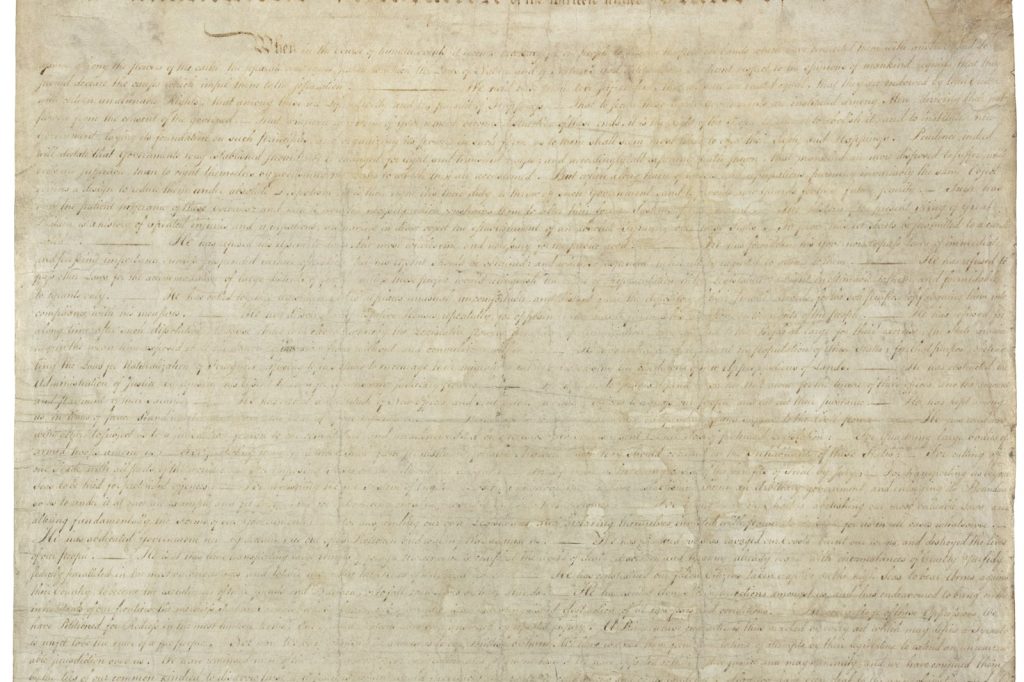
The webinar’s central question is whether 1776 represented a revolution for liberty or, in large part, a counter-revolution by slaveholders and settlers aimed at protecting slavery and westward expansion against a British empire that had begun to constrain both. This framing draws on decades of historical scholarship that scrutinizes the contradictions between the Declaration’s universalist language and the realities of chattel slavery, Indigenous dispossession, and imperial ambition. According to organizers, the question carries implications for understanding the trajectory that followed: continental expansion, the Spanish–American War of 1898, the Bretton Woods settlement of 1945, and the supposed unipolar moment of 1991. The webinar will trace that arc through to the present crisis.
At the core of Hudson’s analysis is the argument that financial structures shaped by slavery and colonial land grabs became foundational to U.S. economic policy. The rise of banking and credit in the antebellum South and the North’s industrial-military complex were deeply entwined with labor and resources extracted from enslaved people and seized Indigenous lands. This system evolved alongside expansionist policies, from the Louisiana Purchase to the Mexican-American War, embedding slavery’s economic logic into governance. Even after the Civil War and Reconstruction’s partial rollbacks, those patterns were not erased but reshaped, as former slaveholders and their allies adapted to new forms of economic control.
Imperial Decline and Domestic Crises
In the corridors of the International Manifesto Group, the wider picture is one of imperial decline. Speakers will address how the United States’ domestic troubles — economic decline, debt, deindustrialization, social division, and political dysfunction — connect to signs of imperial strain abroad: military defeat by Iran, economic and technological defeat by China, and a rising multipolarity. The webinar is part of a broader reckoning, two and a half centuries on, with the republic’s radical and democratic legacy — the universalist language later seized upon by abolitionists, suffragists, and anti-colonial movements — set against the realities of slavery, dispossession, and an imperial trajectory visible from the founding.
Hudson is known for his critiques of financial systems and debt-driven economies. His work traces the long shadow of early American finance, particularly the influence of slavery and plantation capital on the nation’s economic institutions. This perspective emphasizes how the rebellion also served the interests of slaveholding elites seeking to protect their wealth and territorial ambitions — a view that challenges the conventional narrative of the Revolution as a straightforward struggle for freedom.
Legacy for Contemporary Struggles
Why this matters now, organizers suggest, is that Hudson’s analysis frames today’s crises — rising inequality, corporate debt, deindustrialization, and political polarization — as legacies of those early choices. His argument suggests that the United States’ current struggles with global competition, domestic unrest, and financial instability are not anomalies but continuations of long-standing structural conflicts. The webinar’s framing reflects a broader reconsideration of American history, one that weighs the nation’s democratic rhetoric against the realities of racial capitalism and imperial overreach.
For attendees, the event will offer a perspective on how historical financial systems continue to shape modern power struggles — between creditors and debtors, between global empires and rising challengers, and between the promises of democracy and the realities of entrenched inequality. The debate over 1776’s legacy, while rooted in scholarship, carries implications for understanding the nation’s path forward as it marks its 250th year.




