
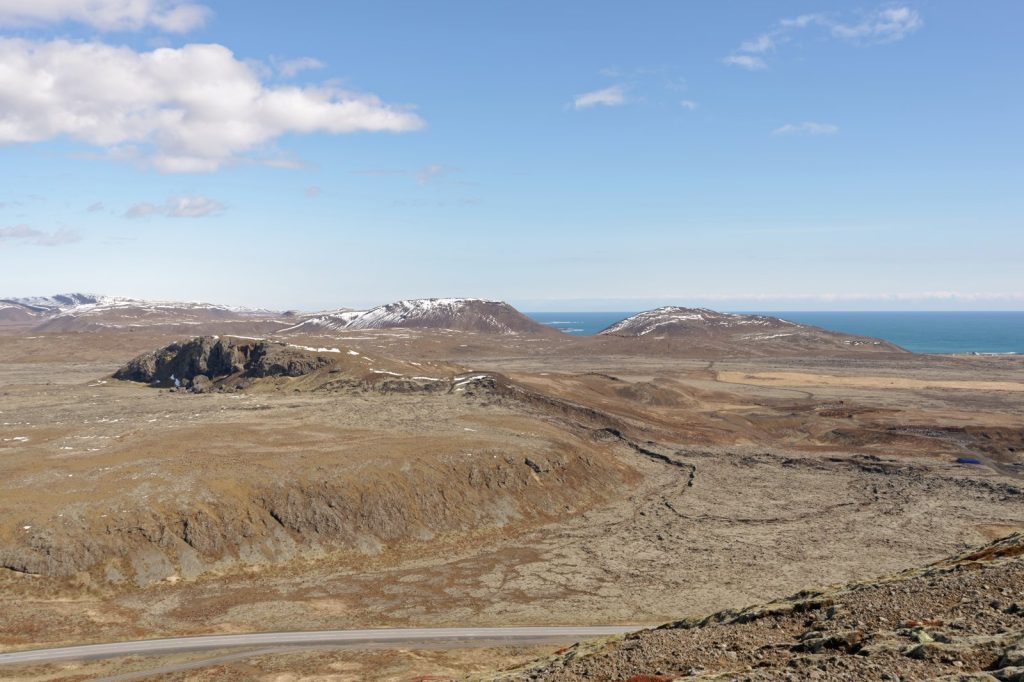
A moderate earthquake with a magnitude of 5.0 rippled through the remote Reykjanes Ridge on Wednesday, according to data from the U.S. Geological Survey. The undersea quake occurred at 12:42 UTC, with its epicenter located along a seismically active segment of the Mid-Atlantic Ridge. The USGS classified the event as shallow, with a depth of just 10 kilometers.
Seismic Details and Regional Context
Shallow earthquakes, defined by the USGS as those occurring at depths less than 70 kilometers, tend to produce more intense ground shaking than deeper events of equal magnitude. However, because the Reykjanes Ridge lies far offshore, the shaking is unlikely to have affected populated areas. The USGS reported that no tsunami warning was issued following the event.
This is consistent with typical undersea earthquakes of moderate size, which do not generally displace enough water to generate a destructive wave. The USGS seismic record indicates that the Reykjanes Ridge and its surroundings have experienced significant seismic activity over the past two decades.
Within a radius of roughly 300 kilometers from Wednesday’s epicenter, at least 45 earthquakes of magnitude 5.0 or greater have been recorded since 2006. The largest such event in that period was a magnitude 5.9 earthquake in 2019. Wednesday’s quake, while smaller than that 2019 event, remains within the moderate range that the USGS says can cause minor to moderate damage near the epicenter. Because the epicenter is located on a remote underwater ridge, the potential for structural damage is very low.
Plate Tectonics and the Reykjanes Ridge
The Reykjanes Ridge forms a key part of the Mid-Atlantic Ridge, a vast underwater mountain chain that runs down the center of the Atlantic Ocean. This global ridge was first suspected through early ocean soundings in the mid-19th century, and its existence was later confirmed by expeditions such as HMS Challenger’s voyage in 1872.
Full mapping of the ridge was accomplished in the 20th century through advances in sonar and ocean floor surveys. The discovery of a continuous, seismically active ridge system was instrumental in establishing the modern theory of plate tectonics and the process of seafloor spreading. In this region, the North American and Eurasian tectonic plates are slowly pulling apart. The Reykjanes Ridge marks the boundary where this divergence occurs.
The ongoing seismic activity, including Wednesday’s earthquake, reflects the natural process of plate separation, which has been shaping the Atlantic Ocean basin for millions of years. Understanding this region provides scientists with insight into the forces driving earthquakes, volcanic activity, and the gradual reshaping of Earth’s crust.
Monitoring and Aftershock Potential
The USGS detected today’s earthquake through its real-time global seismic monitoring network. Seismologists note that aftershocks are common following an earthquake of this magnitude.
Those aftershocks may continue for days or weeks, and people in the affected area–though sparse due to the remote location–are generally advised to be prepared for further shaking. The USGS continues to monitor the area for any additional seismic events. As of the latest reports, no further details on damage or felt reports were immediately available from the USGS.
Wednesday’s magnitude 5.0 event is consistent with the long-term seismic profile of the Reykjanes Ridge. The area’s history of moderate earthquakes, including the magnitude 5.9 quake in 2019, demonstrates that the ridge remains an active tectonic zone.
The USGS will continue to track any changes in seismic activity and provide updates as necessary.




