
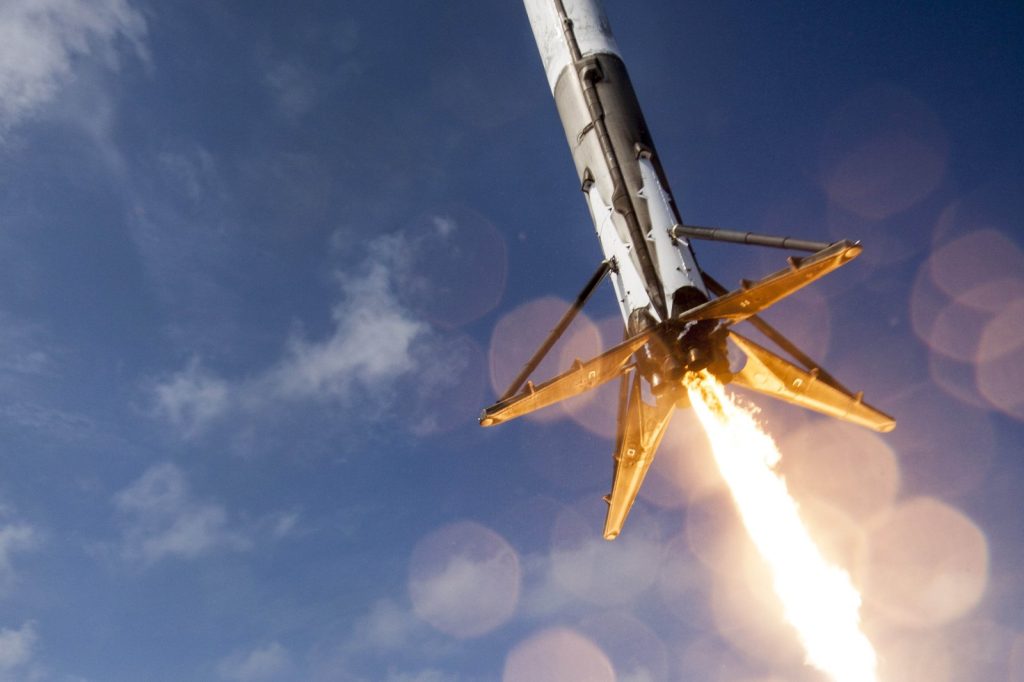
LONDON, July 14 — What if a rocket could fly, land, refuel, and fly again? That question, once the stuff of science fiction, now defines a fast-growing corner of the space industry. The reusable launch vehicle market is built on rockets designed to be recovered and reused for multiple flights, shifting the economics of getting payloads into orbit.
The numbers, where available, hint at the scale of the shift. A Morgan Stanley report from September 2023 projected the global space economy could grow to $1.4 trillion by 2030.
Reusable rockets, the analysts estimated, would account for 40% of launch costs savings. The market itself was valued at $5.2 billion in 2022.
The dominant player and its rivals
SpaceX holds an estimated 70% market share for commercial launches, according to the same report. Its Falcon 9 rocket is the workhorse of the industry, and its Starship system is in development. The company’s lead is substantial.
In 2022 alone, the U.S. government — through NASA and the Department of Defense — awarded SpaceX contracts worth $3.2 billion. But competitors are closing in.
Blue Origin is developing New Glenn, a heavy-lift rocket the company says will reduce launch costs by 30% compared to Falcon 9. Rocket Lab, meanwhile, first reused its Electron rocket in May 2022, marking a milestone for smaller launch vehicles. The European Space Agency and China’s CASC are also developing reusable rockets.
Both organisations had test flights expected in 2024.
How reusability changes the economics
The science behind it is straightforward in concept, fiendishly difficult in execution. A conventional rocket is discarded after a single use — stages fall away and are destroyed or lost at sea. A reusable rocket must survive re-entry, perform a controlled landing, and then be inspected, refurbished and refuelled for its next mission.
The payoff is that the rocket’s most expensive components — engines, avionics, the first-stage airframe — are used multiple times, spreading the manufacturing cost across many flights. That is what drives the projected 40% savings on launch costs.
For commercial operators, government agencies and defence departments, those savings open the door to more frequent, cheaper access to space.
What to watch next
The market is still young. The $5.2 billion valuation from 2022 reflects a sector dominated by a single company. As New Glenn and other vehicles enter service, and as European and Chinese programmes move from test flights to operational launches, the competitive landscape will shift.
The U.S. government remains the largest single customer, and its procurement decisions will shape which vehicles succeed. For now, the question is not whether reusable rockets work — they do, as SpaceX and Rocket Lab have demonstrated — but how quickly the rest of the industry can catch up.
Sources
{“@context”: “https://schema.org”, “@type”: “NewsArticle”, “headline”: “Reusable Rocket Market Valued at $5.2 Billion in 2022”, “description”: “LONDON, July 14 — What if a rocket could fly, land, refuel, and fly again? That question, once the stuff of science fiction, now defines…”, “datePublished”: “2026-07-14T09:30:00+00:00”, “author”: {“@type”: “Person”, “name”: “Henry Thomas”}, “publisher”: {“@type”: “Organization”, “name”: “InfoPulse Today”, “url”: “https://newsfeed.infopulsetoday.com/”}, “citation”: [{“@type”: “CreativeWork”, “url”: “https://en.wikipedia.org/wiki/Reusable_launch_vehicle”}]}




