
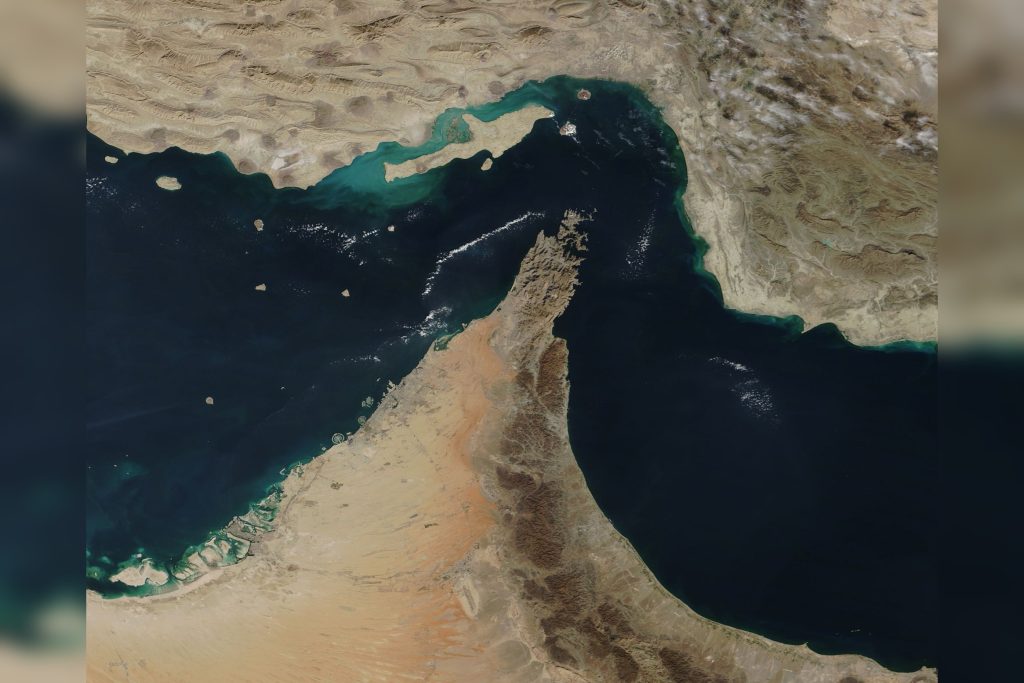
NEW DELHI, July 11 — India faces the steepest exposure among Asian economies if the Strait of Hormuz is closed, with the country importing over 2 million barrels per day from Iran and Gulf states in 2023. That figure, drawn from industry data, places New Delhi ahead of China, Japan, and South Korea in terms of volume at risk from a disruption in the narrow waterway through which 20% of the world’s oil passes. The stakes are existential for India’s energy security.
The ministry of petroleum and natural gas has not issued a formal statement on contingency plans, but officials are understood to be monitoring the situation closely. Any sustained closure would force refiners to seek alternative supplies at significantly higher costs, with the potential to widen the country’s trade deficit and stoke inflation.
Global supply chains under pressure
The Strait of Hormuz carried 17 million barrels per day in 2023, according to the U.S. Energy Information Administration. A closure would sever that flow almost entirely. Historical models suggest that Brent crude, which averaged $99 per barrel in 2022, could surge past $150 per barrel under such a scenario.
Analysts point to the 2019 attack on Saudi Aramco’s Abqaiq and Khurais facilities as a reference point. That incident knocked out 5.7 million barrels per day of production and triggered a 15% spike in oil prices.
A full Strait closure would dwarf that disruption in both scale and duration. China imported over 1.5 million barrels per day from Iran and Gulf states in 2023. Japan and South Korea each imported over 1 million barrels per day.
All three are heavily reliant on the waterway, but India’s dependence is the most pronounced in absolute terms.
Emergency reserves and insurance costs
The U.S. Strategic Petroleum Reserve held 375 million barrels as of March 2025. That stockpile could be tapped to moderate price spikes, though its capacity to offset a prolonged closure is limited. The International Energy Agency, founded in 1974, coordinates emergency oil stock releases among its 31 member countries.
India is not an IEA member, though it has strategic storage of its own. Shipping insurance rates for tankers transiting the region are likely to rise sharply.
In 2019, war risk premiums for vessels in the area increased tenfold after a series of attacks on tankers near the Strait. A similar or larger jump would add to the cost of every barrel that does manage to move through or around the chokepoint. The immediate question for markets is whether diplomatic channels can de-escalate the situation before physical supply is disrupted.
For India and its Asian neighbours, the answer will determine whether the price shock remains a forecast or becomes a daily reality at the refinery gate.
Sources
{“@context”: “https://schema.org”, “@type”: “NewsArticle”, “headline”: “Strait of Hormuz Closure Threatens Global Oil Supply Chains”, “description”: “NEW DELHI, July 11 — India faces the steepest exposure among Asian economies if the Strait of Hormuz is closed, with the country importing over…”, “datePublished”: “2026-07-11T09:30:00+00:00”, “author”: {“@type”: “Person”, “name”: “Arjun Mehta”}, “publisher”: {“@type”: “Organization”, “name”: “InfoPulse Today”, “url”: “https://newsfeed.infopulsetoday.com/”}, “citation”: [{“@type”: “CreativeWork”, “url”: “https://en.wikipedia.org/wiki/Oil_price”}]}




