
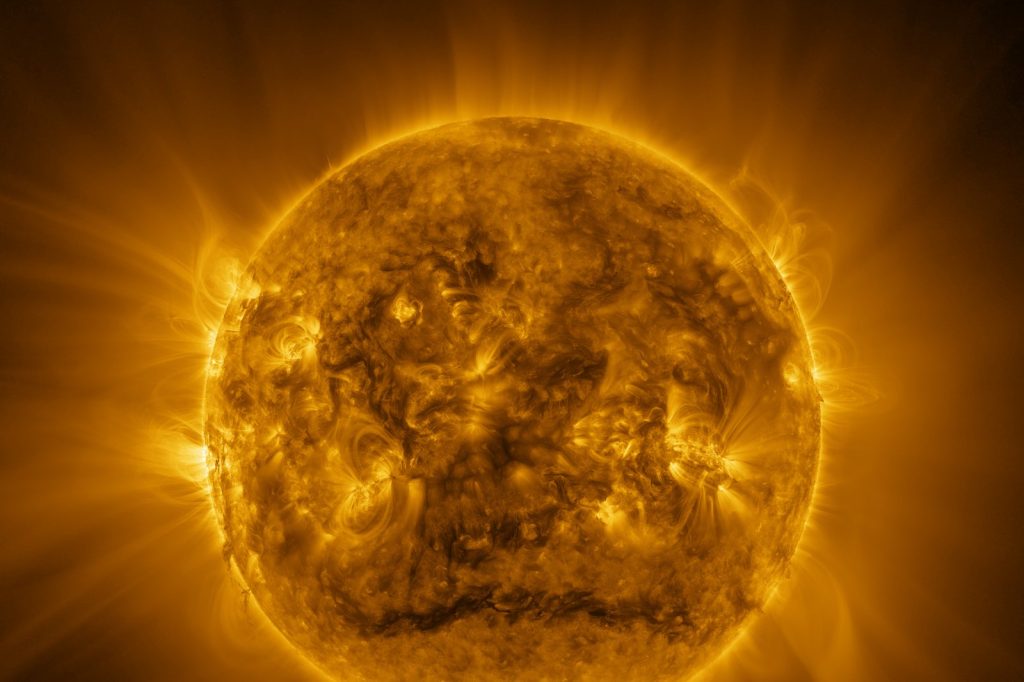
MANILA, July 9 — The outermost boundary of our Sun’s influence, a vast and shifting frontier in space known as the heliopause, continues to fascinate scientists and offers a unique window into the environment that shapes all life in our solar system. This is where the Sun’s constant outpouring of charged particles, the solar wind, finally meets the material drifting between the stars.
For communities across Asia, from farmers monitoring weather patterns to families simply enjoying a stable climate, the Sun is the ultimate source of warmth and energy. But that solar wind, a stream of particles, creates a giant protective bubble around our entire solar system called the heliosphere. This bubble extends far beyond the orbit of Pluto, and the heliopause is its very edge.
NASA’s Interstellar Boundary Explorer, or IBEX, a satellite launched back in 2008, has been our primary eye on this distant frontier. By detecting energetic neutral atoms, IBEX has been able to map the heliopause, giving us our first global pictures of this boundary. The Cassini spacecraft, which spent years exploring Saturn and its moons, also contributed valuable data to this effort.
The exact location and shape of the heliopause are not fixed. They shift and change, responding to the Sun’s own activity cycles and the conditions of the interstellar medium, the matter and radiation that fills the space between stars. The solar wind slows down dramatically at a region called the termination shock, roughly 75 to 90 AU from the Sun, before eventually reaching the heliopause at about 100 to 120 AU.
What this means for our understanding of the solar system is profound. The heliosphere acts as a kind of cosmic shield, deflecting a portion of the harmful galactic cosmic rays that would otherwise reach the inner planets. The health of astronauts on future long-duration missions, and even the long-term stability of our planet’s atmosphere, are linked to the dynamics of this bubble.
A new chapter is now opening. The New Horizons spacecraft, famous for its flyby of Pluto, is providing in-situ measurements from beyond the giant planets. Unlike IBEX, which maps from afar, New Horizons is actually traveling through this region, offering a direct, close-up perspective that no other mission has achieved.
Closer to home, the data from these missions helps refine the models scientists use to predict space weather. For a region like Asia, where telecommunications and satellite-based services are integral to daily life, understanding the heliosphere’s shield is not just an academic exercise. It is part of understanding our place in the cosmos and the forces that shape our world.
{“@context”: “https://schema.org”, “@type”: “NewsArticle”, “headline”: “How the Sun’s Magnetic Bubble Interacts with Interstellar Space”, “description”: “MANILA, July 9 — The outermost boundary of our Sun’s influence, a vast and shifting frontier in space known as the heliopause, continues to fascinate…”, “datePublished”: “2026-07-09T09:30:00+00:00”, “author”: {“@type”: “Person”, “name”: “Merry Gel Sigui”}, “publisher”: {“@type”: “Organization”, “name”: “InfoPulse Today”, “url”: “https://newsfeed.infopulsetoday.com/”}}




