
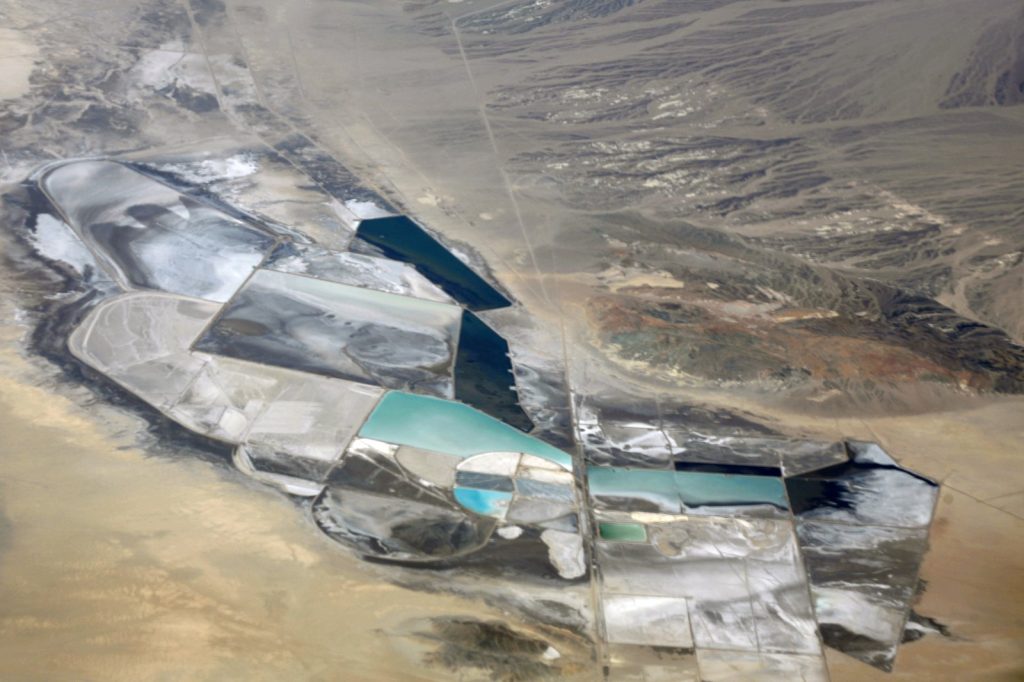
SILVER PEAK, Nevada, July 9 — The dust rises in slow, white clouds off the access road, settling on the sagebrush that stretches to the base of the Monte Cristo Range. Here, in the high desert of central Nevada, a single industrial plant hums against the silence. It is the only operating lithium mine in the United States.
The Silver Peak facility, run by Albemarle Corporation, produces approximately 5,000 metric tons of lithium annually. On the ground, the operation feels modest — a cluster of evaporation ponds and processing equipment tucked into a landscape that has known mining for decades.
But the pressure building around this place, and around the metal it produces, is anything but modest. Global lithium production hit 130,000 metric tons in 2022, according to the US Geological Survey. That was a sharp jump from 100,000 metric tons the year before.
The numbers tell a story of an industry scrambling to keep pace. Australia leads the world, pulling 61,000 metric tons — 47 percent of global supply — from hard-rock spodumene mines.
Chile is second with 39,000 metric tons, all extracted from the brine beneath the Atacama Desert. China produced 19,000 metric tons, but its real leverage lies downstream: Beijing controls 60 percent of the world’s lithium refining capacity. The market has been volatile.
Lithium carbonate prices rocketed from $6,800 per metric ton in January 2021 to a peak of $80,000 per metric ton in November 2022. By mid-2023, prices had fallen back to $40,000 per metric ton. That whipsaw has left producers and buyers alike trying to read the tea leaves.
A New Frontier in Nevada
By nightfall, the lights of the Silver Peak plant are visible for miles across the basin. But a much larger operation is taking shape to the north. The Thacker Pass mine, owned by Lithium Americas, received federal approval in 2021.
It is expected to begin production in 2026, with an annual capacity of 60,000 metric tons — twelve times what Silver Peak produces. That would fundamentally shift the geography of US lithium supply.
For now, the country remains almost entirely dependent on imports for a metal that is essential to the electric-vehicle batteries powering the transition away from gasoline. The International Energy Agency estimates that global lithium demand for EVs alone will climb from 80,000 metric tons in 2022 to more than 500,000 metric tons by 2030. Recycling is not expected to close the gap.
Even by the end of the decade, recycled lithium from spent batteries is forecast to supply less than 10 percent of demand. That means new mines, new brine operations, and new political fights over where and how to extract.
The Lithium Triangle
South America’s “Lithium Triangle” — the high-altitude salt flats shared by Chile, Bolivia, and Argentina — holds some of the world’s richest brine deposits. Argentina produced 6,200 metric tons in 2022, making it the fourth-largest producer globally. The region’s potential is enormous, but extraction is water-intensive, and local communities have raised concerns about the impact on fragile desert aquifers.
In Chile, the Atacama Desert brine operations that produced 39,000 metric tons in 2022 face similar scrutiny. The balance between resource development and environmental stewardship is not theoretical here.
On the ground, residents describe the landscape as both a source of wealth and a living system that has sustained them for generations. The US Geological Survey data shows that global production rose by 30 percent between 2021 and 2022 alone. That pace of growth is likely to continue, driven by automakers’ electric-vehicle targets and government policies favoring domestic supply chains.
The Thacker Pass project, if it reaches full capacity, would represent a significant step toward reducing US reliance on foreign lithium — but it would still cover only a fraction of projected domestic demand. For now, the Silver Peak mine keeps running, its 5,000 metric tons a year a reminder of how far the United States has to go.
By the time the new operation at Thacker Pass is fully online, the global lithium landscape will have shifted again. The question hanging over the desert is whether supply can keep up — and at what cost to the land that holds it.




