
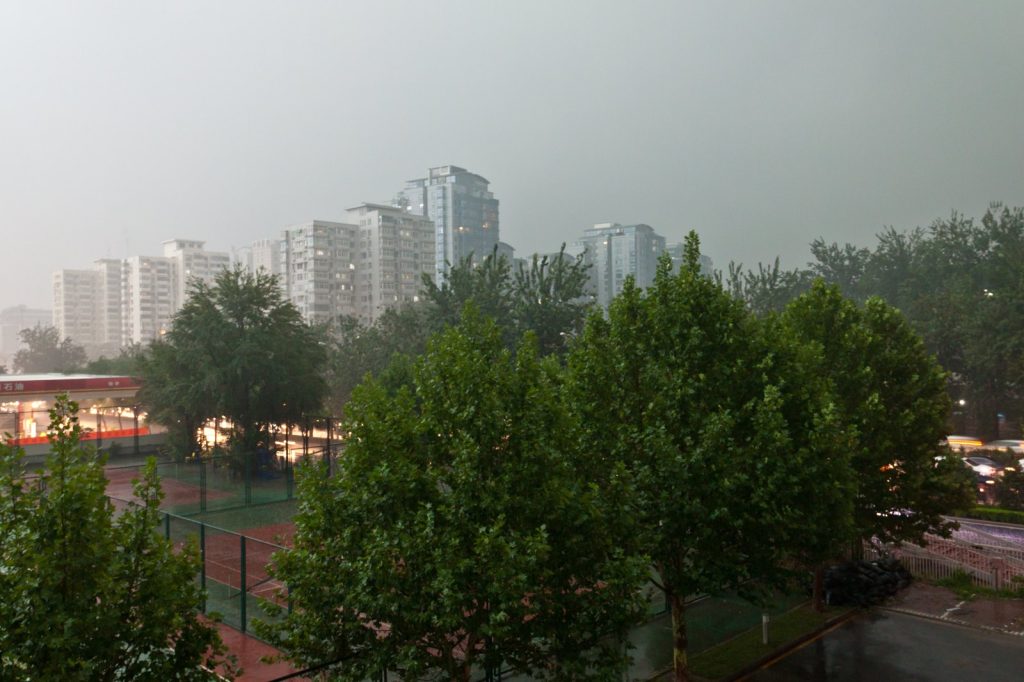
The deluge that inundated Beijing last week was not a sudden surprise. For decades scientists and environmental engineers have documented the conditions that make such a disaster all but inevitable. The city experienced its most severe flooding in more than 140 years, a event that has so far claimed 21 lives, though the toll could still increase as waters remain high.
The roots of the catastrophe extend far beyond a single storm. Beijing sits on a natural floodplain, yet over the past fifty years rapid urbanization has covered vast tracts of soil with concrete and asphalt.
Rain that once infiltrated the ground now rushes straight into streets, basements and the city’s drainage network. Much of that infrastructure was constructed decades ago and was never engineered to handle the sheer volume of water that fell in a short span. Emergency crews have labored around the clock, but they are contending with pressures that have been accumulating for generations.
The loss of wetlands in and around the capital has been a major factor. Wetlands function as natural sponges, absorbing excess rainfall and releasing it slowly; many of these areas were drained to make way for development or agriculture.
Deforestation in the surrounding hills has exacerbated the situation. Without tree cover to slow and capture rainwater, runoff accelerates, picking up debris and silt that clog waterways and trigger overflows. Human engineering has also played a role. Levees and channelized rivers were erected to control flooding, yet they can foster a false sense of security.
When water surpasses their design capacity, the outcome can be worse than if the floodplain had been left untouched, as the recent failure of these controls demonstrates. The link between climate change and flooding remains an active scientific discussion.
Some researchers contend that a warmer atmosphere holds more moisture, leading to heavier rainfall events. Others argue that shifting weather patterns concentrate precipitation into shorter, more violent bursts. What is undisputed is that Beijing has not witnessed flooding of this magnitude in nearly 150 years, a fact borne out by the historical record.
Beyond the immediate loss of life, the long‑term repercussions are beginning to surface. Repairing damaged infrastructure will require years and billions of dollars.
Roads, bridges and subway tunnels have been submerged. Water treatment plants have been compromised, raising public‑health concerns. Standing water in low‑lying neighborhoods creates breeding grounds for disease‑carrying insects, while contaminated floodwaters can infiltrate wells and pipes.
Agriculture in the surrounding countryside has also suffered. Fields of corn and vegetables have been ruined, livestock have drowned, and the loss of a growing season adds economic strain to families already grappling with the disaster.
Civil‑engineering projects will need to be reevaluated; structures built in flood‑prone zones may require retrofitting or relocation. The global context cannot be ignored. Sea level rise, driven by melting ice sheets and thermal expansion of ocean water, elevates baseline risk for coastal cities.
Although Beijing is inland, the same atmospheric dynamics that fuel sea‑level rise are linked to the intensification of rainfall events worldwide. The planet is changing, and the historical rules governing flood risk no longer apply.
Restoring natural habitats offers a partial remedy. Wetlands can be reestablished, forests replanted, and permeable pavement can substitute for some of the concrete that now blankets the city. However, these measures demand time and political will.
In the short term, residents of Beijing remain immersed in the aftermath of a disaster that was decades in the making, with the death toll currently at 21 and the possibility of it rising as waters continue to recede.




