
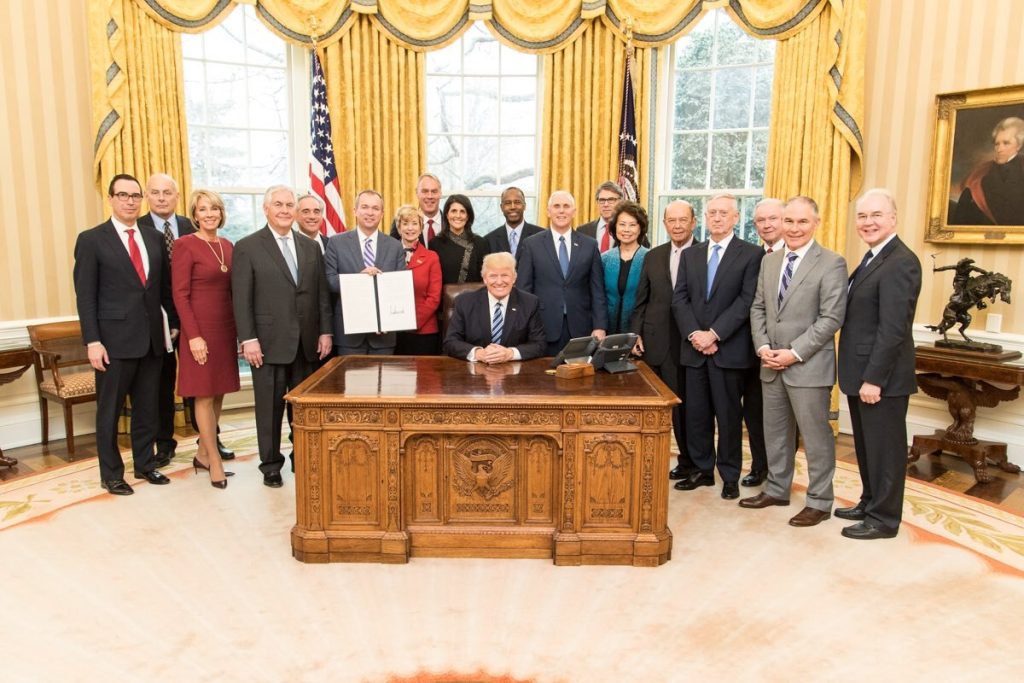
WASHINGTON, July 10 — The man who returned to the Oval Office on January 20, 2025, is now charting a dramatically different course on global energy markets than the one he promised on the campaign trail. President Donald Trump’s proposed tariffs on Russian oil mark a significant departure from his earlier skepticism about U.S. involvement in Ukraine and his repeated claims that he could end the war quickly. Trump, the 45th and now 47th president, won the 2024 election against Kamala Harris with 312 electoral votes to her 226.
That victory handed him a second, non-consecutive term. But the foreign policy landscape he now navigates looks nothing like the one he left in 2021.
During his first term, from 2017 to 2021, Trump imposed tariffs on Chinese goods beginning in 2018 and withdrew the United States from the Iran nuclear deal that same year. His approach was consistently branded “America First,” a doctrine that prioritized U.S. economic interests above traditional alliance commitments. He expressed deep skepticism about American involvement in Ukraine and promised voters he could end the war quickly.
The proposed oil tariffs target Russian crude. This represents a sharp turn from Trump’s earlier rhetoric, which portrayed the Ukraine war as a European problem.
Born June 14, 1946, Trump built his public identity as a businessman and reality television star before entering politics. His first term was defined by the Tax Cuts and Jobs Act of 2017, which slashed corporate rates, and a sweeping deregulation agenda across multiple industries. Those policies remain the backbone of his economic message.
The 2024 campaign saw Trump defeat Harris, the sitting vice president. Trump’s victory was decisive in the Electoral College. Now in his second term, Trump faces a legal landscape unlike any previous president.
He was impeached twice during his first term, in 2019 and again in 2021. Between 2023 and 2024, he faced four criminal indictments, though he was convicted in only one case: a May 2024 verdict on 34 counts of falsifying business records.
That conviction has not prevented him from governing. The proposed Russian oil tariffs would function as a secondary sanction, adding a cost layer onto purchases of Russian crude. The mechanism is familiar: Trump used tariffs extensively during his first term against China, launching a trade war in 2018 that reshaped global supply chains.
The difference now is the target. Russia is a major oil exporter, and any tariff on its crude would ripple through global energy markets.
The administration has not detailed the exact rate or implementation timeline. Trump’s second term unfolds under the weight of his legal history. The two impeachments from his first term — one over Ukraine, the other over the January 6 Capitol attack — remain reference points for his critics.
The four criminal indictments filed in 2023 and 2024 covered everything from classified documents to election interference, though only the New York business records case resulted in a conviction. That conviction, on 34 felony counts in May 2024, has not triggered any constitutional mechanism to remove him from office. The Russian oil tariff proposal is still in its formative stages.
Trump’s earlier claim that he could end the Ukraine war quickly now faces the test of reality. The proposed oil tariffs suggest the administration sees economic pressure, not diplomacy alone, as the primary tool.
By nightfall, the White House had not released additional details. But the direction is clear: the America First president is now deploying America’s energy leverage against one of its primary geopolitical adversaries.




