
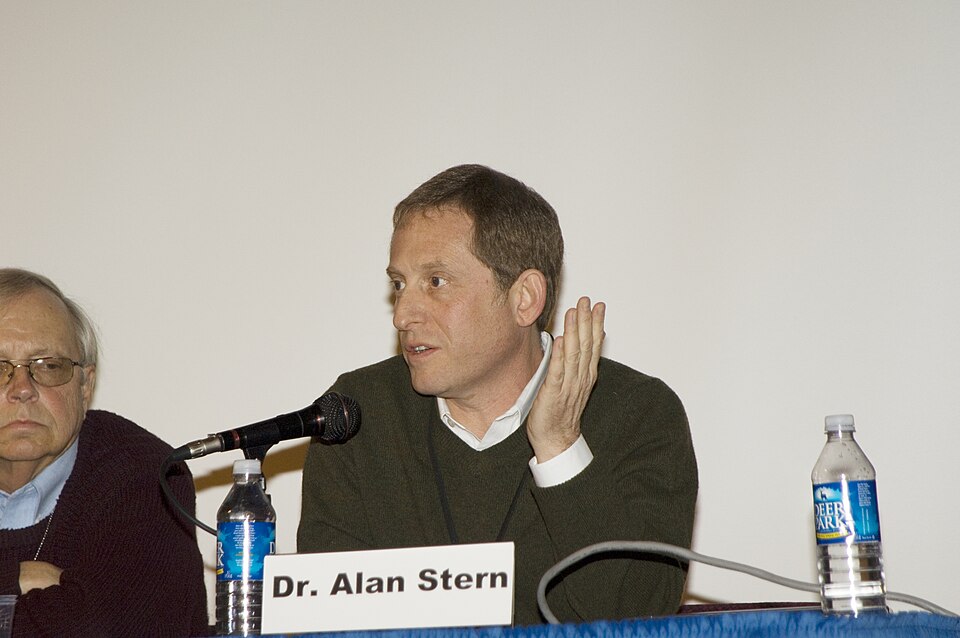
LAUREL, Maryland, July 9 — The geopolitical calculus of planetary exploration rarely gets the attention it deserves. But when Dr. Alan Stern, the principal investigator of NASA’s New Horizons mission, speaks about the broader stakes of space science, he is not merely discussing rock samples and orbital mechanics. He is talking about strategic positioning on a cosmic chessboard.
Stern is a planetary scientist and engineer who once served as NASA’s Associate Administrator for the Science Mission Directorate. He has been a vocal and persistent advocate for pushing the boundaries of planetary exploration, a posture that has placed him at the center of some of the most consequential scientific decisions made by the United States in the last two decades.
His leadership of the New Horizons mission, which conducted the first-ever reconnaissance of Pluto, signals a particular American willingness to invest in high-risk, high-reward science. The mission itself is managed by the Johns Hopkins University Applied Physics Laboratory (APL) in Laurel, Maryland. APL built the spacecraft.
The science team is led by the Southwest Research Institute (SwRI) in San Antonio, Texas. Key personnel include project manager Glen Fountain at APL and deputy project scientist Cathy Olkin at SwRI.
The mission was approved in 2001 after a competitive selection process. This was not a foregone conclusion; it was a hard-fought win in a bureaucratic arena where scientific priorities are weighed against budget realities.
The Cost of Discovery
Strategically, the cost of the mission through the Pluto flyby was about $720 million. That figure, in the context of federal spending, represents a targeted investment with an outsized return in both scientific data and national prestige. The New Horizons team received the 2016 Space Foundation’s Space Achievement Award, a recognition of the mission’s technical and scientific success.
What this signals to the international community is that the United States remains capable of executing complex, long-duration deep space missions that capture the public imagination. Stern has also written books on the subject, using his platform to argue for a sustained American commitment to exploration.
His voice carries weight because he has been in the room where these decisions are made. He understands the calculus of funding cycles, the competition between scientific disciplines, and the political will required to launch a spacecraft toward the edge of the solar system.
Beyond Pluto
The broader stakes of this work extend beyond the Kuiper Belt. Planetary exploration is a long-game endeavor. The decisions made today about mission priorities, funding, and institutional support will shape what the United States can accomplish in space a decade from now.
Stern has consistently framed this as a matter of national capability, not just scientific curiosity. For the moment, the New Horizons mission stands as a landmark achievement.
But the strategic question that lingers is whether the institutional momentum it generated will be sustained. The next moves on this geopolitical chessboard will be determined by budget allocations, administrative priorities, and the willingness of the scientific community to continue making the case for deep space exploration. Stern, for his part, has shown no sign of stepping back from that fight.




