
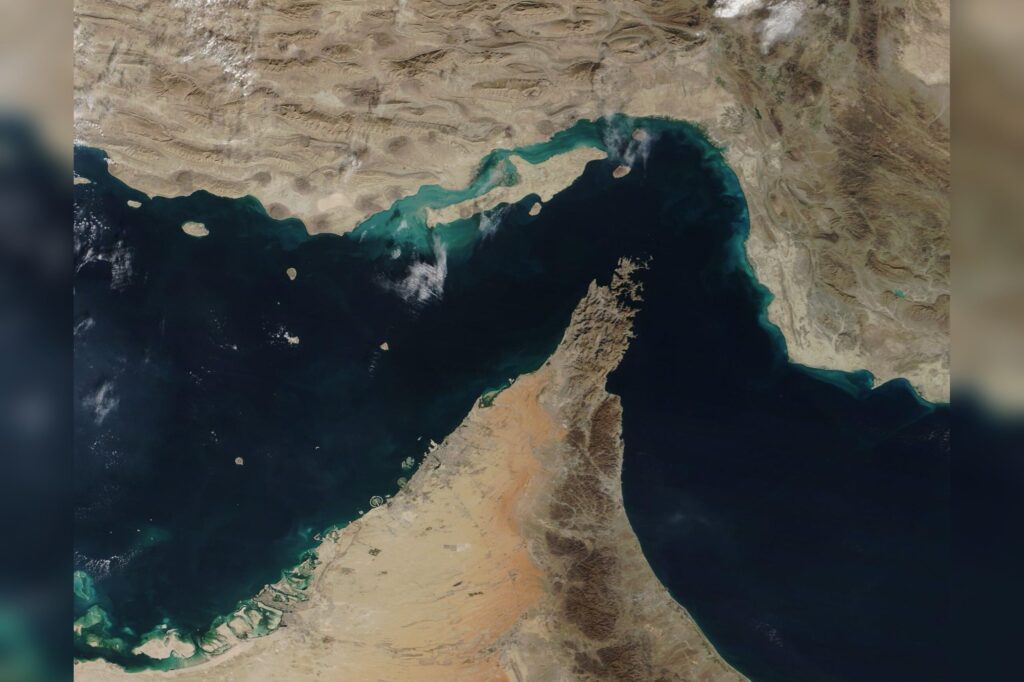
WASHINGTON, July 8 — The economic stake in the Strait of Hormuz is enormous, and a new analysis from the U.S. Energy Information Administration lays out just how exposed global markets remain to any disruption in this narrow waterway. The strait carried roughly 17 million barrels per day of crude oil, condensate, and petroleum products in 2022, the EIA data shows. That volume represents about 20% of global petroleum consumption.
The breakdown is telling. About 12 million barrels per day of that total is crude oil and condensate, with the remaining 5 million barrels per day consisting of refined products and liquefied petroleum gas.
For natural gas markets, the numbers are equally stark. Qatar exports about 100 million tons of LNG annually through the strait, the data shows, making it the world’s largest LNG exporter. Any closure of the strait would simultaneously hit oil and gas markets.
Price shock scenarios
The EIA estimates that a full closure of the strait could cause oil prices to spike by 30% or more. History provides a reference point. In 1990, during the Gulf War, prices doubled.
More recently, in 2019, after attacks on tankers in the area, oil prices rose 15% in a single week. The pattern is clear: even partial disruptions produce sharp, immediate price reactions.
The strait’s importance is not just about the volume of oil that passes through it. It is about the concentration of that volume in a single chokepoint. Tankers leaving Persian Gulf producers must navigate this narrow passage, and there is no practical alternative route for most of the crude.
That geographic reality gives the strait an outsized influence on global pricing.
Asian economies most exposed
The EIA data shows that Japan, South Korea, India, and China import about 80% of their oil from the Persian Gulf via the Strait of Hormuz. For these economies, the strait is not a distant concern but a direct supply line. Any sustained disruption would force these countries to scramble for alternative supplies, likely at much higher prices.
The United States has reduced its direct exposure. U.S. imports from the Persian Gulf stood at about 1.5 million barrels per day in 2022, the EIA data shows.
That is down from 2.5 million barrels per day in 2010. The decline is largely due to domestic shale production, which has given the U.S. more flexibility in its crude supply. Still, the U.S. is not immune.
Oil is a globally traded commodity, and a price spike in Asia or Europe quickly feeds through to American gasoline and diesel prices.
What to watch
The EIA analysis underscores that the Strait of Hormuz remains the single most important energy chokepoint in the world. For traders and policymakers, the key variable is not just the volume of oil that flows through the strait on any given day, but the market’s perception of risk. The 2019 tanker attacks showed that even limited incidents can trigger significant price moves. A full closure, while unlikely, would be an event with few historical precedents in terms of market impact.




