
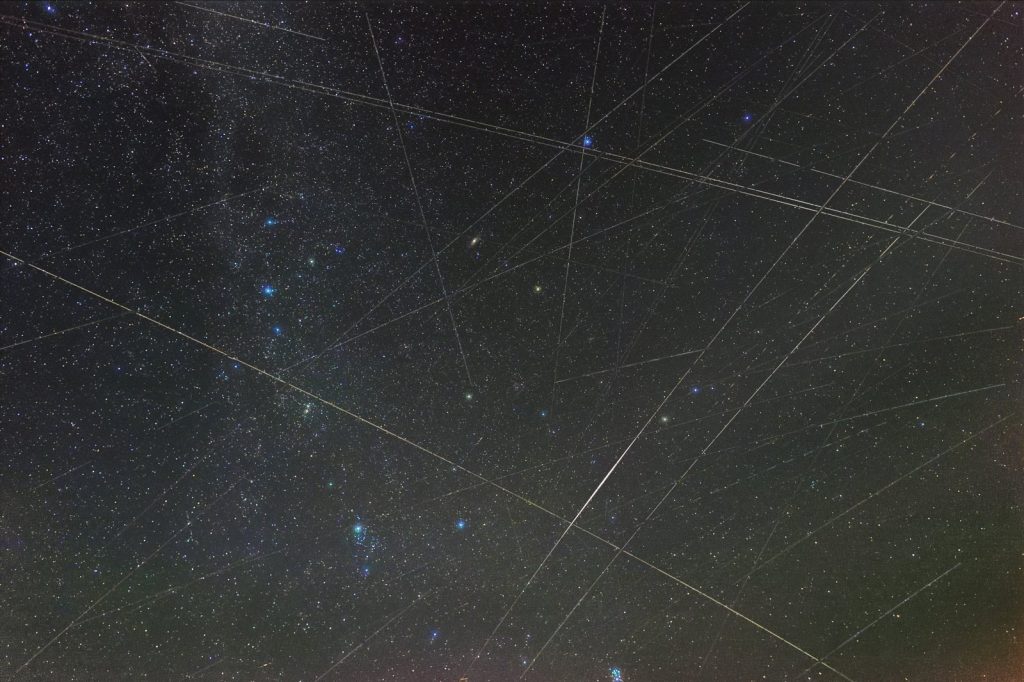
WASHINGTON, July 6 — A new ultra-black coating that reflects only two percent of incoming light could make satellites significantly fainter, directly addressing a years-long conflict between the space industry and astronomers. The coating brings satellite brightness close to the limit recommended by the International Astronomical Union. According to the source, the coating is being developed as a mitigation strategy to preserve the ability to observe celestial objects without interference.
Light pollution from satellites has been a growing concern since the first Starlink launch in 2019. Large constellations, particularly SpaceX’s Starlink network, have been a growing concern for astronomers.
The International Astronomical Union has established guidelines for satellite brightness to minimize impact on ground-based astronomy. The new coating appears designed to meet those standards. The coating reflects only two percent of incoming light.
That represents a substantial reduction in visibility from orbit. The source describes the coating as a mitigation strategy to a problem that has been a growing concern for astronomers since the first Starlink launch in 2019.
The source does not indicate a timeline for deployment on operational satellites. The source indicates the technology remains in development. For astronomers, the stakes are clear.
Ground-based observatories represent decades of investment and scientific infrastructure. Protecting their ability to observe celestial objects without interference has become an urgent priority as satellite launches accelerate. The International Astronomical Union’s brightness guidelines provide a target.
The new coating brings satellite reflectivity close to that threshold. What remains unclear is whether the coating can withstand the harsh conditions of space.
The source does not address specific challenges such as thermal cycling, radiation, or debris impacts. The broader question involves adoption. Even if the coating works, satellite operators must choose to use it.
There is no indication in the source that constellation operators have committed to applying the coating to their fleets. On the timeline, the problem has evolved rapidly.
The first Starlink launch in 2019 marked a turning point. Since then, light pollution from satellites has been a growing concern for astronomers. The coating represents one technical fix among several being explored.
For now, the development marks progress. But the source shows the solution remains in development.




