
LONDON, July 9 — The global charging infrastructure for electric vehicles is expanding at pace, but the gap between what exists and what is needed remains vast. According to the International Energy Agency, there were 2.7 million public EV charging points worldwide at the end of 2022, up from 1.8 million the year before. The technical reality under the hood of that headline figure is worth picking apart.
Of those 2.7 million public chargers, 900,000 were fast units delivering 50 kW or more, while the remaining 1.8 million were slower, standard chargers. China dominates the picture by a considerable margin: the country operates 1.8 million public chargers in total, including 760,000 fast chargers.
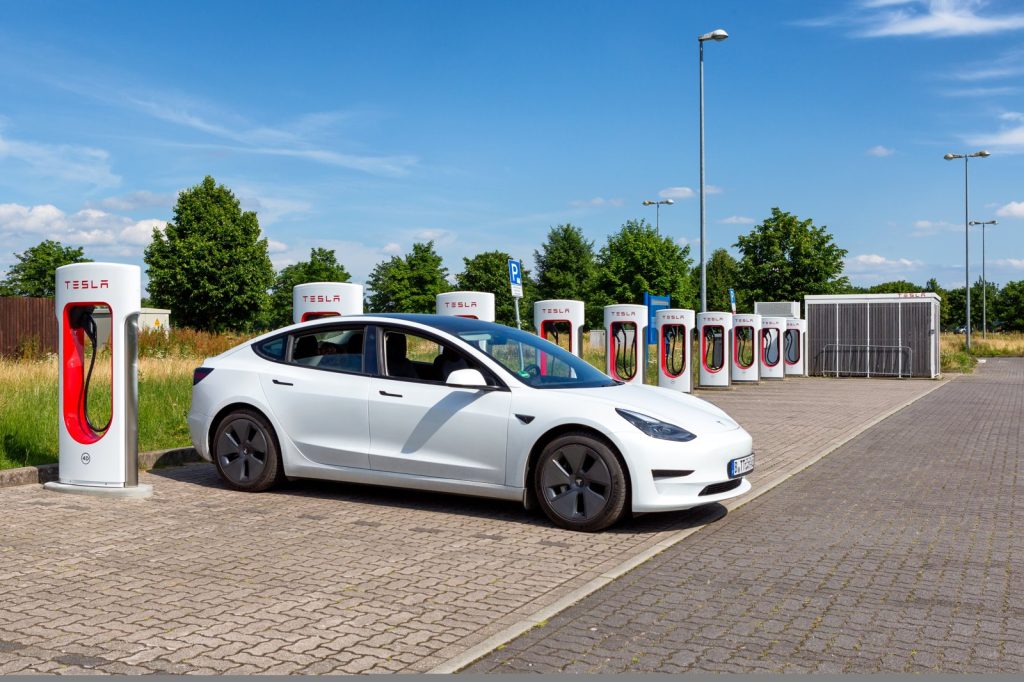
Europe has 500,000 public chargers, and the United States lags with 140,000. Within that US figure, approximately 50,000 are public fast-charging ports. Tesla’s Supercharger network, launched in 2012, accounts for 20,000 of those fast ports in the US and has over 40,000 connectors globally.
The detail that matters for American drivers is that Tesla, in February 2023, announced it would open its Supercharger network to non-Tesla EVs in the United States, following a similar move already made in Europe. That decision shifts the competitive landscape, though the sheer scale of the challenge remains.
The IEA estimates that 40 million public charging points will be needed globally by 2030 to support a projected EV fleet of 300 million vehicles.
The $7.5 billion question
The US National Electric Vehicle Infrastructure program, funded by the Bipartisan Infrastructure Law of 2021, is the federal government’s answer to the shortfall. The NEVI program provides $7.5 billion to build 500,000 public EV chargers by 2030. The requirements are exacting: chargers must be placed every 50 miles along designated highways and must be operational at least 97% of the time.
That reliability standard, as ever, is the sort of technical specification that sounds dry but determines whether the infrastructure actually works for the people who need it. Home charging, however, remains the backbone of EV use in America.
The IEA data notes that home charging accounts for 80% of EV charging sessions in the US. An average Level 2 home charger installation costs $500 to $700. The cost of public fast charging is higher: the average session runs $0.30 to $0.50 per kWh, which works out to $10 to $15 for a 200-mile charge.
That is cheaper than petrol for most comparable journeys, though the upfront cost of home installation and the variability of public pricing are factors that still give some buyers pause. Europe’s 500,000 public chargers represent a denser network than the US, though still far from what the IEA projects as necessary.
The continent has moved faster on interoperability and standardisation, partly driven by regulation and partly by the competitive pressure of Chinese EV imports. The United States, by contrast, has a more fragmented landscape, with Tesla’s proprietary network historically functioning as a closed system. The opening of the Supercharger network to other brands changes that dynamic, though the pace of rollout will depend on permitting, grid capacity, and the availability of installation crews.
The slow charger problem
The split between fast and slow chargers is not merely academic. Of the 2.7 million public chargers globally, 1.8 million are slow units. In many markets, especially outside China, slow chargers dominate city-centre locations and kerbside parking, where cars sit for hours.
Fast chargers, meanwhile, are critical for highway travel and for drivers who lack off-street parking. The ratio of fast to slow chargers in the US — roughly 50,000 fast ports against a total of 140,000 public chargers — means that the majority of public charging is still a slow affair.
China’s 760,000 fast chargers, by contrast, reflect a deliberate policy push to support a rapidly growing EV fleet. The country’s 1.8 million total public chargers give it the largest network in the world by a wide margin. For context, the US has roughly 8% of China’s total public charger count, despite having a comparable landmass and a similar number of cars on the road.
The NEVI program’s requirement for 97% uptime is a response to a persistent complaint among EV owners: chargers that are broken, vandalised, or simply offline. The detail that matters here is that the requirement is attached to federal funding, so states and private operators have a financial incentive to maintain equipment.
Whether that translates into reliable charging at scale remains to be seen, but the specification is a clear step up from the current patchwork. Looking ahead, the gap between the 2.7 million chargers in place at the end of 2022 and the 40 million needed by 2030 is enormous. The IEA’s projection assumes not just continued growth but a dramatic acceleration in installation rates, particularly in North America and Europe.
The US has committed $7.5 billion and a target of 500,000 chargers by the end of the decade. That is ambitious, but the technical reality is that permitting, grid upgrades, and equipment manufacturing all need to scale simultaneously.




