
LONDON, July 14 — The mechanics of global oil pricing have been tested repeatedly over the past eighteen months by a steady campaign of Ukrainian drone strikes on Russian energy infrastructure. Yet the headline number — Brent crude hovering around $80 per barrel — tells a story of remarkable stability. On closer reading, however, the calm at the surface masks a quiet but significant shift in the structure of Russian oil exports, one that has begun to reshape product markets far from the front lines.
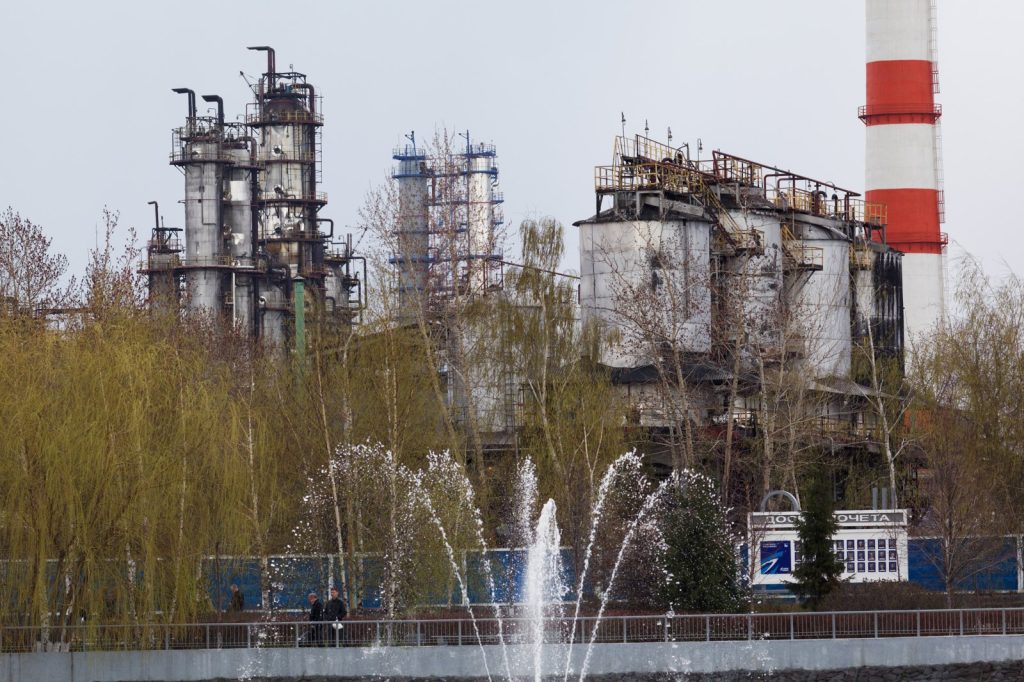
When Ukrainian drones hit the Moscow Refinery on January 23, 2025, the immediate reaction in trading rooms was a shrug. The facility processes roughly 12 million tons of crude oil annually, but its output is consumed almost entirely within Russia’s domestic market.
That distinction matters. A refinery that serves local petrol stations rather than export terminals does not directly threaten the global supply of crude. The same logic applied to the strike on the Nizhnekamskneftekhim plant that same day: it produces petrochemicals, not crude oil, so its disruption does not reduce the volume of barrels available to international buyers.
Analysts attributed the price stability to ample global supply and the domestic orientation of the targeted facilities. The catch is that these attacks are not isolated events.
They are part of a broader, sustained campaign that has, since April 2024, reduced Russia’s total refining capacity by an estimated 10-15%, according to industry reports. That cumulative damage is the story beneath the flat price chart.
Follow the Barrel: From Refined Products to Crude
The real consequence of this campaign is not a spike in the price of crude but a forced restructuring of what Russia sells. When refineries are taken offline, the crude oil that would have been processed inside them must go somewhere else. Increasingly, that somewhere else is the export market.
Russia is shipping more raw crude and fewer refined products — diesel, gasoline, fuel oil — than it did before the attacks began. The International Energy Agency reported in January 2025 that Russian oil product exports had fallen by 12% year-on-year, a direct result of the refinery damage.
That decline has implications for global diesel and gasoline markets, which are tighter than the crude market itself. A reduction in Russian refined product supply can push up prices for those specific commodities even as Brent crude remains steady. Traders watch the crude headline; the real pressure may be building in the product spreads.
The Sanctions Architecture: A Price Cap and Its Limits
The United States and the European Union have layered their own mechanism on top of these physical disruptions. Since December 2022, a price cap of $60 per barrel has limited the revenue Russia can earn from its crude exports by barring Western shipping and insurance services for cargoes sold above that threshold. The cap has constrained Moscow’s income even as the volume of crude exports has, in some periods, held up.
The strikes on refineries amplify this effect: by forcing more crude onto the market at a time when the price cap already limits the per-barrel revenue, the combined pressure on Russia’s energy earnings is greater than either the sanctions or the military campaign would achieve alone. The catch is that the cap applies to crude, not to refined products, which have their own separate price limits.
As Russia exports less diesel and more crude, the mix of its sales shifts toward the commodity that is already subject to the tightest Western restrictions. Follow the money: the Kremlin earns less per barrel on crude than it would on the diesel that barrel could have become.
Why the Risk Premium Has Not Materialised
For all this activity, oil markets have not yet priced in a significant risk premium. The reason lies in the targets. The strikes have repeatedly hit refineries and petrochemical plants, but they have not, so far, targeted the pipelines, ports, and export terminals that move Russian crude to international buyers.
As long as the export infrastructure remains intact, the physical flow of crude to the global market is not directly interrupted. The market is rational: it prices what has happened, not what might happen, and what has happened is a reduction in Russian refining capacity, not Russian export capacity.
That calculus could change. Traders are monitoring the situation for potential escalation that could affect export infrastructure. A strike on a major export terminal or a key pipeline junction would be a different event entirely — one that would remove crude from the global balance, not merely shift it from one form to another.
The market is watching, but it has not yet flinched. The stability of Brent at $80 per barrel is therefore a conditional stability.
It depends on the continuation of a pattern: attacks that degrade domestic refining but spare the export machine. If that pattern breaks, the mechanics of the oil market will change. For now, the headline is calm, but the substructure is shifting beneath it.




