
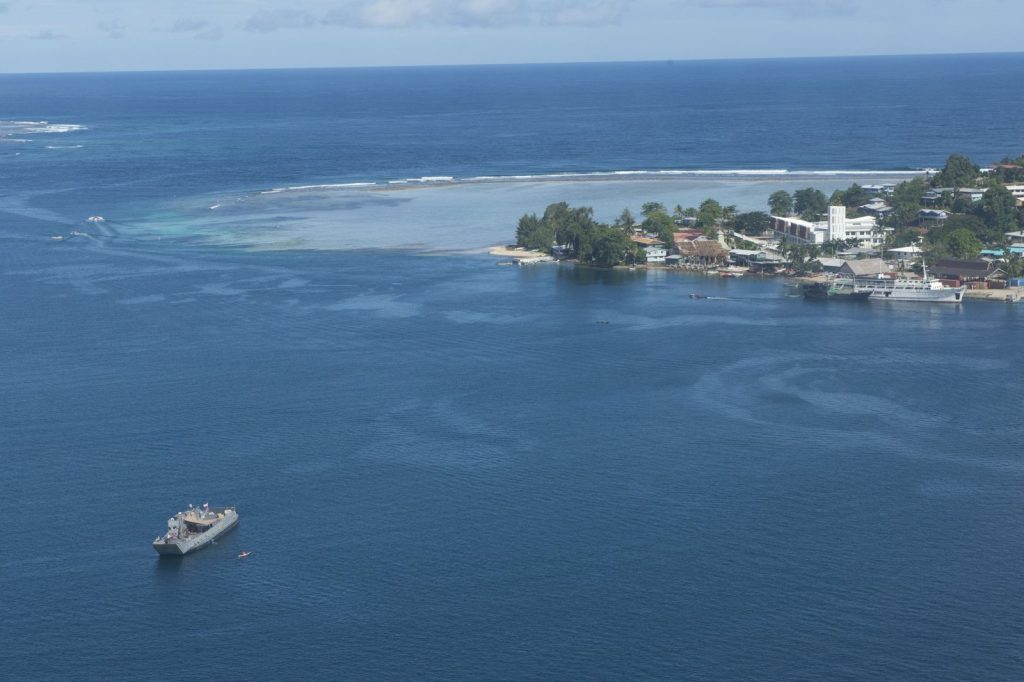
KIRAKIRA, Solomon Islands, July 28 — A magnitude 5 earthquake struck 82 kilometers southwest of Kirakira on July 28 at 19:28 UTC, the U.S. Geological Survey reported. The earthquake occurred at a depth of 10 kilometers. No tsunami warning was issued.
Seismic Event Details
The USGS detected the event through its real-time global seismic monitoring network. At 10 kilometers deep, this was a shallow earthquake. The agency classifies events at depths less than 70 kilometers as shallow, and the record shows that such earthquakes typically produce stronger shaking at the surface than deeper events of the same magnitude.
The seismic energy from a shallow event has less distance to travel through the earth before reaching the surface, which generally results in more intense ground motion. At magnitude 5, this is considered a moderate earthquake.
According to the USGS, earthquakes in this range can cause minor to moderate damage near the epicenter, depending on local building construction and ground conditions. The precise extent of any damage in the area surrounding the epicenter was not immediately available from the USGS.
Regional Seismic History
On the timeline of seismic activity in the region, the USGS data shows that this latest event fits into a pattern of frequent earthquakes. Within roughly 300 kilometers of this location, at least 391 earthquakes of magnitude 5.0 or greater have been recorded over the past two decades. The strongest among them was a magnitude 7.8 earthquake that struck in 2016.
The area around the Solomon Islands is seismically active. The convergence of tectonic plates in this part of the southwestern Pacific generates regular seismic events of varying magnitudes.
The 2016 magnitude 7.8 earthquake remains the largest recorded in this vicinity over the past 20 years according to the USGS catalog.
Aftershock Outlook
Seismologists note that aftershocks are common following an earthquake of this size. According to the USGS, aftershocks may continue for days or weeks after the main event. People in the affected area are generally advised to be prepared for further shaking.
Even moderate events like this magnitude 5 earthquake can produce aftershocks strong enough to cause additional damage to structures that may have been weakened by the initial quake. The USGS continues to monitor the region for any subsequent seismic activity through its global network of sensors.
No further details on damage, injuries, or local response were available from the agency at the time of this report. The USGS provides real-time earthquake information to authorities and the public worldwide as part of its monitoring mandate.




