
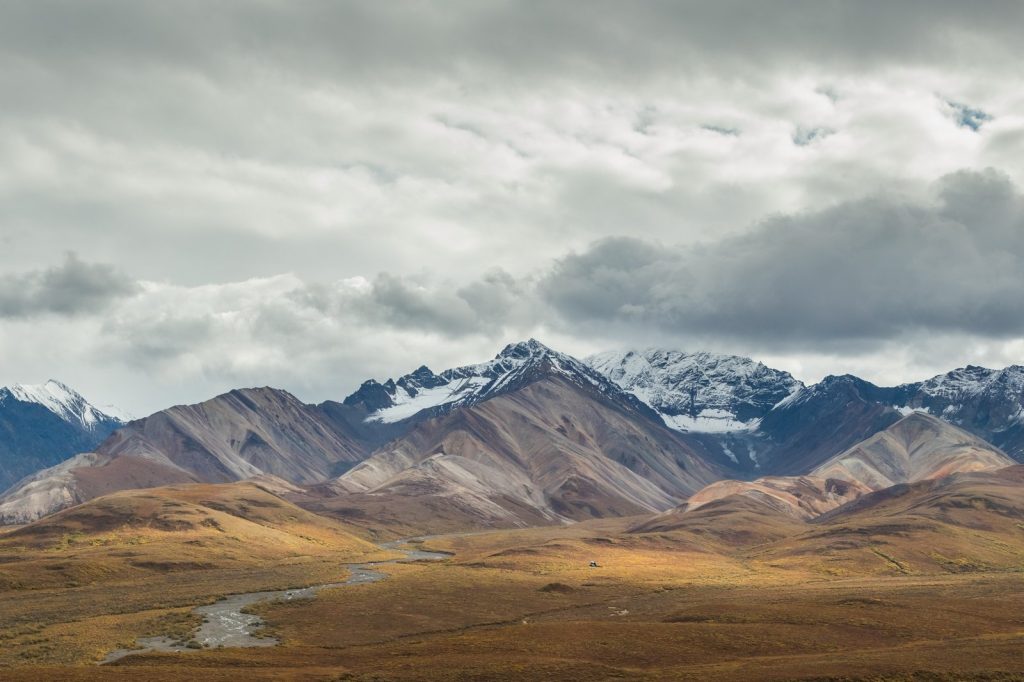
FAIRBANKS, Alaska, July 28 — A magnitude 5 earthquake struck 52 kilometers east of Denali National Park in Alaska on Tuesday evening, according to the U.S. Geological Survey. The quake occurred at 20:49 UTC at a shallow depth of 5 kilometers, a depth seismologists associate with stronger ground shaking at the surface compared with deeper events of equivalent magnitude. The USGS reported that the earthquake was centered roughly 52 km east of Denali National Park, a remote and sparsely populated region.
At magnitude 5, the event falls into the moderate category, capable of causing minor to moderate damage near the epicenter. Early reports indicate that at least 143 people felt the shaking, though no tsunami warning was issued, which is consistent with the inland location and relatively modest magnitude.
The depth of 5 km places this earthquake in the shallow category—less than 70 km deep—meaning the energy released reached the surface quickly, amplifying the intensity of the shaking for those in the immediate vicinity. For comparison, deeper earthquakes of similar magnitude tend to dissipate more energy before reaching the surface, resulting in less intense shaking over a broader area.
An active seismic neighbourhood
This is not an unfamiliar event for the region. The area stretching roughly 300 km around the epicenter has recorded at least 46 earthquakes of magnitude 5.0 or greater over the past two decades. The strongest among them was a magnitude 7.1 event in 2018, which occurred in a similar tectonic setting.
The cumulative record underscores that south-central Alaska sits atop a geologically active zone where the Pacific Plate subducts beneath the North American Plate, generating frequent earthquakes of varying sizes. Seismologists note that aftershocks are common following a magnitude 5 earthquake and may continue for days or even weeks.
Residents in the affected area are generally advised to remain alert for additional shaking, as smaller aftershocks can sometimes pose risks to structures already weakened by the main event.
Monitoring and preparedness
The USGS detected the earthquake through its real-time global seismic monitoring network, which continuously tracks ground motion across the planet. The system allows scientists to quickly assess the location, depth, and magnitude of events, providing critical information for response and public awareness. The encouraging part is that no tsunami warning was needed, and the moderate magnitude suggests the risk of widespread destruction is low.
For residents living near Denali National Park, the important thing is to stay informed and prepared. Earthquakes of this size serve as a reminder that Alaska remains one of the most seismically active regions in the United States.
Talk to your local emergency management office about earthquake safety plans and supplies—a simple conversation can make a real difference when the ground starts to shake.




