
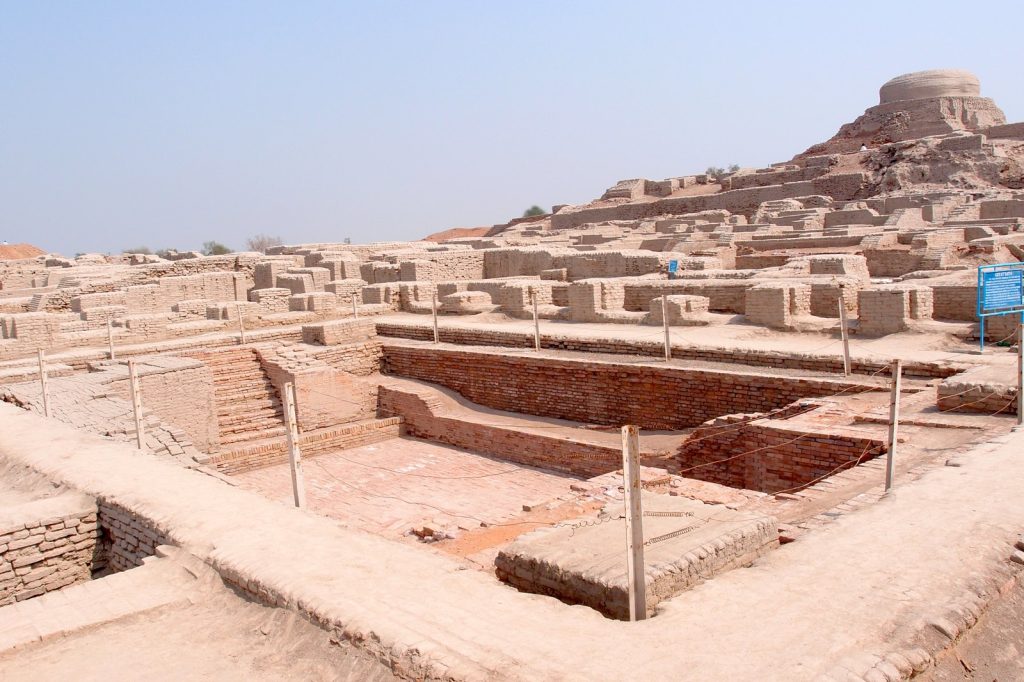
ISLAMABAD, July 19 — The Indus Valley Civilisation, which flourished from 3300 to 1300 BCE, is increasingly drawing the attention of environmental engineers and educators who see its urban and technological achievements as early examples of sustainable infrastructure. While no single city or artifact stands named in the current discussion, the civilisation’s principles of sanitation, water management, and resource efficiency are being examined as potential models for modern design.
Early evidence gathered by archaeologists suggests that the civilisation’s settlements were planned with an emphasis on drainage and waste removal that rivals systems built thousands of years later. The encouraging part is that these patterns were not isolated to one location—they appear to have been standard practice across the culture’s urban centres.
Researchers highlight that the origins of modern engineering, including sophisticated metallurgy and efficient water systems, can be traced directly to this period.
A Blueprint for Sustainability
Urban planning within the Indus Valley appears to have followed a grid-like organisation, with streets laid out to facilitate movement and drainage. Houses often had private bathing areas connected to covered drains running along the main roads. This design ensured that wastewater was removed from living spaces quickly, reducing health risks and the contamination of drinking water sources.
The emphasis on sanitation aligns closely with what today’s environmental engineers aim to achieve in rapidly growing cities around the world. The civilisation’s water systems are particularly notable.
Early findings suggest that reservoirs, wells, and channels were built not only for daily use but also to manage seasonal rainfall and runoff. That kind of integrated approach to hydrology is now considered cutting-edge in sustainable urban design. The civilisation demonstrated an understanding that water is a shared resource requiring careful allocation—a principle that many modern water authorities are still working to implement fully.
Metallurgy and Resource Management
Beyond infrastructure, the Indus people displayed advanced metallurgical skills. They worked with copper, bronze, lead, and tin, producing tools, vessels, and ornaments with techniques that required precise temperature control and alloying knowledge. Early evidence shows that they sourced materials from distant regions, indicating organised trade networks and an ability to manage raw material supplies over long distances.
This early resource management provides a historical precedent for responsible sourcing—a topic of growing importance in today’s manufacturing and electronics industries. The fact that these achievements were sustained for nearly two millennia—from roughly 3300 BCE to 1300 BCE—without the kind of environmental degradation seen in many modern industrial centres has prompted some engineers to ask what lessons can be applied today.
The civilisation’s decline remains debated, but its long period of stability suggests that its systems were resilient and adaptable.
Lessons for Modern STEM Education
Educators and curriculum designers are beginning to explore how the Indus Valley’s approach to design and engineering can be integrated into STEM programmes. Rather than treating ancient history as a separate subject, some schools and universities are using it as a case study in environmental engineering and sustainable design. The encouraging part is that students can see firsthand how principles like low-impact drainage, natural cooling, and resource recycling were put into practice thousands of years ago.
This historical foundation offers a model that combines technical skill with environmental awareness. It avoids the trap of viewing sustainability as a purely modern invention and instead roots it in proven, long-term human experience.
For students learning about system design, the Indus example provides a concrete demonstration that careful planning and respect for natural systems can support large, dense populations over centuries. Early findings suggest that incorporating such historical perspectives into engineering courses helps students think more broadly about the consequences of their designs. Instead of focusing solely on efficiency or cost, they learn to consider durability, community health, and environmental integration—qualities that were central to Indus urban planning.
For engineers, urban planners, and educators looking to rethink contemporary infrastructure, the Indus Valley Civilisation offers a tested reference point. The encouraging part is that this ancient wisdom is no longer confined to museum exhibits; it is being studied in labs and design studios as a practical guide for building cleaner, more resilient cities.
As with any historical model, context matters. Modern materials, population densities, and climate conditions differ significantly from those of the 3rd millennium BCE. Still, the principles of thoughtful drainage, efficient resource use, and community-scale sanitation remain as relevant today as they were then.
For those considering how to integrate these lessons into new projects, talking to archaeologists and environmental engineers can help bridge the gap between ancient practice and modern feasibility. The conversation, like the systems themselves, is worth having.




