
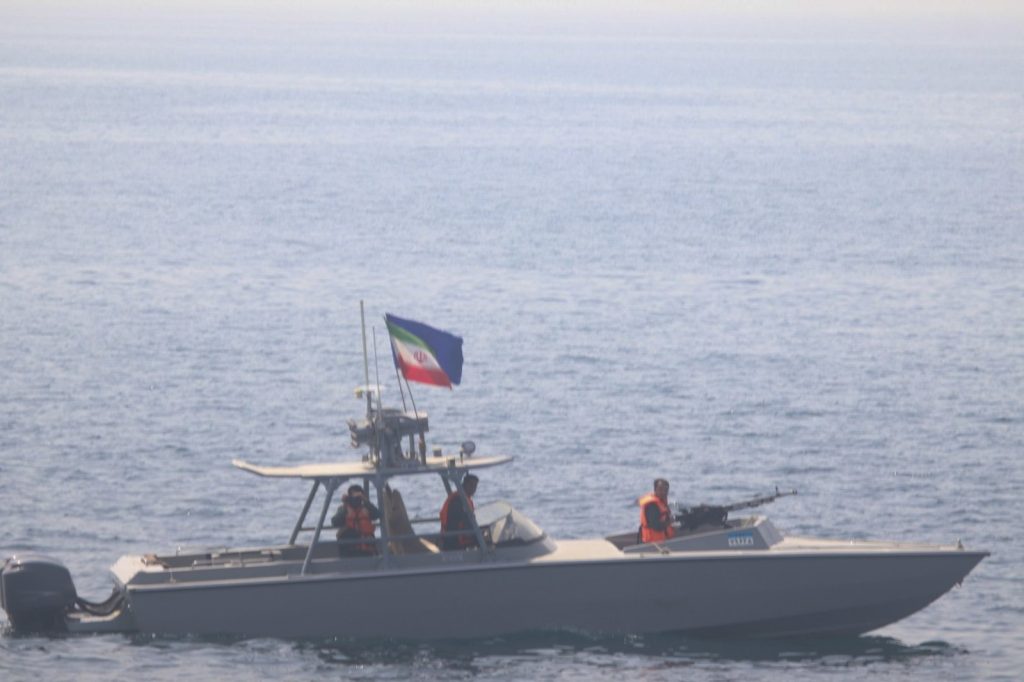
SINGAPORE, July 8 — The global petroleum market is holding its breath, watching a narrow stretch of water that carries the lifeblood of economies across Asia. The Strait of Hormuz, 21 miles wide at its narrowest point, is the passageway for roughly 17 million barrels of oil every single day. That figure comes from the U.S. Energy Information Administration.
For communities across the Philippines, Indonesia, and the rest of Southeast Asia, the numbers out of the Middle East are not abstract. When supply lines tighten, the cost of everything from jeepney fares to cooking gas can shift.
The source of that potential pressure sits in Tehran, where officials have historically threatened to close the strait during periods of heightened conflict. The current ceasefire in the region remains fragile, and analysts at the International Energy Agency are watching closely. The IEA has projected what could happen if that ceasefire collapses entirely.
Their models show a potential supply shortfall of 3 to 5 million barrels per day. That is a gap large enough to send shockwaves through refineries from Batangas to Bangkok.
It is a scenario that energy ministers across the region are quietly preparing for, even as public attention remains fixed on other headlines. OPEC does have some cushion. The organisation’s spare capacity, held primarily by Saudi Arabia and the United Arab Emirates, was estimated at 4 million barrels per day as of March 2025.
That figure is significant, but it is worth noting that spare capacity is not the same as instant production. Bringing those barrels online takes time, and the margin between that cushion and the potential shortfall is razor-thin. A gap of 3 to 5 million barrels a day against a spare capacity of 4 million leaves almost no room for error.
Closer to home, the United States has been ramping up its own production. In February 2025, U.S. oil output hit a record high of 13.2 million barrels per day.
That is a remarkable number, and it reflects years of investment in shale drilling and improved extraction technology. For Asian importers who rely on American crude, that record production offers some reassurance. But American oil mostly travels by tanker across the Pacific, which means longer transit times and different price dynamics than the crude that flows through the Gulf.
The United States also maintains the Strategic Petroleum Reserve, a stockpile built to cushion the economy against exactly this kind of disruption. As of February 2025, the SPR held 375 million barrels.
That is a substantial reserve, but it is worth putting in context: in 2020, the reserve held 638 million barrels. The drawdown over the past several years reflects previous emergency releases and a slower pace of replenishment. For a major disruption in the Strait of Hormuz, 375 million barrels would cover a portion of the shortfall, but it is not an unlimited buffer.
For the Philippines, the stakes are particularly direct. The country imports nearly all of its oil requirements, and a significant portion of that crude passes through the Strait of Hormuz. When global prices spike, the impact is felt immediately at the pump and in the cost of transporting goods to market.
For families across the archipelago, a sustained price increase can mean rethinking budgets for food, school supplies, and medicine. The situation is similar across much of developing Asia.
Countries like India, Thailand, and Vietnam all rely heavily on Middle Eastern crude. The Strait of Hormuz is not just a geopolitical flashpoint; it is a commercial artery that connects some of the world’s largest oil producers with some of its fastest-growing consumers. When that artery is threatened, the entire region pays attention.
There is also the question of what happens to the global tanker market. Insurance rates for vessels transiting the Strait of Hormuz have historically spiked during periods of tension.
Shipping companies may reroute, adding days and costs to each voyage. Those costs, inevitably, are passed down the supply chain. For now, the ceasefire holds.
But the projections from the IEA and the data from OPEC and the EIA paint a clear picture: the margin for error is slim. The world’s spare production capacity is roughly in line with the worst-case shortfall scenario. That leaves little buffer if something goes wrong.
What comes next depends on diplomacy as much as geology. The Strait of Hormuz has been threatened before, and it has never been closed for an extended period.
But each crisis tests the system in new ways. For the nations of Asia that depend on this waterway, the coming weeks and months will be a time to watch closely, to prepare contingency plans, and to hope that the projections remain just that — projections.




