
Mission Overview
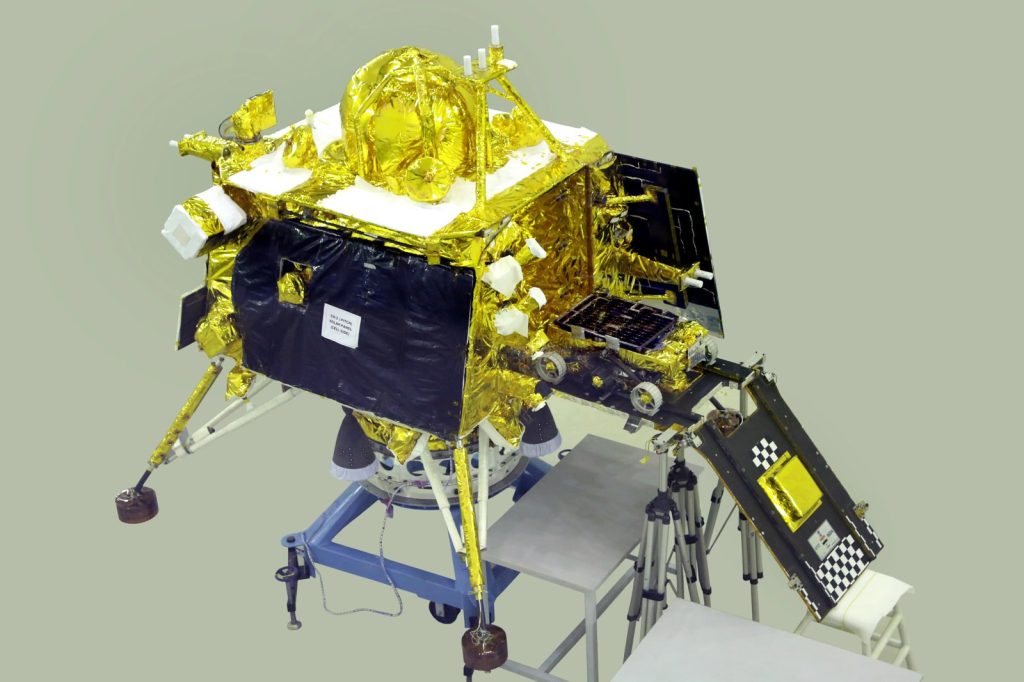
The Indian Space Research Organisation launched Chandrayaan-3 on July 14, 2023, marking another step in India’s lunar exploration programme. The spacecraft carries the Vikram lander and the Pragyan rover, which are intended to touch down on the Moon’s surface and operate for approximately two weeks.
This effort repeats the attempt made with Chandrayaan-2 in 2019, when the lander crashed just before touchdown, falling short of its goal.
Organizational Background
As India’s national space agency, ISRO has been at the forefront of the country’s space‑based activities, exploration initiatives and international cooperation. Its headquarters are located in Bengaluru, Karnataka. The agency functions under the oversight of the Prime Minister of India, and the Chairman of ISRO also serves as the chief executive of the Department of Space.
Over the years ISRO has built a strong fleet of imaging, communications and remote‑sensing satellites and is responsible for operating the GAGAN and IRNSS navigation systems.
Mission Objectives
The primary aim of Chandrayaan-3 is to achieve a successful soft landing of the Vikram lander on the lunar surface, followed by the release of the Pragyan rover. Once deployed, the rover is designed to carry out a series of experiments and gather data on the Moon’s terrain for a two‑week period.
The collected information is expected to shed light on the Moon’s geology, composition and tenuous atmosphere, thereby improving scientific understanding of how the Moon formed and evolved.
Significance of a Successful Landing
If the landing succeeds, India will join the small group of nations that have placed a spacecraft intact on the Moon. The mission is regarded as a complex undertaking that demands meticulous planning, precise execution and the use of cutting‑edge technology. Key phases include launch, transit to the Moon, lunar orbit insertion and the final landing maneuver, each presenting distinct challenges that must be overcome.
Spacecraft Capabilities
Both the Vikram lander and the Pragyan rover are equipped with state‑of‑the‑art instruments and sensors. These tools enable the vehicles to acquire scientific measurements and transmit the data back to Earth. Scientists and researchers will analyse the returned data to gain new insights into the lunar surface and subsurface environments.
Programmatic Context
India’s space programme has recorded a series of successful launches and missions in recent years, demonstrating growing competence in space technology. Chandrayaan-3 stands as a testament to this progress and has attracted considerable attention both domestically and abroad. Observers anticipate that the mission will motivate a new generation of scientists, engineers and explorers, and will help lay the groundwork for future lunar and interplanetary endeavours.
ISRO’s Role and Outlook
With a legacy of innovation and achievement, ISRO is well placed to continue expanding the frontiers of space exploration and to contribute to humanity’s comprehension of the




