
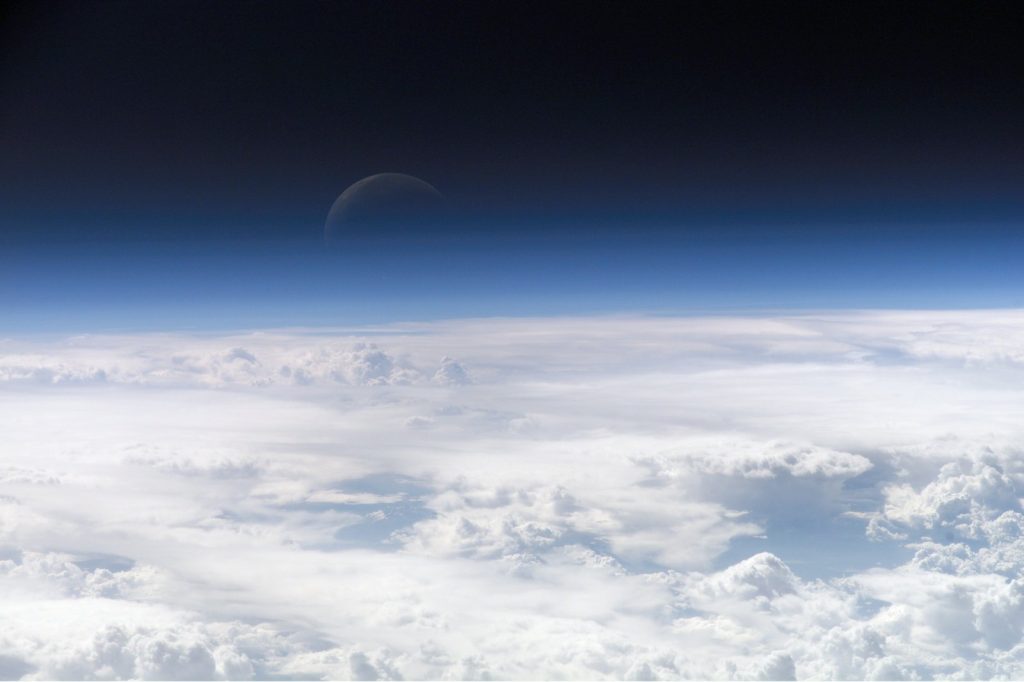
WASHINGTON, July 7 — The prospect of thousands of satellites burning up in Earth’s atmosphere is raising fresh environmental alarms, with scientists warning that the resulting metallic particles could eat away at the planet’s protective ozone layer. Each Starlink satellite weighs roughly 2,700 pounds — about 1,225 kilograms — and carries a mix of aluminum, titanium, and copper, along with electronic components. When these objects reenter the atmosphere, they vaporize, and that vaporization creates aluminum oxide particles.
Those particles are known to catalyze ozone-depleting reactions. A 2023 study in the journal *Geophysical Research Letters* ran the numbers.
The researchers estimated that a full Starlink constellation — the company’s planned network of 42,000 satellites — could trigger a 0.1% to 0.5% drop in global ozone levels. The study also flagged potential regional effects, where the damage could be more concentrated. The problem isn’t just ozone.
The vaporized satellite materials could alter the chemical composition of the stratosphere and mesosphere. That could affect cloud formation and radiative balance.
Environmental advocacy groups are paying close attention. The Center for Biological Diversity has urged the Federal Communications Commission to conduct a full environmental impact statement under the National Environmental Policy Act — NEPA — before approving further satellite launches. The group argues that the cumulative effects of thousands of reentries need serious study.
Here’s the practical upshot: the FCC is currently considering a proposal to exempt satellites from NEPA review altogether. If that goes through, it would bypass the kind of environmental assessment the Center for Biological Diversity and others are calling for. Critics say that would leave a significant oversight gap, allowing the rapid expansion of satellite constellations without a thorough look at what happens when they all come back down.
The issue sits at the intersection of two fast-moving trends: the explosion of low-Earth-orbit satellite networks for global internet coverage, and the growing awareness that space debris disposal has real environmental costs. Right now, the standard practice is to let defunct satellites burn up in the atmosphere.
That keeps space clear for operational spacecraft, but it shifts the pollution problem from orbit to the upper atmosphere. What to watch next: the FCC’s decision on the NEPA exemption. If the agency moves forward without requiring environmental impact statements, expect legal challenges from conservation groups.
Meanwhile, researchers are likely to push for more detailed modeling of exactly how satellite reentry emissions affect atmospheric chemistry — including how aluminum oxide particles behave at different altitudes and latitudes. The 2023 *Geophysical Research Letters* study provides a starting point, but it looked at a single constellation.
With multiple companies — including Amazon’s Project Kuiper and others — planning their own mega-constellations, the cumulative effect could be larger than what that study modeled. For now, the question is straightforward: as we build out a space-based internet infrastructure, are we trading one environmental problem for another? The answer, scientists say, depends on how thoroughly regulators study the trade-offs before giving the green light.




