
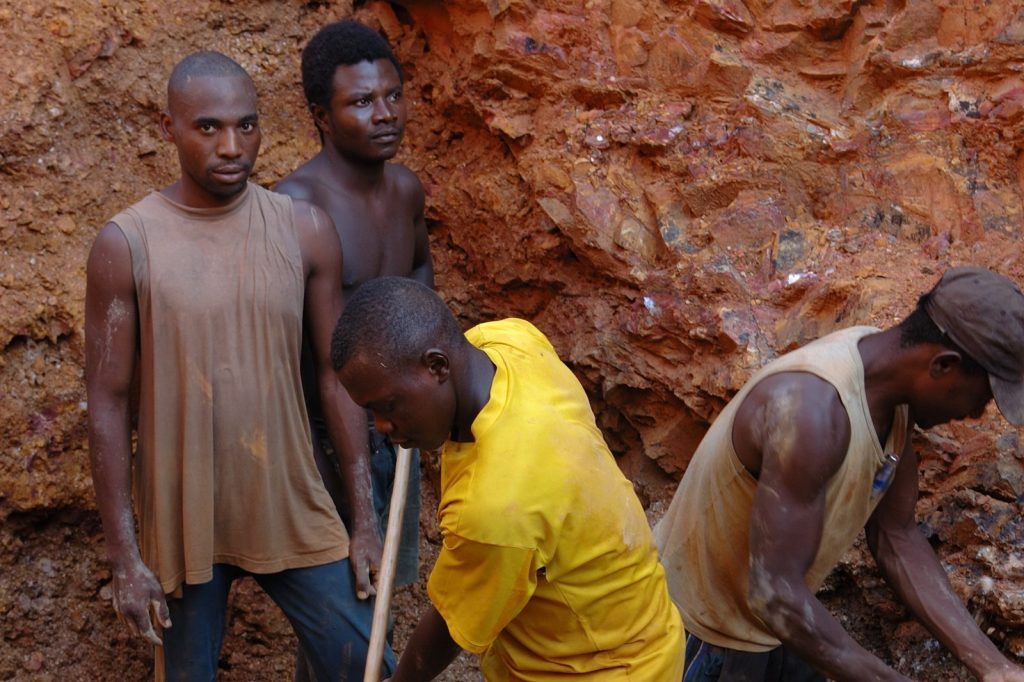
After Hoist Collapse, Mashonaland Central Faces Mining Reckoning
Two weeks have passed since a hoist system failure killed six illegal miners in Mashonaland Central Province, leaving the machinery idle and the shaft sealed. Four injured men remain under local medical care.
The province covers 28,347 square kilometers and is home to 1.38 million people, many of whom rely on the land for farming and drinking water. Illegal mining is not a peripheral activity here; it is a primary livelihood for large numbers of residents. The Shona‑speaking majority has long worked the mineral‑rich ground, with some operators holding permits and many working without authorization. The July 18 incident at an unnamed mine in one of the province’s eight districts did not originate the problem; it merely brought it into sharp focus.
The hoist that gave way was likely an improvised assembly—a pattern common in unregulated operations where ropes, pulleys and jury‑rigged engines move workers and ore in and out of shafts dug without engineering oversight, inspector visits or backup safety systems. When such a device fails roughly a hundred feet underground, there is no rescue plan; the outcome is a straight fall.
Six men died in that fall, while four others survived with injuries. Provincial officials now await to see whether the government’s expressed concern will translate into concrete action. Discussions of stricter regulations have occurred before, and promises have been made, but the central question remains: will this loss of life finally prompt change?
The provincial economy hinges on what is extracted from the earth. Legal mines employ thousands of workers, while illegal sites employ thousands more, offering cash payments, no contractual obligations and no insurance coverage.
Environmental consequences are evident: trees are cleared for pits, stripped hillsides erode, and runoff laden with heavy metals and silt contaminates streams that nearby communities use for drinking and irrigation. Clean water and healthy soil are not luxuries; they are essential to the survival of families who grow their own food and draw from local wells. Both legal and illegal mining degrade these vital resources.
There is currently no mechanism to compel reclamation of abandoned sites, no dedicated fund for cleanup, and no enforcement presence capable of reaching the remote diggings where most illegal activity occurs. As a result, the cycle persists: men descend into unmarked shafts, hoists break, lives are lost, the provincial government releases statements, and little alters in practice.
Authorities say the forthcoming investigation will concentrate on safety protocols—inspecting hoists, mandating permits, and shutting down operations that cannot demonstrate compliance with basic standards. In a territory of roughly 28,000 square kilometers that hosts hundreds of active illegal sites, such an undertaking would strain any enforcement agency. The deceased miners were not identified in official reports; they are recorded simply as six among many.
The four injured likewise remain unnamed, reflecting how frequent mining accidents have become in the province—so common that they cease to attract headlines after a week. What follows is not a matter of policy; suitable rules already exist.
It is a matter of political will. The provincial administration can decide to enforce current legislation, draft new measures, allocate resources for inspectors and equip them to access isolated locations, or it can wait for the next hoist to fail. Mashonaland Central possesses abundant mineral wealth, yet its 1.38 million residents depend on the land and water that lie beneath those resources.
Those two realities stand in direct opposition. Until the conflict is addressed with genuine enforcement, the hoists will continue to turn, and they will continue to break.




